




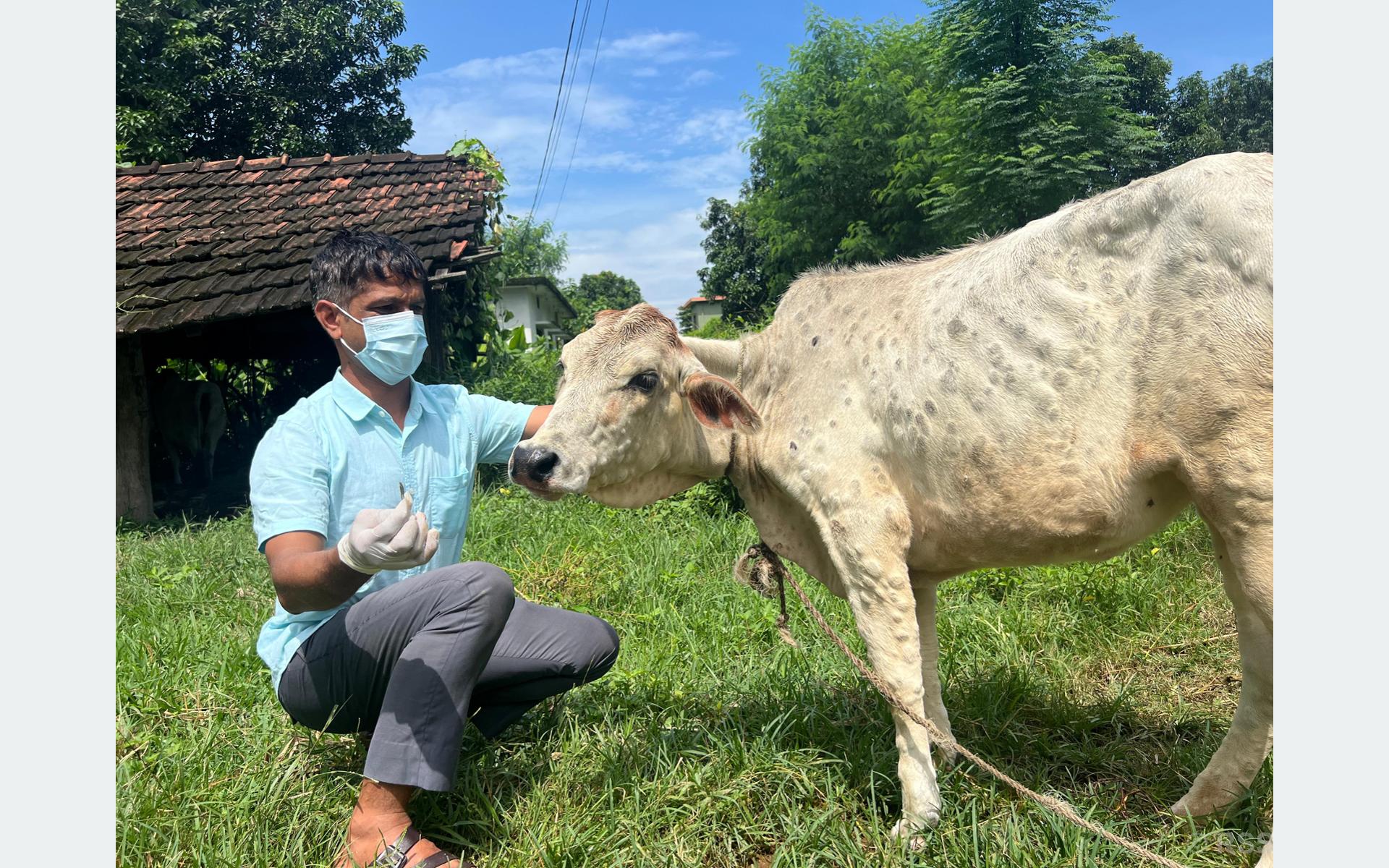
KANCHANPUR: Lumpy skin disease has been confirmed in cow calves raised by local farmers in Sisaiya, Ward No. 9 of Shuklaphanta Municipality in Kanchanpur.
After symptoms were observed in the affected calves, a team led by senior veterinarian Dr. Naresh Prasad Joshi from the Animal Disease Research Laboratory in Dhangadhi collected tissue samples.
The samples were tested at the Central Animal Disease Research Laboratory using the PCR method, confirming the presence of the disease.
Dr. Joshi stated that lumpy skin disease had last appeared in Sudurpaschim Province two years ago, and this is the first confirmed case since then. So far, only a single calf has tested positive, and no symptoms have been detected in other nearby animals, including cattle and buffaloes.
“Investigations are ongoing to trace the origin of the infection,” he said. “This is the first reemergence of the disease in the province since the last wave, which occurred toward the end of the previous fiscal year.”
He added that during the outbreak two years ago, nearly 1.3 million animals were infected across the country, with approximately 50,000 fatalities.
Dr. Joshi warned that the risk of widespread transmission remains high in Sudurpaschim Province, particularly due to the ongoing monsoon season and limited vaccination coverage. “Vaccination is the most effective preventive measure, but currently there is no vaccine stock available in the province,” he said.
He urged farmers to isolate infected animals immediately and emphasized the importance of maintaining hygiene around animal sheds, controlling disease vectors such as mosquitoes and flies, and exercising caution when handling infected animals or entering the sheds.
According to Dr. Joshi, symptoms of lumpy skin disease in cattle and buffaloes include the appearance of large lumps all over the body, blisters around the eyes, nose, and mouth, high fever exceeding 104°F, and lesions measuring 10 to 50 mm on the neck, back, abdomen, and udder.
Other symptoms include reduced milk production (up to 80%), diarrhea, nasal discharge, excessive salivation, and swollen lymph nodes.
Ram Prasad Bhatta, head of the Livestock Development Branch of Shuklaphanta Municipality, confirmed that the disease was previously detected four years ago in Kalagoudi, Ward No. 12. “This is the second occurrence in the municipality, now found in Sisaiya,” he said.
“We have advised farmers to avoid allowing infected animals to mingle with healthy ones, to isolate affected livestock, and we are actively spreading awareness in the community.”



Comment