




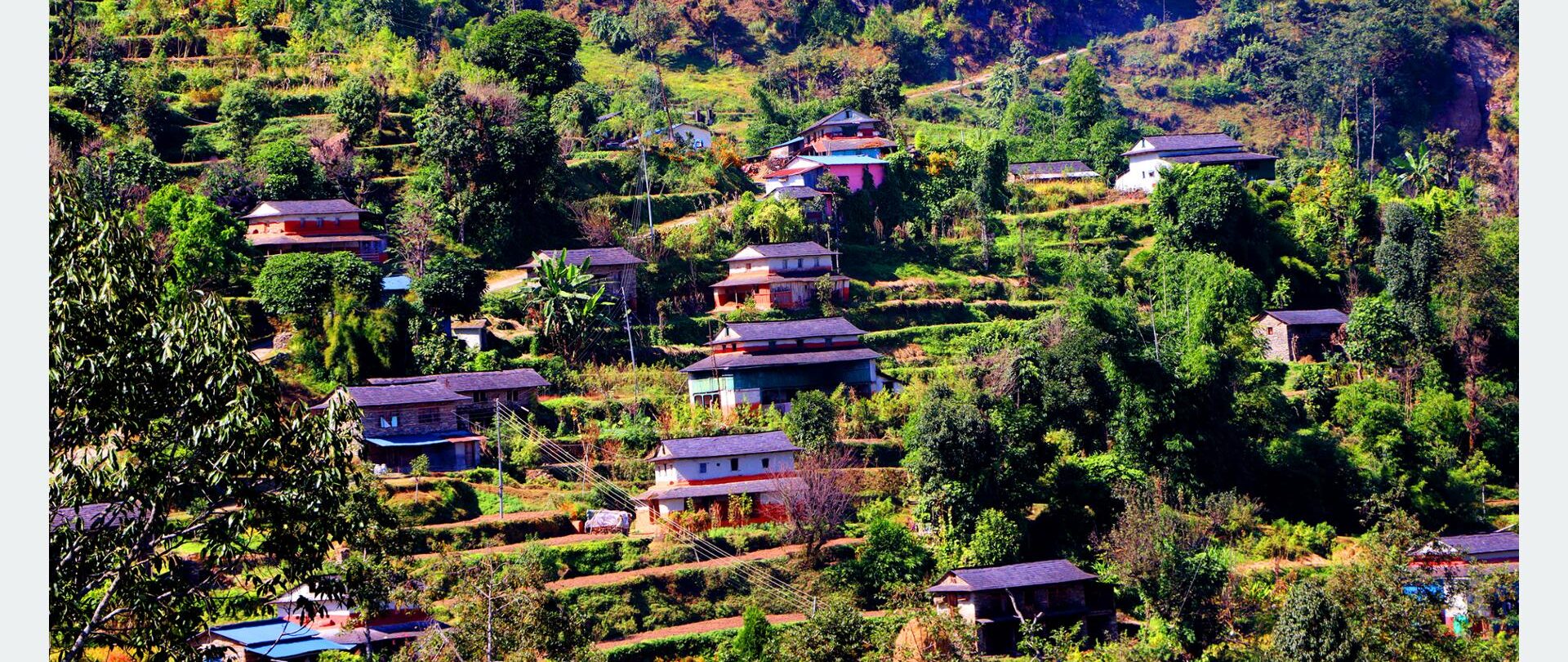
BAGLUNG: Once a vibrant village echoing with the sounds of daily life, Karlim in Kathekhola Rural Municipality-5, Baglung, now stands eerily silent.
Once-thriving homes lie abandoned, fields have turned barren, and the community spirit that once defined the village has faded. As migration to cities and foreign countries accelerates, Karlim has become a stark example of rural depopulation—where only a handful of residents remain to witness the slow unraveling of village life.
“So much land has turned barren, all the houses in the village are empty, and there are no neighbors left to help in times of need,” says Til Bahadur Kandel of Karlim, Kathekhola Rural Municipality-5, Baglung.
These days, Kandel feels a deep sense of loneliness. After migrating from a neighboring village to the city, he is saddened to see Karlim—once a lively settlement—reduced to near abandonment. Now, only two to four houses in the entire village are still inhabited.
Kandel shares that in times of trouble, there’s often no one around to lend a hand. “Even when someone falls sick, there’s no one to take them to the hospital. The village is overgrown with bushes, and the presence of wild animals has become a serious concern. When wildlife begins nesting near the houses, it becomes frightening even to walk around,” he adds.
Local resident Maina Subedi echoes Kandel’s concerns. With most young people gone, farming has come to a halt. Reflecting on the past, he recalls how vibrant the village used to be a decade ago. “Now, the population shrinks every year. There aren’t even enough people left to share joy or grief together,” he says.
Subedi believes the government should take concrete steps to address this crisis. He suggests managing internal migration and implementing policies to prevent homes from being abandoned.
“Even the roads leading to the village are now covered with forest and brush. The youth have gone abroad, and with the money they send back, families are building houses in cities. Wealthier residents have already moved to city centers or overseas. All that remains here is barren land and abandoned homes,” he laments.
Karlim is not alone. Migration from other parts of Kathekhola and across the district is steadily rising, leaving many rural areas desolate. Kathekhola, in particular, has seen significant outmigration.
While most of the local youth are now in Japan, Korea, or Australia, their families have relocated to urban areas like Baglung Bazaar, Pokhara, Kathmandu, and Chibatan.
In response, Kathekhola Rural Municipality Chairperson Raju Thapa stated that efforts are underway to curb migration by linking locals with skills, technology, and entrepreneurship. “The village has changed a lot over the years, but we haven’t been able to stop migration,” he admits.
“We are offering technical support and grants to young entrepreneurs who choose to stay and work in the village. The rural municipality is doing what it can with the resources available. But everyone must work together. Let’s all contribute to creating opportunities in our villages,” Chairman Thapa urged.





Comment