




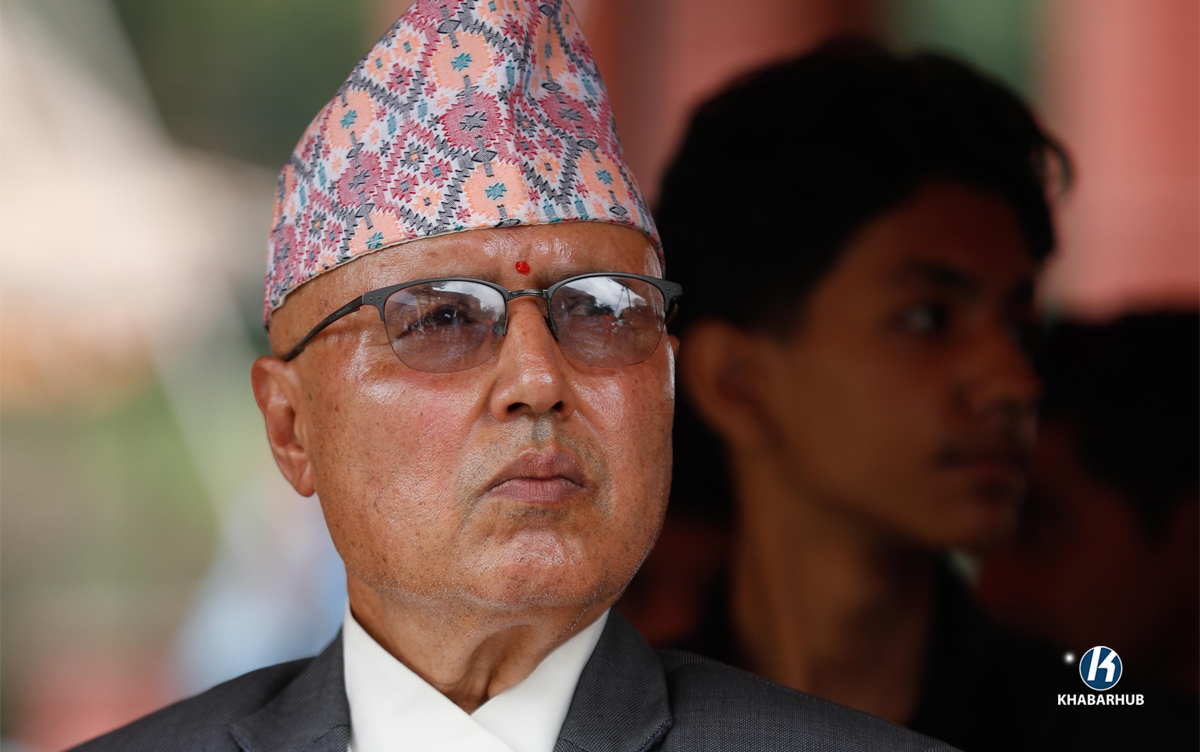
KATHMANDU: Following the fall of the KP Sharma Oli-led government in the wake of the Gen-Z protests on September 8 and 9, former Chief Justice Sushila Karki has formed a three-member interim Cabinet.
Among the key appointments, seasoned economist and former finance secretary Rameshore Khanal has been entrusted with the Ministry of Finance.
Karki, who was appointed prime minister on Friday, inducted her ministers on Monday: Rameshore Khanal as Finance Minister, Kulman Ghising as Minister for Energy, Water Resources and Irrigation, and senior advocate Om Prakash Aryal as Home and Law Minister.
Khanal steps into the role at a time of immense economic and political upheaval. The Gen-Z movement caused extensive damage to both state and private property, leaving the government under pressure to fund reconstruction while also preparing for elections expected by March.
A reformist technocrat
Born in 1956 in Tansen, Palpa, Khanal has long been recognized as a reformist within Nepal’s bureaucracy. Entering government service at 23, he rose through the ranks to become finance secretary in 2006. He worked closely with then-finance minister Dr. Baburam Bhattarai, with many crediting their partnership for stabilizing Nepal’s economy during the country’s transition from conflict to peace.
Khanal resigned in 2010 after policy disagreements with the government, later joining politics briefly with the Nepali Congress and later Baburam Bhattarai’s Naya Shakti, before stepping back from active politics. In recent years, he has remained a respected policy voice, advising successive governments and the private sector on economic reforms.
Just last year, the Oli government had appointed Khanal to lead a high-level commission on economic reform, whose recommendations on structural changes were widely welcomed by analysts and the business community.
Challenges ahead
Economist Govinda Nepal described Khanal as the “right man for the crisis.” Speaking to Khabarhub, he said, “Reconstruction of damaged infrastructure must begin immediately, but the current budget was never designed with an election in mind. The minister must find resources both for rebuilding and for conducting elections.”
He added that beyond fiscal management, Khanal faces the crucial task of restoring confidence among the private sector and the general public, both shaken by weeks of unrest.
For Khanal, who has spent decades balancing technocratic expertise with reformist zeal, the challenge now is not only economic stabilization but also helping to chart a credible path for the interim government’s legitimacy.






Comment