




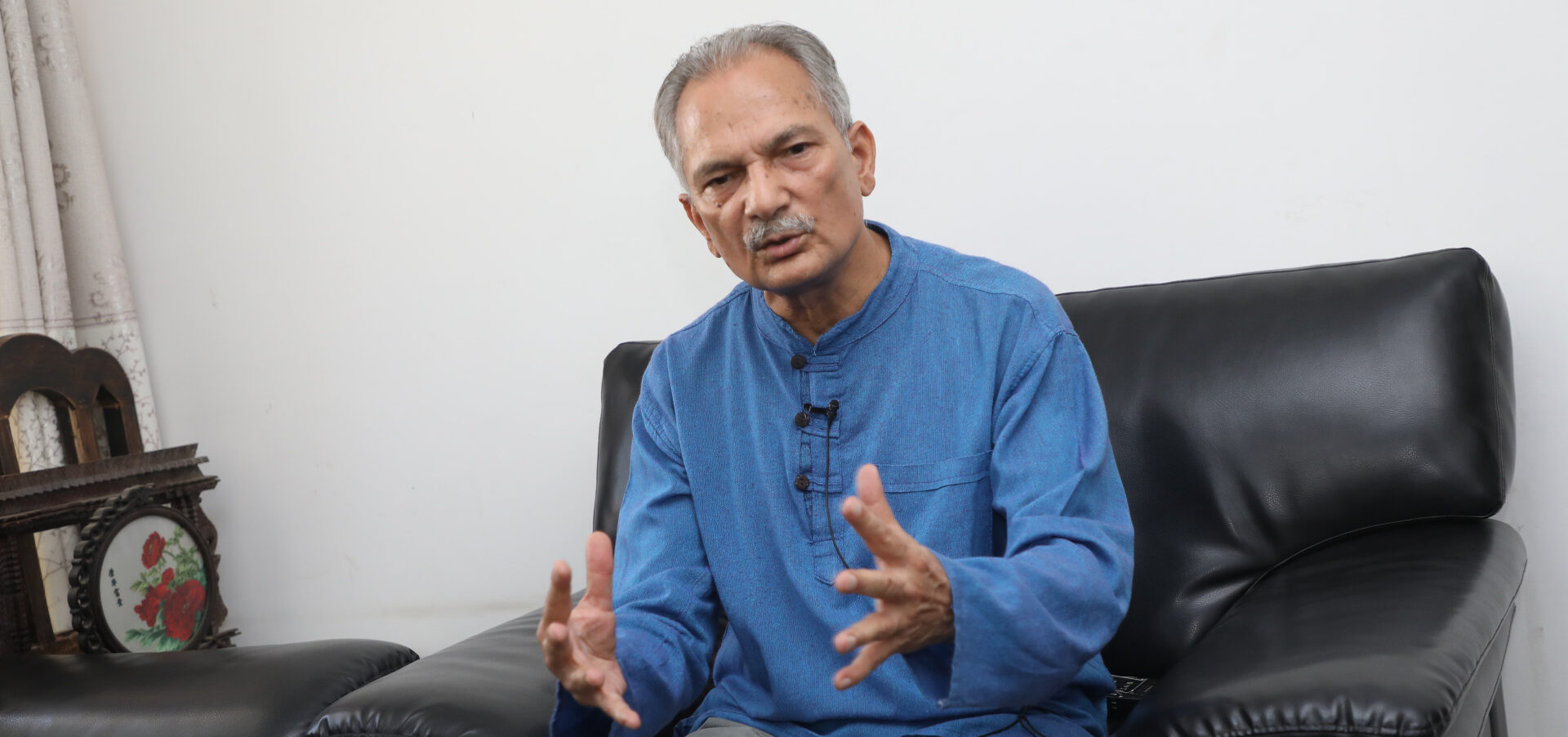
KATHMANDU: Former Prime Minister Dr. Baburam Bhattarai has expressed strong support for the decision to appoint former Chief Justice Sushila Karki as the head of the interim government.
Extending early congratulations, he has called on all Nepalis to cooperate with and support her leadership.
In a statement issued on Friday morning, Bhattarai urged President Ram Chandra Poudel to dispel any confusion and formally swear Karki in as interim Prime Minister without delay.
“It is a highly positive and timely step for the youth of Gen-Z, who aspire to lead a new Nepal, to propose former Chief Justice and a capable, clean figure like Sushila Karki to head the interim government. The entire nation should unite in supporting her. We also offer our full support and extend our congratulations in advance,” Bhattarai said.
He added, “Now, in line with the current Constitution, the President—as its custodian and protector—should take the appropriate democratic and constitutional steps, consult with constitutional experts, and formally swear her in to end the present uncertainty.”
Bhattarai also urged the Gen-Z movement to be mindful of constitutional differences compared to the 2008 precedent when Khil Raj Regmi was appointed head of government.
“At that time, the Interim Constitution of 2063 BS explicitly allowed for certain decisions to be made on the basis of ‘political consensus,’ which was defined as an agreement among seven parties and the CPN (Maoist),” he said.
“However, this current constitution—drafted by an elected Constituent Assembly—is permanent and contains no such provision. Gen-Z must tread carefully. This is the first constitution in Nepal’s history to be written by the people’s representatives after a historic movement, and it would be in Gen-Z’s long-term interest to work within its framework.”
Despite overnight discussions at the President’s Office, Sheetal Niwas, where a broad agreement was reportedly reached to appoint Karki, no final conclusion has yet been announced. President Poudel continues to deliberate on whether or not to dissolve Parliament.






Comment