




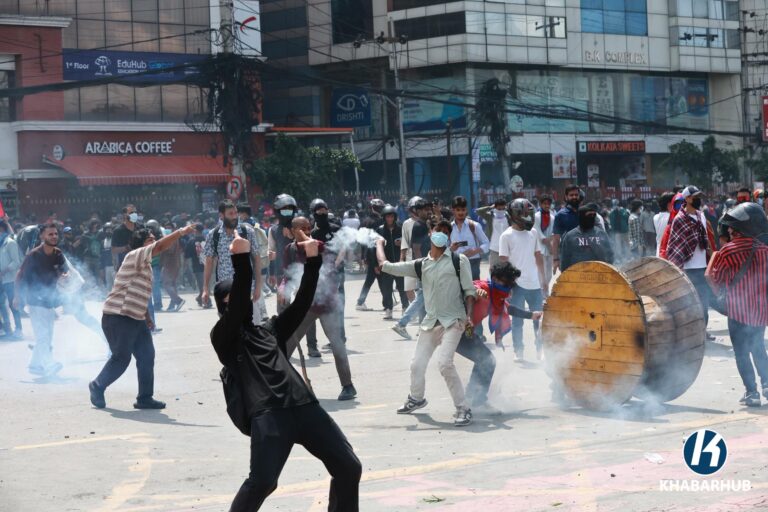
KATHMANDU: What began as a tense standoff in Kathmandu’s Baneshwor area on Monday erupted into some of the deadliest street clashes Nepal has seen in years. Riot police fired tear gas and baton-charged crowds of young demonstrators, leaving several dead and hundreds injured and sparking outrage nationwide.
The protests, led primarily by Gen-Z activists, are not just about a single issue. They reflect a deeper frustration with corruption, nepotism, and the decades-long grip of aging political leaders. A pedestrian near the protest area put it bluntly in the evening,“The dirtiest pig is KP Oli.”
The reference to Prime Minister KP Sharma Oli, once affectionately known as “Ba” (father) to his supporters, shows how dramatically public sentiment has shifted.
Even as clashes raged in Kathmandu, the unrest spread east. In Jhapa’s Damak municipality, protesters attacked Oli’s private residence. While damage was minor, the symbolism was unmistakable as it was a direct assault on the stronghold of Nepal’s most powerful leader.
Security forces quickly locked down the area. “They had their eyes on the house, but there was no major damage,” said UML district chair Prem Giri, confirming heightened security around Oli’s home.
Meanwhile, protests also flared in Biratnagar and Birtamod, where several youths were injured and rushed to B&C Hospital.
What is this protest?
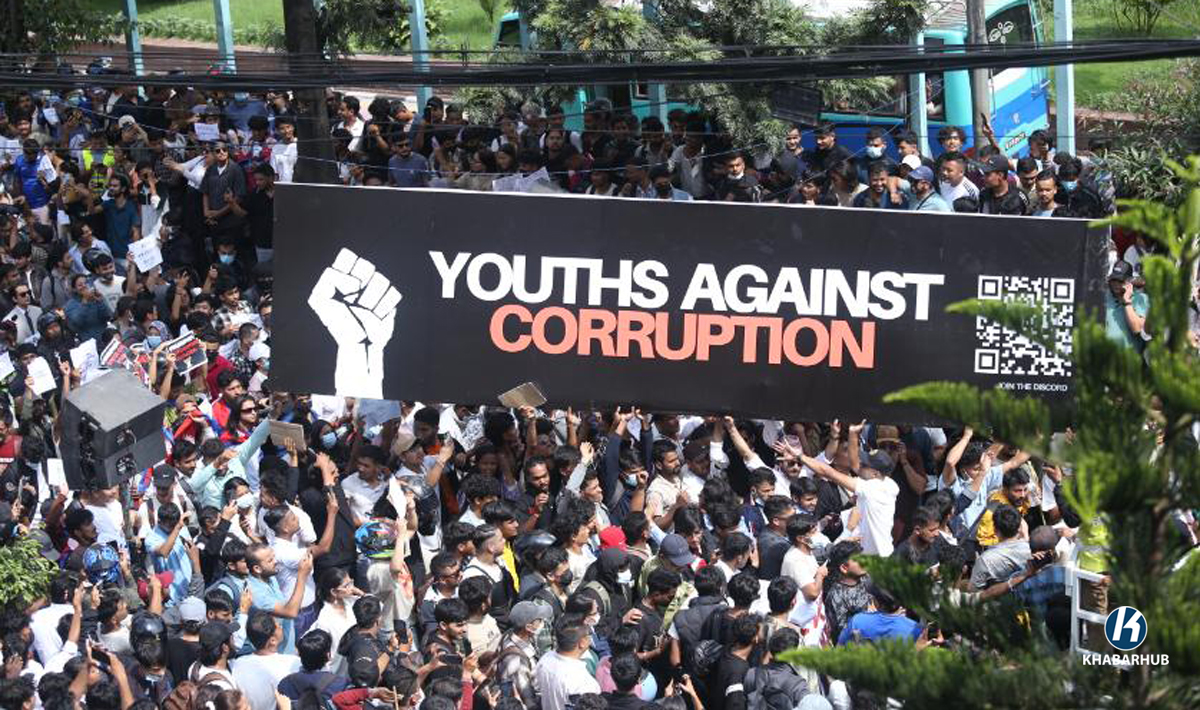
At the heart of the movement is anger at a system that young people feel has betrayed them. Corruption has been a major grievance. “Corruption has finished this country,” said businessman Simet Rizal, who joined Monday’s march.
Nepotism is another key issue driving the protests. Students have rallied under the slogan “No to Nepo-Babies,” denouncing the children of political elites who enjoy luxury lifestyles while ordinary Nepalis struggle to make ends meet. Leadership fatigue also fuels the frustration, with elderly figures like KP Sharma Oli remaining in power decades after the monarchy fell, leaving little space for youth voices to shape the country’s future.
Many students even came in their school uniforms, symbolizing the generational stakes of the movement. “This country is not UML’s inheritance,” said Suresh Pandey, a security guard who marched in solidarity. “Leaders’ children live in luxury, while ours are sold to the Gulf for labor.”
Voices from the street
The movement is deeply personal. Protesters are not speaking in abstract terms as they are talking about their lives and the realities they face. Karina Gahatraj, 18, said, “We see no future in Nepal. Right after high school, we must go abroad. These leaders created this reality.” Similarly, student Manika Bohora criticized the misuse of public funds: “The taxes citizens pay are for citizens, not for leaders’ children to live lavish lives.”
Even professionals joined the protest. “This is not a hobby protest. I skipped class and work to be here. Don’t underestimate us,” said Engineer Jeewan Wali.
Professor Ramesh Rimal, initially skeptical about youth engagement, admitted, “I thought this generation only cared about TikTok. I was wrong. This protest is a spark that can ignite a wildfire.”
Student leader Biplav Karki highlighted the political stakes. “Old leaders must retire. In the 2027 elections, we will not vote for them. Gen-Z will decide the future.”
Government on the defensive
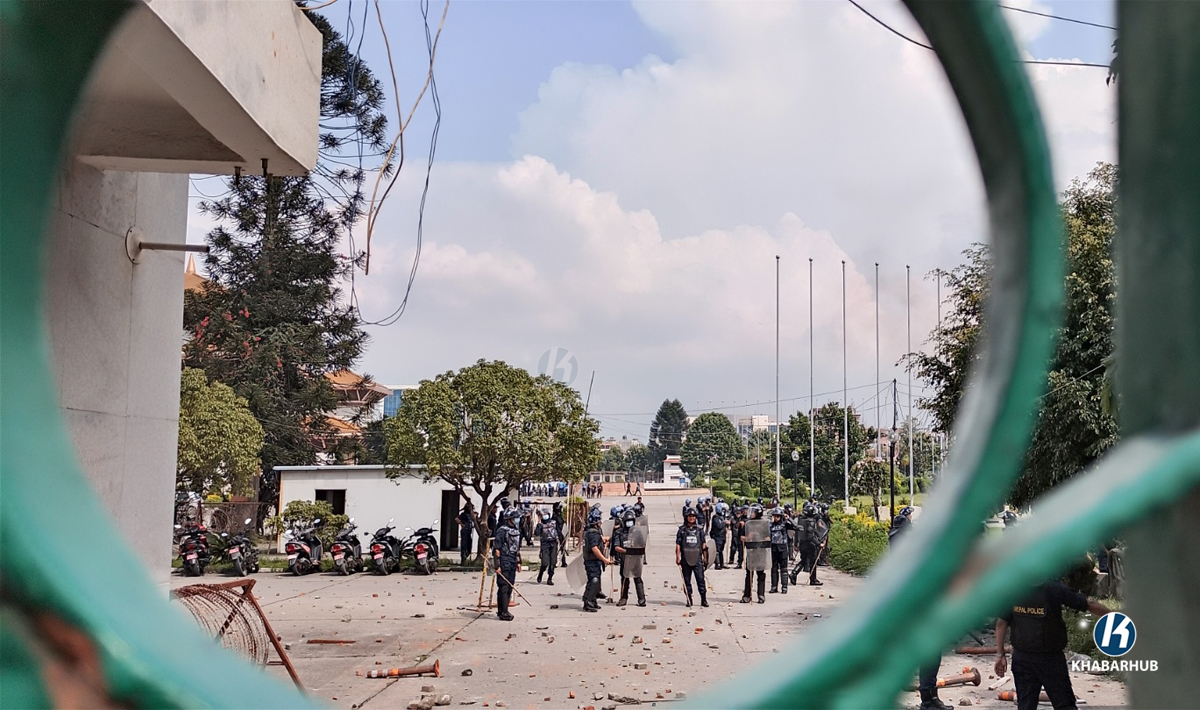
Authorities have once again scrambled to contain the crisis. Riot control units fired tear gas and clashed with demonstrators, drawing condemnation from rights groups. They said they fired rubber bullets, but reality on the ground was different as doctors removed real bullets from the injured.
The Nepal Army was placed on standby to guard state institutions, underscoring the seriousness of the unrest. Hospitals were mobilized after the Health Ministry directed them to treat the injured free of charge. Meanwhile, the opposition Rastriya Swatantra Party (RSP) called for the government’s dismissal, claiming it had lost legitimacy. Despite these moves, protesters insist they will not be silenced. The aftermath? Home Minister Ramesh Lekhak resigned on moral grounds.
Why this protest feels different
Nepal has witnessed mass protests before. Once in 1990, when democracy was restored and the other in 2006, when the monarchy was toppled. But analysts say this uprising is distinct. The divide is not merely ideological; it is generational, pitting young against old. The protests are largely spontaneous, lacking a central leader and fueled instead by social media mobilization. Unlike earlier movements that sought reform, this one openly rejects political families and their heirs.
“This is not about one leader or one party,” said Professor Ramesh Rimal. “It’s about a generation saying: enough.”
What’s next?
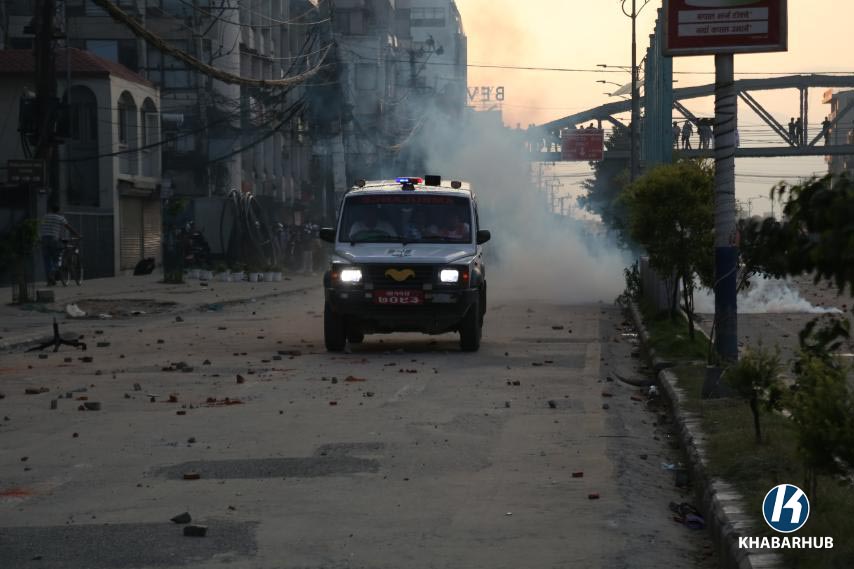
The coming days will test whether Nepal’s rulers can contain the unrest without further violence. A harsher crackdown risks radicalizing a generation already disillusioned with politics. Yet protesters are thinking beyond the streets. Many see the 2027 elections as their turning point, the moment to deny votes to establishment parties and force a generational shift.
For now, Baneshwor remains a scarred battleground. Broken glass, burnt barricades, and bloodstains symbolize a generation’s rage. As one student whispered through tear gas and smoke, “If our future is stolen, we will fight for it, right here, not abroad.”




Comment