




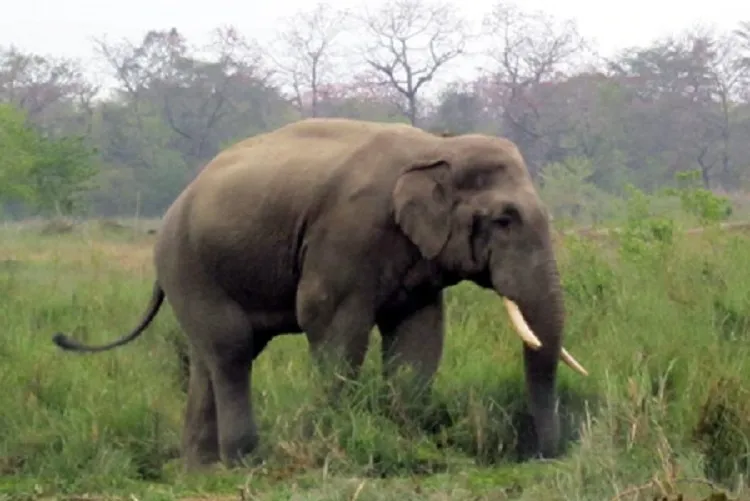
KATHMANDU: Nepal joined the global community in marking World Elephant Day on Tuesday with awareness programs, even as human–elephant conflict intensifies, particularly in the eastern Tarai region.
Experts warn that habitat loss, encroachment on elephant corridors, and infrastructure development have forced wild elephants into human settlements, resulting in deaths, crop destruction, and damage to homes. In some cases, elephants have died from electric fencing installed to protect communities.
According to government records, between 2000 and 2025, elephant attacks have killed 345 people in Nepal, while human retaliation and electrocution have claimed the lives of 55 elephants. Every year, elephants cause significant losses to crops, livestock, and property, disproportionately affecting poor communities living near forests.
The Ministry of Forests and Environment says it is preparing a comprehensive project to mitigate conflict, incorporating modern technology and local participation. “We have been working to relocate problem elephants, provide rescue and treatment, offer compensation, run awareness programs, install fencing, and support alternative livelihoods,” ministry spokesperson Shiv Kumar Wagle said.
Elephant experts stress the need to simplify relief distribution guidelines to reduce resentment among affected communities. Dr. Naresh Subedi, a leading elephant biologist, said that building positive attitudes toward elephants could reduce conflict by two-thirds. He emphasized preserving elephant corridors and establishing rapid response mechanisms in conflict zones.
Nepal is home to around 230 wild elephants and about 180 domesticated ones. Many more migrate seasonally from India, often causing additional damage. WWF Nepal’s Country Representative Dr. Ghana Shyam Gurung urged greater cross-border coordination with India to address the issue.
Electric fencing has proven effective in some areas, but conservationists say more resources and vehicles are needed for on-the-ground staff. Mapping elephant routes could also help reduce human casualties.
Data shows that human–elephant conflict is equally severe inside and outside protected areas. Senior ecologist Hari Bhadra Acharya noted that the eastern Tarai, which has a higher number of male elephants, experiences greater damage, while areas like Bardiya with more females report fewer incidents.
Nepal’s suitable elephant habitat covers about 12,000 square kilometers, mostly in the northern Tarai, Chure, and inner Tarai. These areas are shared by over 15 million people.
Bardiya National Park’s Senior Conservation Officer Dr. Ashok Ram said conflict often occurs along historical elephant corridors now occupied by settlements and farms. “Both humans and elephants share the same habitat and food sources, which fuels the problem,” he said, adding that habitat destruction and fragmentation are the main drivers.
Globally, only two species of elephants exist, Asian and African. Asian elephants, found in 13 countries including Nepal, number around 50,000. The International Union for Conservation of Nature lists them as endangered, while Nepal protects them under Schedule 1 of the National Parks and Wildlife Conservation Act, 1973.






Comment