




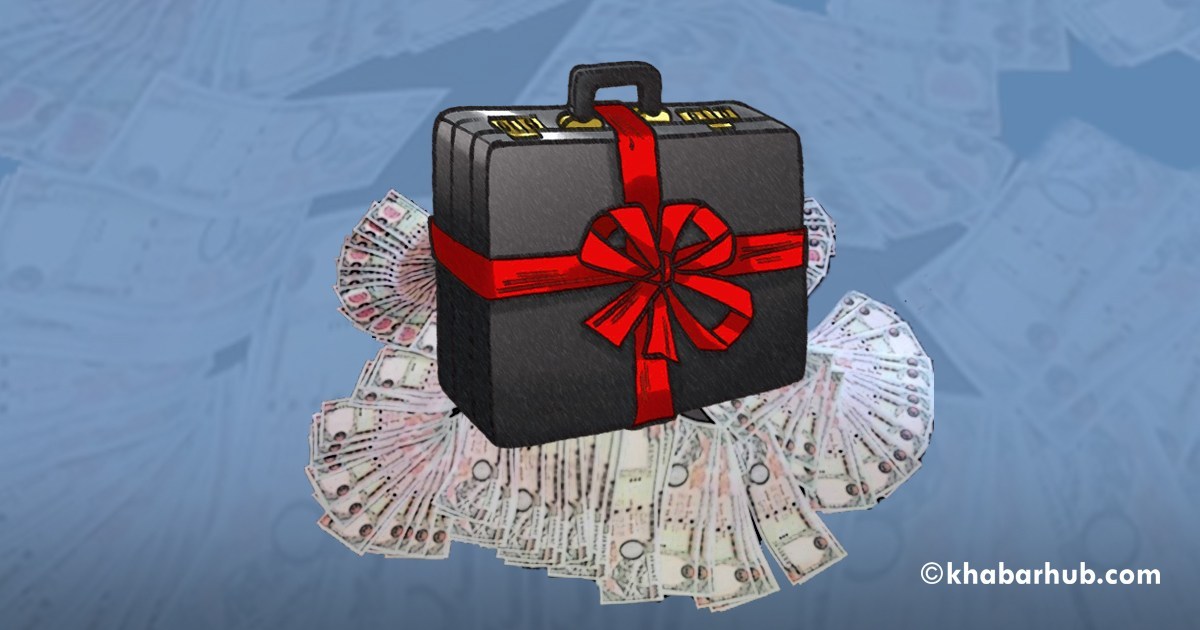
KATHMANDU: While Nepal’s economy shows steady growth across most indicators in recent years, the country’s revenue collection has failed to keep pace, raising concerns about tax leakage and informal economic activities.
According to the Ministry of Finance, except for a few years, Nepal’s GDP has consistently risen over the past decade. Key indicators such as foreign trade, new industrial registrations, remittance inflows, credit flow, government expenditure, social security payments, and pensions have all increased steadily.
However, despite growth in these economic activities, state revenue, particularly customs and tax collection, has not increased proportionally.
Data from the last five fiscal years show an overall rise in imports and exports. For example, import values grew from Rs 1.53 trillion in FY 2020/21 to Rs 1.80 trillion in FY 2024/25. Yet, customs revenue increased only marginally from Rs 420 billion to Rs 477 billion in the same period.
The Inland Revenue Department reports a significant rise in the number of registered taxpayers, including business Permanent Account Numbers (PAN), individual PANs, and VAT registrants. The number of registered industries also rose from 203 in FY 2020/21 to 622 in FY 2024/25.
Despite this, total tax revenue increased slowly, from Rs 429 billion in FY 2020/21 to Rs 577 billion in FY 2024/25—indicating challenges in fully capturing economic activities.
Remittance inflows have grown nearly one-third over the past five years, reaching NPR 1.53 trillion as of the latest data. While this has improved foreign exchange reserves and trade balance, much of the money is spent on consumption, with unclear impact on tax revenues.
A High-Level Economic Reform Commission report highlights that about 40% of Nepal’s economy operates informally, outside tax purview. Widespread tax evasion practices include lack of billing, customs leakages, and collusion among officials, contributing to revenue shortfalls.
Economist Anil Raj Bhattarai points out that over half of Nepal’s economy remains informal, explaining why revenue collection lags behind economic growth. Despite increasing government spending and borrowing, revenue does not reflect the expanding economic size.






Comment