




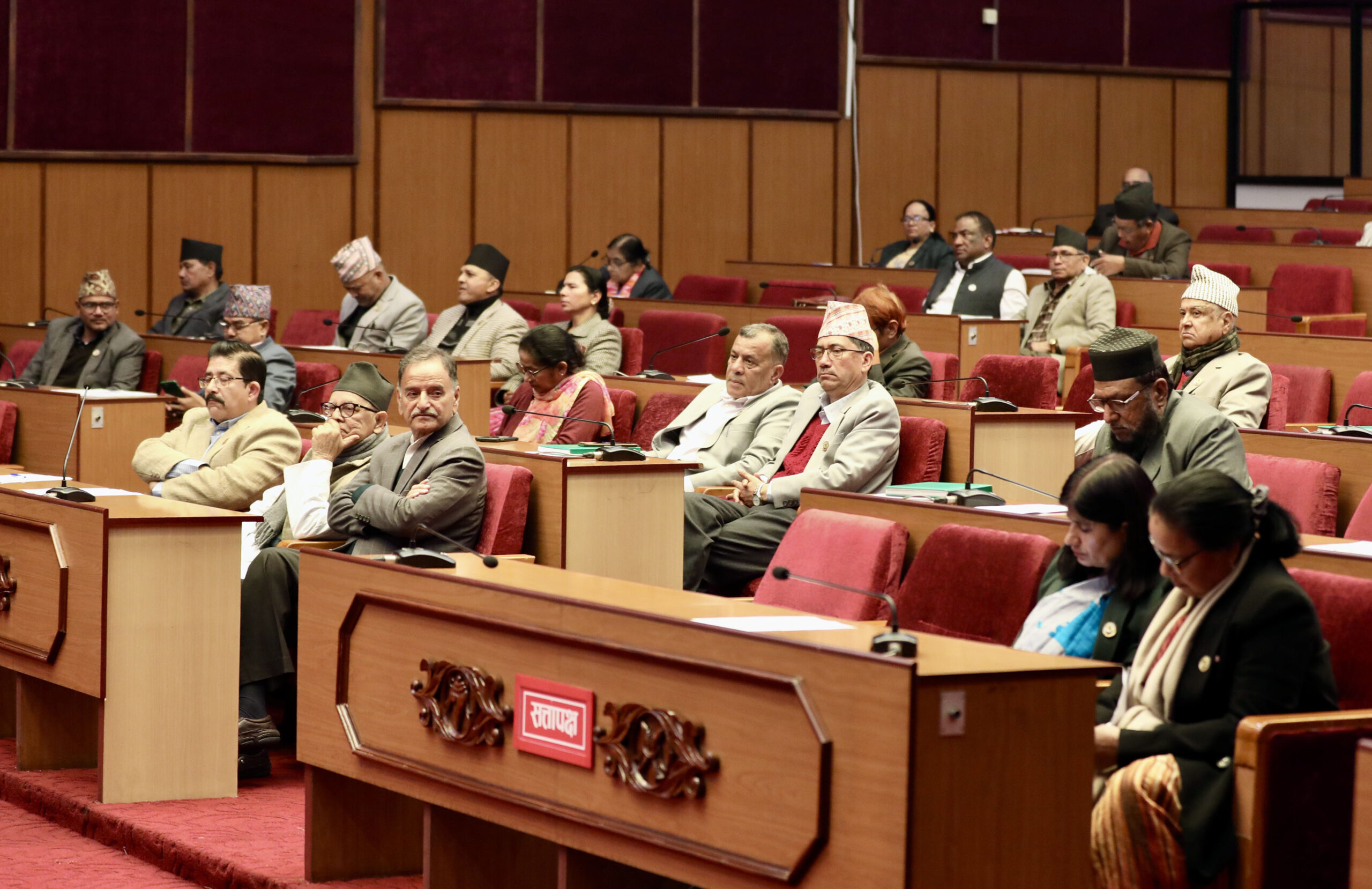
KATHMANDU: The Federal Civil Service Bill, which aimed to introduce a mandatory cooling-off period for retired bureaucrats before they can be appointed to political or high-level posts, has become the subject of intense debate in Nepal’s National Assembly.
The bill, unanimously endorsed by the State Affairs and Good Governance Committee of the House of Representatives earlier this year, is currently under review in the upper house’s Legislative Committee. Lawmakers had originally inserted a two-year cooling-off period to curb the growing trend of retired civil servants quickly securing political appointments, diplomatic posts, or donor-funded jobs.
However, during its passage in the lower house, the clause was altered — a move critics allege was done quietly to benefit influential bureaucrats eyeing immediate appointments.
The bill reached the National Assembly on July 2, after being tabled by Assembly Secretary Dr. Surendra Aryal. Federal Parliament spokesperson Ekram Giri confirmed that it has been compiled with amendments and sent to the Legislative Committee for further discussion. The upper house must return the bill to the lower house by September 3.
UML and Nepali Congress at odds
Ruling coalition partners are split over the cooling-off period provision. The CPN-UML has already registered a collective amendment proposal in the National Assembly seeking to remove the cooling-off requirement. On July 20, UML’s Gopal Bhattarai and four other lawmakers filed the proposal to scrap Clause 82(4) entirely, a change seen as favorable to senior officials and secretaries seeking immediate constitutional or diplomatic roles.
In contrast, the Nepali Congress has submitted its own amendment insisting on keeping the two-year restriction. Nepali Congress lawmakers Krishna Bahadur Rokaya and Anand Prasad Dhungana filed the proposal to restore the committee’s original provision, which bars any civil servant from taking constitutional or government posts within two years of resignation or retirement.
The provision was unanimously agreed upon in the State Affairs and Good Governance Committee, chaired by Ramhari Khatiwada, but controversy erupted after the clause was allegedly altered before the bill’s final tabling in parliament.
Parliamentary probe points to misconduct
Amid the dispute, the House of Representatives formed a special parliamentary probe committee on July 7, chaired by Nepali Congress MP Jeevan Pariyar, to investigate the alteration. The committee included members from the Congress, UML, Maoist Centre, Rastriya Swatantra Party, and Rastriya Prajatantra Party.
On August 5, the committee submitted its report, which raised serious ethical questions about Chief Secretary Ek Narayan Aryal and Committee Chair Ramhari Khatiwada. The report concluded that Aryal’s conduct had breached the dignity of his position and that Khatiwada should resign on moral grounds.
Path forward
Nepal’s Constitution, under Article 285, mandates the creation of a federal civil service. The law to govern it should have been enacted in 2015, but repeated delays stalled the process. The first draft of the Federal Civil Service Bill was registered in 2018, yet it languished in parliament for two years before being presented to the House of Representatives in April 2021.
Following disputes, the government withdrew the bill in October 2021. It was reintroduced on March 4, 2024, and sent to the State Affairs and Good Governance Committee for clause-by-clause review. The committee passed it unanimously on May 15 this year, including the cooling-off provision, before the House approved it on June 28.
However, the subsequent revelation that the clause had been modified before the final vote triggered the current political storm.
Both UML and Nepali Congress amendments are now before the National Assembly, and the Legislative Committee will determine whether the cooling-off clause stays or goes. Spokesperson Giri stressed that the upper house has full constitutional authority to decide.
“It is too early to say whether the clause will be reinstated or removed,” Giri said. “The National Assembly is a sovereign body, and the decision will come only after thorough discussion in the Legislative Committee.”
For now, the fate of one of the bill’s most contentious provisions, meant to strengthen integrity in Nepal’s bureaucracy, remains uncertain.


Comment