




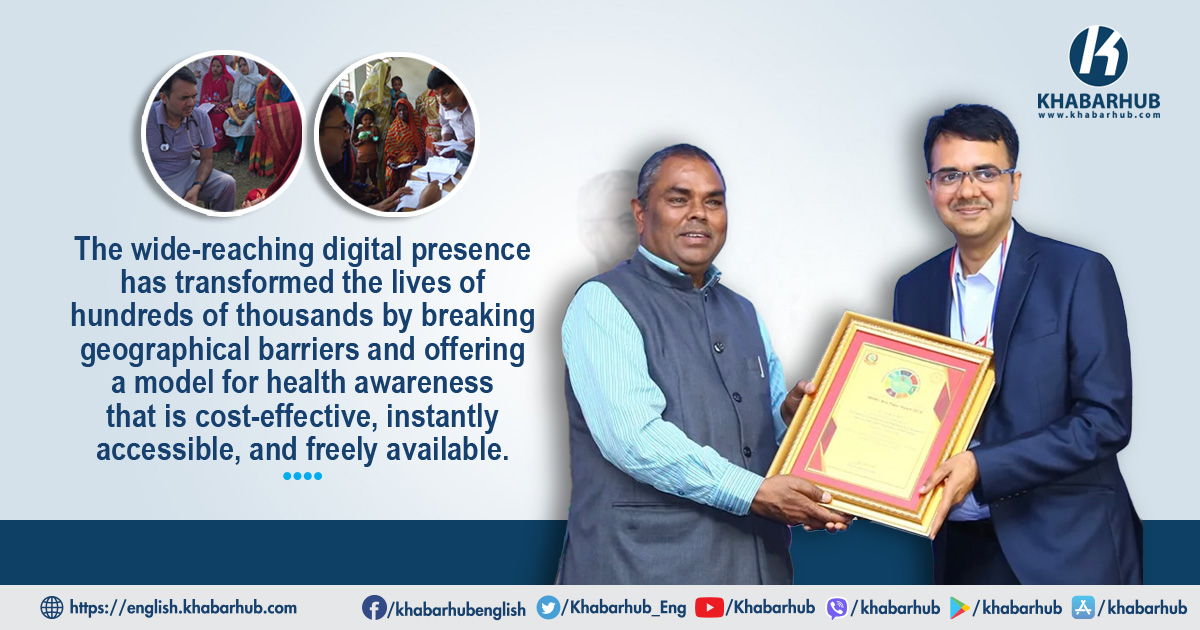
While most medical recognition focuses on new treatments, Dr. Om Murti Anil, a Nepali cardiologist, has quietly followed a different path that has got limited recognition. For nearly a decade and a half, he has dedicated himself to a mission whose impact is difficult to measure and even harder to reward. He chose to focus on heart disease prevention which is an area often underprioritized in public health.
Without holding any formal position in any major organization, he has continued his work as an individual for the betterment of society. A notable aspect of his work is that it has been entirely self-funded which reflects an independent approach to public health outreach.
As per a recent report, more than 70% of annual deaths in Nepal are due to non-communicable diseases and heart disease being the most common among them. However, Dr. Anil anticipated the growing burden of cardiovascular disease in the country long before it was widely recognized as a public health issue. Since the beginning of his career as a cardiologist in 2011, he worked with a long-term vision. His initiatives, to tackle heart disease, have reached tens of thousands of underserved people.
In a region where infrastructure to deal with the burden of heart disease is limited and insufficient, and the economy is poor to afford treatment, prevention especially through raising awareness is not only life-saving but also economically and socially beneficial.
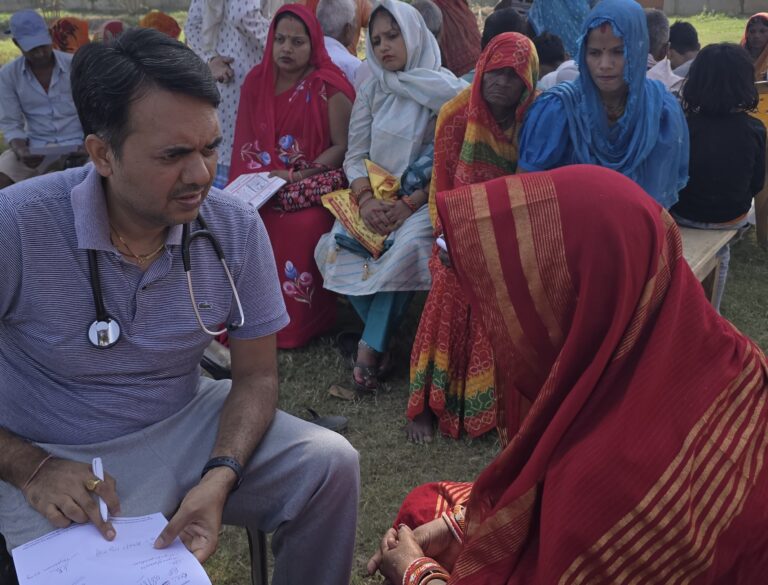
Over the past decade, more than 20,000 individuals have been served through his free heart camps, offering essential services such as ECGs, echocardiograms, consultations, and medications. A 2014 camp alone provided care to 6,800 people over 11 days and is considered the largest heart camp ever conducted in Nepal. Another camp in 2012, held in the rural village of Mahottari, reached over 5,000 individuals. These large-scale camps expanded access to cardiac services in areas where such care is limited.
For those with life-threatening conditions, the camps played a crucial role in enabling timely detection, helping prevent premature death or serious disability. For the majority, they offered a rare opportunity to undergo heart risk screening and take their first step toward better heart health.
Beyond direct patient care, he has organized several training sessions over this period to empower over 3,000 health professionals with knowledge and skill to strengthen primary care of heart patients in rural areas.
Dr. Anil’s impact extends beyond clinical practice. His large-scale social media presence, with nearly 2 million followers, stands out for being dedicated entirely to public health awareness rather than personal promotion. Through these platforms, he shares accessible, evidence-based information on heart health with audiences across Nepal, as well as in India, Bhutan, migrant workers in the Gulf region, and Nepali speaking communities around the world.
This wide-reaching digital presence has transformed the lives of hundreds of thousands by breaking geographical barriers and offering a model for health awareness that is cost-effective, instantly accessible, and freely available. In 2023, one of his awareness efforts led to setting a Guinness World Record for the largest cardiovascular health session conducted via Facebook Live. The initiative not only earned international recognition but also demonstrated the potential of digital outreach to extend public health education to diverse populations at scale.
His preventive work reflects a holistic approach that addresses heart disease from multiple angles. He has led awareness campaigns to educate the public on heart risk factors, promoted early detection through low-cost screenings, and ensured that even the underserved have access to care.
Dr. Anil’s efforts were not merely based on personal opinion or anecdotal experience but grounded firmly in scientific evidence and public health needs. In 2014, recognizing the lack of data on heart disease risk among younger populations, he personally funded and conducted Nepal’s largest heart risk study among the urban population, involving 5,530 young adults.
The study was carried out with high methodological standards, and it revealed alarming levels of hidden risk. The results of the study became a landmark contribution to the country’s understanding of non-communicable diseases. It was later published in a peer-reviewed journal and awarded the best research of the year by the Journal of Nepal Health Research Council. This work not only validated his early focus on prevention but also demonstrated that these interventions were rooted in data-driven, evidence-based medicine.
Such personal involvement is rare, particularly at this scale without institutional funding. Dr. Anil’s self-funded efforts, including heart camps and research, are rarely seen at this scale without institutional support. Such a multifaceted approach is especially relevant in resource-limited settings, where the efforts of government alone are insufficient to meet the demands of the growing burden of heart disease.
He authored a book, “Ma Pani Doctor”, in simple Nepali language more than a decade ago for the purpose of heart health awareness, and distributing 5,000 free copies to teachers and health workers to empower communities with accessible knowledge.
His free telemedicine services have reached over 3,000 individuals, helping to close healthcare gaps for rural residents and Nepali migrant workers abroad. Rather than focusing on isolated interventions, he has built a model of prevention that is broad, inclusive, and sustained. It reaches people before disease onset and creates practical pathways for long-term health.
The 2024 “Smokers Are Not Selfish” campaign is a striking example of Dr. Anil’s health awareness efforts, demonstrating the measurable influence he can achieve through public trust and motivation. Within two weeks, over 2,500 people quit smoking, proving his ability to drive behavioral change in society.
This is particularly true in Nepal, where heart disease has emerged as the biggest public health problem. In such a context, an initiative led by a professional from the private sector is especially worthy of recognition and broader discussion.
Smoking cessation goes beyond preventing premature deaths; it carries wider social and economic impacts. Quitting smoking is not just saving one life, but also about saving families and helping communities. His decade-long efforts suggest that sustained initiatives, even with limited resources, can contribute meaningfully to public health. He has created a model that can be adapted to other settings.
Dr. Anil hasn’t just played a role in influencing common people by empowering them with knowledge to take care of their health themselves, but has also inspired the medical fraternity to view public health as a responsibility beyond the clinic.
His regular appearances in national media and public forums since the beginning have further amplified key messages about lifestyle changes, early screening, and the long-term benefits of prevention.
In a region where infrastructure to deal with the burden of heart disease is limited and insufficient, and the economy is poor to afford treatment, prevention especially through raising awareness is not only life-saving but also economically and socially beneficial.
This is particularly true in Nepal, where heart disease has emerged as the biggest public health problem. In such a context, an initiative led by a professional from the private sector is especially worthy of recognition and broader discussion.

Comment