




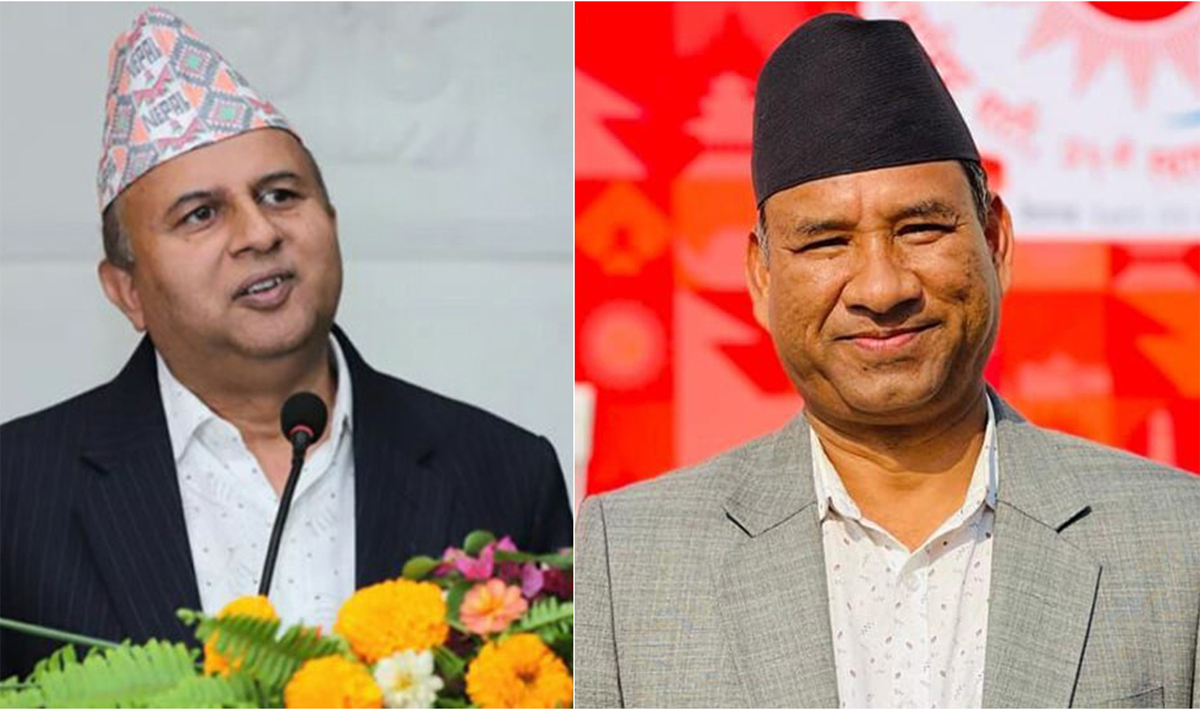
KATHMANDU: Cracks within the Communist Party of Nepal (Unified Marxist-Leninist) [CPN-UML] are becoming increasingly apparent as a power struggle between Chair KP Sharma Oli and former President Bidya Devi Bhandari’s factions intensifies.
The latest flashpoint involves standing committee member Karna Bahadur Thapa, a close confidante of Bhandari, who has publicly criticized General Secretary Shankar Pokharel’s conduct and leadership style.
The simmering tensions came to a head during a recent gathering at the party’s central office in Chyasal, ostensibly organized by the party secretariat to discuss the upcoming General Convention.
Thapa vehemently objected to Pokharel’s alleged monopolization of the event, claiming the General Secretary delivered a “one-sided speech” without allowing for broader discussion.
“The General Convention-related gathering was limited to the General Secretary’s speech,” Thapa stated emphatically. “They distributed three different versions of the statute printed by the office, which was deceptive, and we weren’t given an opportunity to present the true facts.”
He added that he felt compelled to speak out to prevent confusion from spreading within the party ranks.
This isn’t the first time Thapa has voiced his discontent.
Earlier, in a social media post, he accused Pokharel of fostering factionalism at the party office since the 10th General Convention, alleging that Pokharel has been prioritizing his own position over the party chairman. Thapa also lashed out at those who “falsely praise” the chairman and pretend to be his protectors, calling their “threatening language” against party interests.
He also issued a stern warning to those aspiring to “become a chief by misleading the leadership.” “If anyone thinks they will always be the chief, they should free themselves from that mindset,” Thapa asserted. “I have stood for truth even in difficult circumstances, and I will stand for truth again.”
Thapa urged all CPN-UML members to engage in fact-based discussions rather than resorting to personal attacks, highlighting the growing factional conflict within the party.
This public spat signals a deepening internal struggle that could have significant implications for the CPN-UML’s future direction.




Comment