





KATHMANDU: Economic Digest offers a concise yet comprehensive overview of significant business happenings in Nepal, presented in easily digestible summaries.
Nepal’s economic and environmental landscape is undergoing significant shifts, marked by both policy-driven optimism and systemic vulnerabilities. The NEPSE’s recent rise, driven by investor confidence in new monetary reforms, reflects momentum in financial markets, yet an EY report underscores structural challenges, with over half of the economy still informal.
Meanwhile, climate-related disasters—such as glacial lake outbursts and monsoon-triggered floods—have disrupted transport and pilgrimage routes, highlighting urgent needs for resilience planning. In agriculture, Madhes Province faces a drought emergency, while labour market instability worsens with rising outsourcing and weak enforcement.
Infrastructure developments like the 80% complete Madhyamewa Hydropower Project and newly inaugurated health and food outlets in Ilam and Kathmandu suggest forward strides, but sustaining this progress requires integrated responses to Nepal’s fiscal, environmental, and governance challenges.
NEPSE rises by 27.84 points amid policy optimism and fiscal-year adjustments
The Nepal Stock Exchange (NEPSE) climbed 27.84 points last week, ending at 2,731.80 as investors anticipated a more flexible monetary policy and year-end market adjustments. Gains were seen primarily in the banking sector (+3.67%), while the life insurance sector declined by 1.80%. Notable performers included Bhagawati Hydropower (+18.31%) and Goodwill Finance Debenture (–18.49%). Nepal Reinsurance led trading volumes with transactions worth Rs 2.24 billion. Total turnover rose to Rs 41.58 billion, with overall market capitalization increasing by Rs 46 billion to Rs 4.551 trillion.
Report finds 51% of Nepal’s economy remains informal
An Ernst & Young (EY) report has revealed that over half of Nepal’s economy—approximately 51% of GDP—is driven by unregistered, untaxed activity, ranking the country third globally in terms of shadow economy size. Only Sierra Leone and Niger rank higher. While down from 60% in 2000, progress in formalizing the economy has stalled. Contributing factors include low tax compliance, limited access to formal credit, and widespread informality in agriculture and real estate. Experts warn that without reforms to encourage registration and institutional strengthening, the informal sector will continue to hamper investment and revenue growth.
Floods and landslides block five major highways across Nepal
Heavy monsoon-triggered floods and landslides have disrupted transportation across Nepal, blocking five key highways, according to Nepal Police. The Koshi Highway in Sankhuwasabha, Pasang Lhamu Highway in Rasuwa, Araniko Highway in Sindhupalchok, and sections of the Bheri Corridor in Rukum West and Dolpa are currently impassable. Additionally, routes such as the Kaligandaki Corridor and Shahid Highway are partially open for one-way traffic after temporary clearance efforts. Authorities are actively working to restore full connectivity and have advised travelers to confirm road conditions before departure.
New monetary policy eases lending rules, boosts investor confidence
Nepal Rastra Bank’s latest monetary policy includes measures aimed at reviving the economy and encouraging private sector lending. The policy rate has been lowered to 4.5%, while the bank rate remains at 6%, making credit more accessible. The home loan cap has been raised to Rs 30 million, and the limit on share-backed loans has increased to Rs 250 million per family. Additionally, the foreign travel currency limit for Nepali citizens has been increased to USD 3,000. These changes are expected to support real estate and capital markets, while improving overall financial liquidity.
TAAN urges diplomatic response after border bridge collapse halts Mansarovar pilgrimage
The Trekking Agencies’ Association of Nepal (TAAN) has called on the government to engage diplomatically with China following the collapse of the Nepal-China Miteri Bridge in Rasuwagadhi due to flooding in the Lhende stream. The incident has interrupted pilgrimages to Mount Kailash via routes such as Tatopani, Korola, and Hilsa. TAAN President Sagar Pandey urged immediate coordination with Chinese authorities to resume travel and simplify visa processing. TAAN also extended condolences to flood victims and requested prompt rescue and recovery operations.
Consecutive glacial lake outbursts in Nepal raise alarm among climate experts
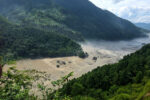
Nepal has experienced two severe flash floods within a year—Khumbu in 2024 and Lhende in 2025—both caused by supraglacial lake outbursts, raising serious concerns about climate vulnerability in the Himalayas. ICIMOD has confirmed that Dijachho Lake and a glacial lake on the Tibetan side were responsible for the events, which caused damages exceeding $30 million. Experts are calling for urgent climate action, improved monitoring systems, and expansion of early warning coverage, noting that only two glacial lakes—Imja and Tsho-Rolpa—currently have early warning mechanisms in place.
Madhes Province declares drought emergency as paddy planting drops to 25%
Facing an alarming rainfall deficit, Madhes Province has declared a drought emergency after only 25% of paddy fields were planted during the monsoon season. The provincial cabinet cited environmental instability and prolonged dry conditions, urging the federal government and international donors for immediate assistance. Cracks are appearing in existing plantations, and seedlings are drying out, threatening a severe agricultural crisis. Emergency drinking water supplies are also being mobilized in urban areas like Birgunj through water tanker distribution.
Dharahara earns over Rs 48 million in ticket revenue since reopening
Since reopening on November 24, 2024, the iconic Dharahara tower has attracted over 262,000 visitors and generated more than Rs 48.36 million in ticket revenue. The site operates daily except Wednesdays from 10:30 a.m. to 5 p.m., drawing an average of 1,200 visitors per day. Ticket prices range from Rs 200 for Nepali citizens to Rs 1,000 for tourists from non-SAARC countries. Additional revenue streams include parking, photography, and advertising services. Officials believe the tower’s footfall could increase further with extended visiting hours.
Prime Minister Oli inaugurates 15-bed hospital in Ilam’s Mai Municipality
Prime Minister KP Sharma Oli officially opened a newly built 15-bed hospital in Ilam’s Mai Municipality on Saturday. Constructed at a cost of Rs 100.7 million, the facility spans 10.5 ropanis and will provide round-the-clock healthcare services including emergency care, diagnostic testing, X-ray, ECG, and pharmacy support. The hospital also integrates health insurance services to make care more accessible for the local population and surrounding communities.
NRB unveils monetary policy aimed at boosting housing, stock markets
Nepal Rastra Bank (NRB) has released its monetary policy for fiscal year 2082/83 with several reforms to stimulate investment. The residential loan ceiling has been increased from Rs 20 million to Rs 30 million, and the loan-to-value ratio has been raised to 80%. Stock market lending limits have also been lifted to Rs 250 million per family. The central bank has cut the policy rate from 5% to 4.5% to improve liquidity and lower borrowing costs. Additional measures include support for bank recapitalization, rights share issuance, and relaxed dividend rules for microfinance institutions.
Nepal sees 40% decline in horse and mule population over a decade
Nepal’s population of horses and mules has decreased by 40% over the past ten years due to the expansion of road networks and declining reliance on traditional transport. Government data shows the population dropped from 55,800 in 2072 BS to just 33,900 in the current fiscal year, with a peak of 68,700 in 2073 BS. Once crucial for trade and travel in remote regions, these animals are now becoming scarce as modern transport systems replace older routes.
Yasoda Foods opens second ‘Current Point’ outlet in Kathmandu
Yasoda Foods, the maker of the popular “Current Noodles,” has launched its second ‘Current Point’ outlet in Anamnagar, Kathmandu, following the success of its first location in Butwal. The new outlet was inaugurated on Asar 27 (July 12) with brand ambassador and actress Keki Adhikari in attendance, drawing a large crowd. Chairman Chunna Prasad Paudel stated that the expansion is aimed at meeting growing demand for spicy noodle dishes in the capital. Global CEO GP Shah highlighted the company’s broader snack offerings. Founded in 2017, Yasoda Foods exports to more than 22 countries and is recognized for combining bold Nepali flavors with international quality.
Outsourced labor rises in Nepal as labour rights weaken, GEFONT warns
A new report from the General Federation of Nepalese Trade Unions (GEFONT) shows that outsourced labor in Nepal’s industries surged to 14.91% in 2024, nearly doubling from 2022. The trend has led to growing insecurity for workers, with 77.2% of companies using outsourced staff failing to meet minimum wage or benefit requirements. The report also highlights a shift toward part-time and contract work. Labor law violations are widespread, with 29% of firms not complying with wage regulations. Weak enforcement, underfunded labor offices, and slow economic recovery have worsened the situation. GEFONT has called for stronger labor protections and institutional reforms.
Gagan Thapa returns from Asia Climate Summit, calls for fair carbon trade
Nepali Congress General Secretary Gagan Thapa has returned from the Asia Climate Summit held on July 9 in Thailand, where he advocated for equitable carbon trade under Article 6 of the Paris Agreement. Reflecting on Nepal’s limited gains from the earlier Clean Development Mechanism, Thapa emphasized the urgency of action. He highlighted Nepal’s potential in carbon markets through its forests and clean energy initiatives. With international interest growing, Thapa urged the government to act swiftly to secure funding opportunities and ensure Nepal doesn’t fall behind in global climate finance.
Monsoon rains and poor roads lead to tourist decline in Baglung homestays
Homestays in Baglung’s Bhakunde and Kathekhola villages have seen a sharp decline in visitors due to heavy monsoon rains and deteriorating road conditions. Popular for mountain views and rural experiences, the area usually draws tourists during this time, but operators say business has come to a halt. With road damage making travel difficult, guest numbers have dropped significantly. Local officials have pledged improvements to infrastructure and promotion of rural tourism once the weather stabilizes, with hopes for recovery starting mid-September.
Madhyamewa Hydropower Project in Taplejung reaches 80% completion
The 73.5 MW Madhyamewa Hydropower Project in Mikwakhola Rural Municipality, Taplejung, has achieved 80% physical progress since its launch in 2021. The underground powerhouse structure has been completed, and key features such as a 5.2-km tunnel and a nearly finished 10.7-km transmission line are nearing completion. Despite a 13-month delay caused by the COVID-19 pandemic, construction has accelerated. Once completed, the project will generate 436 GWh of electricity annually. With a total investment of approximately NPR 18 billion, the project is scheduled for completion by March 2026.




Comment