




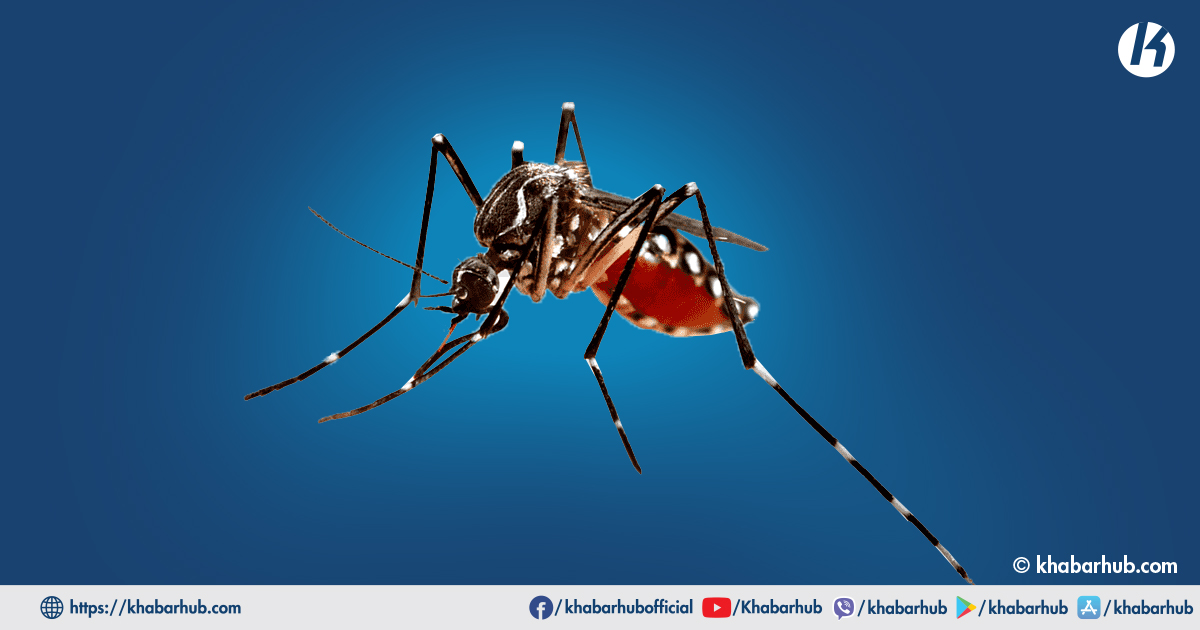
GANDAKI: Dengue infection has already spread to 73 districts this year, according to the Epidemiology and Disease Control Division.
The Division has warned that over 60,000 people could be infected, urging heightened vigilance. Since the risk remains high from mid-July to mid-October, all three levels of government have begun preparations for the prevention and management of the disease.
In Pokhara, the capital of Gandaki Province—which was a hotspot for dengue last year—community-level awareness and orientation programs are being actively conducted.
Public Health Inspector Rajendra Regmi from the Pokhara Metropolitan City Health Division said that sporadic cases have already been detected in the Lekhnath area.
“As the high-risk period is approaching, we have conducted orientation programs focused on prevention,” he said. “Students from grades 7 to 10, female health volunteers, and other groups have been made aware of protective measures.”
He also informed that the health division is preparing dengue test kits and providing training to health workers to strengthen response capacity.
Last year, more than 8,600 people were infected in Pokhara, and three deaths were recorded. The Provincial Health Ministry had designated Pokhara as a dengue hotspot at the time, with infection rates rising sixfold between mid-August and September.
Although the metropolitan city has initiated ward-level campaigns to identify and destroy mosquito breeding grounds, Regmi admitted that controlling dengue remains a major challenge.
“It is difficult to prevent and control dengue unless individuals, families, and communities actively participate. That’s why we’re emphasizing public awareness again this year,” he said.
Authorities have urged the public to eliminate mosquito breeding sites by preventing water from collecting in open containers, puddles, tires, drums, and utensils at homes, offices, and public areas. The Aedes aegypti mosquito, which transmits dengue, breeds in clean, stagnant water—particularly inside unused tires and similar containers.
A campaign is underway to disrupt the mosquito life cycle by destroying such breeding grounds.
Dr. Kiran Tiwari, Chief of Dhawalagiri Provincial Hospital, said that avoiding mosquito bites is the most effective way to prevent dengue. Two dengue patients have been admitted to the hospital since May.
Dr. Tiwari emphasized the importance of timely testing and treatment. “Symptoms include sudden high fever, bleeding, headaches, and body aches. While most patients recover with basic treatment, the infection can become serious and even fatal in some cases,” he said.
“There’s no need to panic,” he added. “But if symptoms such as vomiting, nosebleeds, black stools, or extreme fatigue appear, the patient should be treated under close medical supervision.” He advised infected individuals to rest, stay hydrated, and avoid self-medicating.
Dr. Tiwari also cautioned that pregnant women and children are at higher risk of complications and should take extra precautions.
Last year, Kaski and Tanahun were among the most affected districts. With dengue typically spreading from Asar to Kartik, Public Health Inspector Regmi warned that the disease could take the form of an epidemic if not contained in time. He stressed the need for increased vigilance in urban areas, where high population density accelerates transmission.





Comment