




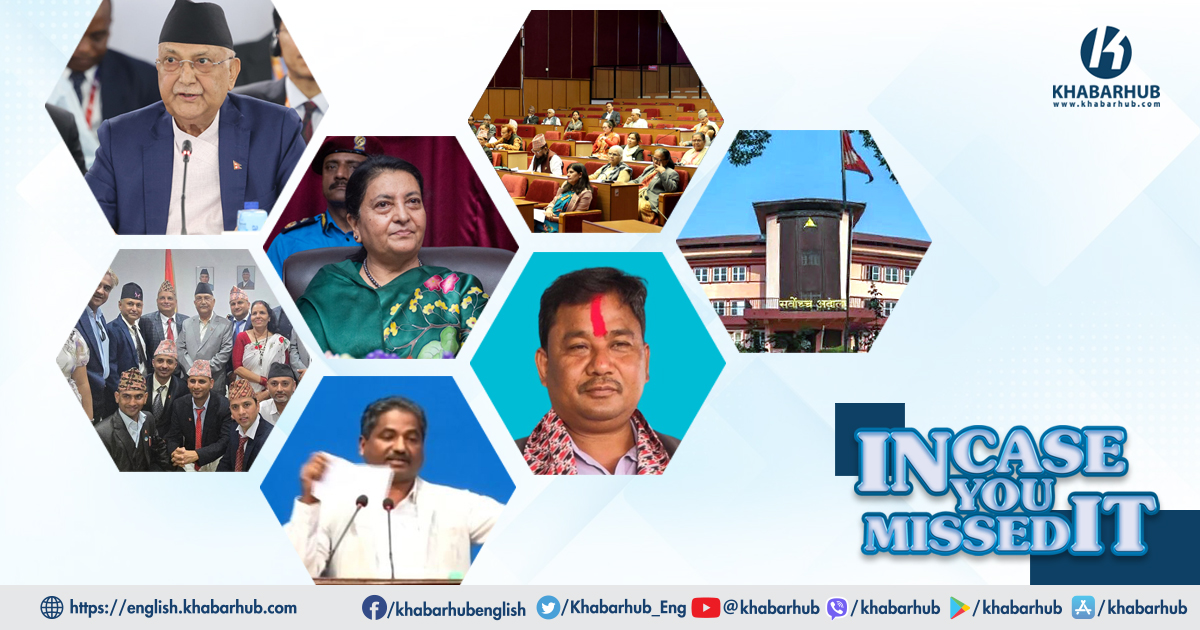
KATHMANDU: Last week in Nepal was marked by significant political and developmental developments, highlighting both the country’s growing international engagement and ongoing domestic challenges. Prime Minister KP Sharma Oli returned from a high-profile visit to Spain, where he participated in the UN Financing for Development Conference and sought to boost foreign investment and diaspora involvement.
Meanwhile, the Supreme Court upheld controversial constitutional appointments, underscoring persistent legal and political tensions. Internal dynamics within the ruling CPN-UML party intensified with former President Bidya Devi Bhandari’s political comeback, while governance issues surfaced at the provincial level amid ministerial dismissals.
Against this backdrop, legislative debates, provincial development initiatives, and the national airline’s struggles further illustrated Nepal’s complex path toward political stability and sustainable growth.
Prime Minister KP Sharma Oli’s International Engagement and Diplomatic Outreach
Prime Minister KP Sharma Oli’s visit to Spain for the Fourth International Conference on Financing for Development (FFD4) marked a significant step in Nepal’s diplomatic and economic outreach. His active participation in high-level dialogues, bilateral meetings, and chairing of the Least Developed Countries (LDC) session underscored Nepal’s aspiration to position itself as a proactive voice among LDCs and Small Island Developing States (SIDS). The emphasis on sustainable development and innovative financing solutions aligns with Nepal’s own development challenges and priorities.
PM Oli’s engagement with Spanish investors and his calls for enhanced investment climate reforms signal a deliberate pivot towards attracting foreign direct investment (FDI) and integrating Nepal more closely with global economic networks. However, these ambitions face structural constraints at home, including bureaucratic inefficiencies and political instability, which remain critical factors for investors.
The Prime Minister’s appeal to the Nepali diaspora in Spain to return and contribute to national development also highlights the government’s recognition of the diaspora’s potential role in knowledge transfer, capital inflows, and entrepreneurship. This is a strategic move to leverage human capital for economic progress.
Judicial Validation and Political Stability Challenges
The Supreme Court’s majority ruling to uphold the appointments of 52 constitutional office bearers — all made during Oli’s previous tenure — is a moment of judicial affirmation for the government’s past actions. Nonetheless, the narrow 3-2 verdict and dissenting opinions reveal underlying legal and political contestations that persist in Nepal’s governance landscape. The controversy around appointments made during a period of limited Constitutional Council participation reflects ongoing tensions between different branches of government and political factions.
Such disputes underline the fragility of institutional consensus and the challenge of consolidating democratic governance in Nepal, where political rivalries often impede institutional coherence.
Internal Party Dynamics and Leadership Contestation in CPN-UML
The political ripple effects triggered by former President Bidya Devi Bhandari’s return to active politics and re-entry into the CPN-UML spotlight critical internal power dynamics. Bhandari’s renewed engagement and potential leadership ambitions expose fissures within the UML, particularly concerning succession and the future direction of the party.
This internal contest, set against the backdrop of the party’s upcoming Second Statute Convention, reveals the tensions between entrenched leadership under PM Oli and emerging challengers advocating generational change. It also reflects broader questions about political renewal in Nepal’s dominant parties and the negotiation between experience and reform.
Governance and Accountability in Provincial Administration
The dismissal of Sudurpaschim Province Minister Rameshwar Chaudhary amid allegations of corruption and refusal to resign exemplifies ongoing struggles with governance and accountability at sub-national levels. It highlights the importance of provincial government vigilance against malpractices, especially in sectors such as forestry and agriculture, which have direct impacts on livelihoods and environmental sustainability.
This episode also demonstrates how political considerations intersect with administrative decisions, as provincial leadership seeks to assert control and uphold standards within coalition arrangements.
Political Protest and Legislative Friction
The dramatic act of tearing the Federal Civil Service Bill by Aam Janata Party Chairman Prabhu Sah underscores rising political tensions and social anxieties over proposed reforms perceived as exclusionary. His vehement opposition suggests a wider apprehension among marginalized groups about equitable access to government employment and social mobility.
This event signals that legislative reform processes in Nepal remain highly politicized and vulnerable to mass mobilization, posing challenges for building consensus on public sector governance reforms.
Provincial Development and Tourism Promotion
The declaration of ‘Koshi Province Tourism Year’ and associated promotional campaigns illustrate efforts to stimulate regional economic development through tourism. Such initiatives, focusing on media outreach and roadshows, are positive steps towards diversifying provincial economies and harnessing Nepal’s natural and cultural assets. Effective implementation will be key to translating these plans into sustainable economic benefits for local communities.
Upcoming Electoral and Legislative Developments
With by-elections slated for November and the Citizenship Amendment Bill moving through legislative channels, Nepal’s political calendar remains active. These developments will test the government’s capacity to manage electoral processes transparently and handle sensitive citizenship issues, which have historically been sources of social tension.
Nepal Airlines’ Enduring Challenges
As Nepal Airlines marks 67 years of operation, its continued financial woes and limited market presence highlight systemic challenges facing state-owned enterprises in Nepal. Despite expanded international routes and fleet upgrades, NAC struggles with debt, inefficiency, and competition. Reform efforts remain incomplete, pointing to the need for stronger institutional reforms, clearer strategic vision, and enhanced governance to ensure its viability and contribution to Nepal’s connectivity.
Overall Reflection
Last week’s events illustrate a complex interplay of Nepal’s efforts to enhance international engagement, navigate domestic political contestations, pursue economic development, and strengthen governance. Prime Minister Oli’s foreign diplomacy and investment outreach reflect ambition for Nepal’s global integration, but internal political challenges—ranging from judicial disputes to party factionalism and governance controversies—pose risks to political stability and reform momentum. At the provincial and societal levels, initiatives in tourism promotion and public service reform reveal ongoing attempts to drive inclusive development, even as political protest and institutional weaknesses challenge these goals.
Nepal stands at a crossroads where strategic diplomatic advances must be matched by deepened political consensus and institutional strengthening to fulfill its development aspirations.





Comment