




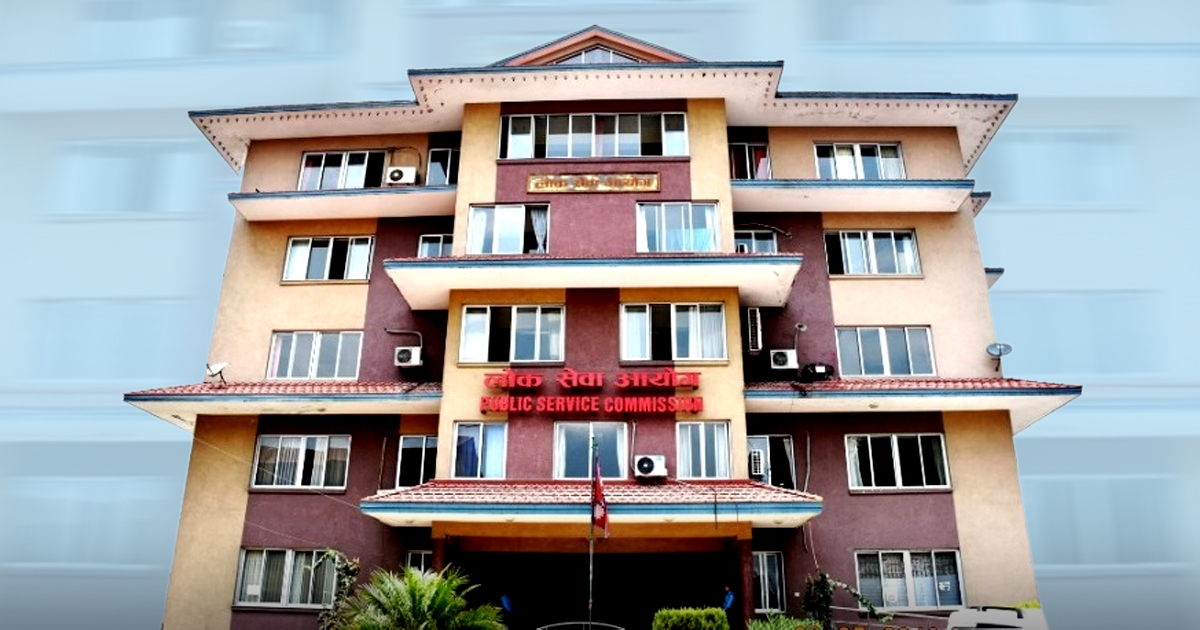
KATHMANDU: The Public Service Commission (PSC), guided by the core values of competence, impartiality, and integrity, is celebrating its 75th anniversary today, marking the occasion as its Diamond Jubilee with a series of events and programs.
In the lead-up to today’s celebration, the Commission has already conducted a variety of activities throughout the week, including eye camps, blood donation drives, and talent recognition programs.
The PSC, established under the Constitution of Nepal, is responsible for conducting written examinations and selecting candidates for various positions within the Civil Service, Nepal Army, Nepal Police, Armed Police Force, and other federal institutions.
Diamond Jubilee-related events are being organized across all Commission offices — three in Kathmandu and 11 outside the capital — including the central office.
The Commission has announced that the Diamond Jubilee celebration is being held under the chief patronage of President Ram Chandra Poudel. It has also planned year-long commemorative programs to honor the milestone.
Geeta Kumari Humagain, spokesperson for the Commission, said a special Diamond Jubilee emblem will be used throughout the year to mark the occasion.
In recognition of the long-standing service of Bhuvan Man Singh Pradhan, who served as Secretary for nearly 30 years, the Assembly Hall at the central office has been named in his honor.
The PSC continues to fulfill its constitutional mandate with the guiding motto: “Competence, Integrity, Fairness: Commitment of the Public Service Commission.”
Its responsibilities include developing curricula, preparing question papers, conducting examinations, evaluating answer sheets, and publishing results for open competitive examinations.
It also provides recommendations for appointments, promotions, transfers, and retirements, and advises the government on matters related to civil service laws and personnel management.
Through its rigorous and merit-based selection process, the Commission plays a key role in maintaining fairness and efficiency in Nepal’s public administration.




Comment