




KATHMANDU: This year, the production of wild cliff honey in Nepal’s Myagdi district has dropped by an alarming 75 percent compared to previous seasons, local honey hunters have reported.
Lok Bahadur Paija, a seasoned honey hunter from Swat in Annapurna Rural Municipality–5, said that while his team collected around 1,000 liters of honey last year, they managed to harvest only about 200 liters this year.
His team conducted a two-day honey hunt on the steep cliffs of Chhahari Bhir and Chhisko Tauko near Swat village.
Paija attributed the drastic drop to dry winters and untimely rainfall during the honey-harvesting season, which disrupted bee foraging.
With flowers in short supply, the bees ended up consuming much of the honey themselves, leaving little for collection.
Cliff honey hunting is a seasonal tradition in the highlands of Myagdi, including Annapurna, Raghuganga, and Dhaulagiri rural municipalities, particularly during the Nepali month of Jestha (May–June). Spring and autumn are considered ideal seasons for honey hunting—spring in the lower hills and autumn in higher altitudes.
Moti Prasad Paija, a honey hunter from Khoriya in Dhaulagiri Rural Municipality–2, shared a similar experience. His team harvested only 500 liters this year, compared to 2,000 liters last year.
Hunters from other renowned honey sites like Gurja and Mudi in Dhaulagiri, Chimkhola and Kuinemangle in Raghuganga, and Histan in Annapurna have also reported significant declines in harvests.
The giant Himalayan honeybee, which nests in steep cliffs, feeds on wildflowers in the forest. During winter, these bees migrate to lower elevations in search of warmth and return to the highlands as temperatures rise.
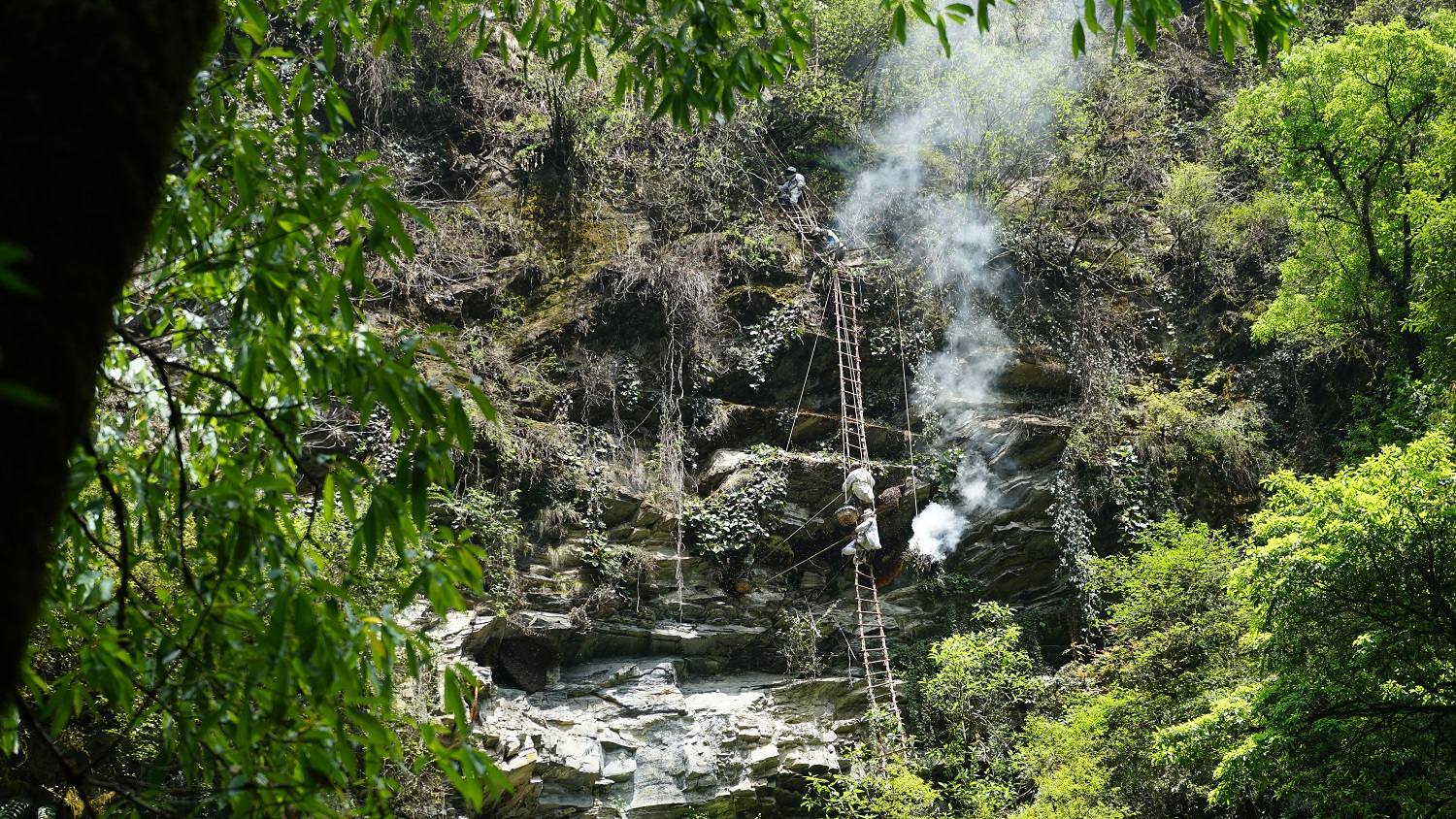
Harvesting cliff honey is a dangerous endeavor. Using ropes known locally as parang, honey hunters dangle from sheer cliffs to reach the nests. One team remains at the top to manage ropes, while another at the base collects the honey brought down.
During harvesting, smoke is used to drive away the bees, which cluster around their honeycombs. Once the bees disperse, the lead hunter cuts the comb, and the honey is lowered in containers using ropes. The process requires great caution, as bees become aggressive and hunters often have to hide behind rocks or in caves until it is safe.
Highly valued for its medicinal properties and unique flavor, cliff honey fetches a high price in the market, ranging from Rs. 3,000 to Rs. 3,500 per liter. It is also used in traditional rituals and is considered a prized gift, especially among people living abroad or in urban centers.





Comment