





KATHMANDU: Economic Digest offers a concise yet comprehensive overview of significant business happenings in Nepal, presented in easily digestible summaries.
Nepal’s economy reflects a mix of cautious optimism and structural challenges, as seen in recent developments across financial, infrastructural, and policy domains. The NEPSE index reversed after a brief rally, signaling investor uncertainty, even as gold prices climbed—highlighting a shift toward safer assets amid liquidity-tightening measures by Nepal Rastra Bank, which plans to withdraw Rs 40 billion from the banking sector.
Inflation has dropped to a 51-month low of 2.77%, providing relief to consumers, while SEBON’s study on a second stock exchange suggests regulatory interest in improving capital market competitiveness. Budgetary trends reveal high fiscal pressure, with nearly Rs 300 billion allocated for salaries and pensions, and provincial spending at Rs 117 billion, indicating underutilization of available funds.
Meanwhile, infrastructure projects like the Gwarko flyover and Mirchaiya–Katari–Ghurmi road are progressing, albeit slowly, and key hydropower initiatives face uncertainties—from low water levels in Kulekhani to policy shifts affecting PPAs for ROR projects.
On the trade front, EV imports via Rasuwagadhi reflect a growing interest in green transport, although customs delays persist. The labor pact with Saudi Arabia and active tourism around the Trishuli River show positive movement in labor mobility and domestic tourism, respectively, even as revenue enforcement tightens, with over 2,200 VAT-registered firms suspended.
Overall, the economic landscape is shaped by a balancing act between tightening monetary policy, ambitious infrastructure planning, and cautious market sentiment.
NEPSE drops after two-day rally
After two consecutive days of gains, the Nepal Stock Exchange (NEPSE) index declined on Wednesday, falling by 13.69 points to settle at 2,664. Trading volume also dipped slightly, with daily turnover decreasing from NPR 1.016 billion to NPR 990 million. A total of 77 companies saw share prices rise, 170 declined, and one remained unchanged. All sector indices declined except for hydropower, which rose by 1.13 percent. The finance sector, which had jumped 5 percent a day earlier, dropped by 1.31 percent.
Gold price increases in Nepali market
Gold prices rose on Wednesday, with the rate for hallmark gold climbing by Rs 1,300 per tola from the previous day. According to the Federation of Nepal Gold and Silver Dealers’ Association, the new price for hallmark gold is Rs 191,300 per tola, up from Rs 190,000 on Tuesday. Silver prices remained unchanged at Rs 1,165 per tola.
SEBON releases feasibility report on second stock exchange
The Securities Board of Nepal (SEBON) has made public a report by its study committee on the need for a second stock exchange. Headed by NRB Director Chintamani Shiwakoti, the report suggests that a competitive stock exchange could boost market performance by 30–50 percent. However, it recommends restructuring the existing Nepal Stock Exchange before issuing a new license.
NRB to withdraw Rs 40 billion from banking system in a day
Nepal Rastra Bank (NRB) plans to absorb Rs 40 billion from the banking sector on Wednesday in a move to curb excess liquidity. The central bank has issued a 20-day deposit collection auction, open to banks and financial institutions. The minimum bid is Rs 100 million, and bids must be made in multiples of Rs 50 million. Both the principal and interest will mature on Ashad 18 (July 2), with the interest rate determined through the bidding process.
Inflation drops to 51-month low of 2.77 percent
Nepal Rastra Bank reports that year-on-year consumer inflation in Baisakh dropped to 2.77 percent, the lowest in 51 months. Last year in the same month, inflation was 4.40 percent. After peaking at an average of 8.64 percent in Bhadra 2079, inflation has steadily declined, reaching this multi-year low.
Nearly Rs 300 billion set aside for salaries and pensions
The government has allocated nearly Rs 300 billion for civil servant salaries and pensions in the upcoming fiscal year. This accounts for a significant share of the Rs 1.964 trillion total federal budget. The government has estimated recurrent expenditure at Rs 1.180 trillion—Rs 171 billion more than the previous year.Over 14,500 electric vehicles imported via Rasuwagadhi in a decade
More than 14,500 electric vehicles manufactured in China have been imported through the Rasuwagadhi border over the past ten years. Many of these EVs are currently parked in Timure, Ghattekhola, and Rasuwagadhi due to customs clearance delays. According to Rabindra Pyakurel, Information Officer at Rasuwa Customs Office, 2,570 vehicles have completed customs procedures and moved toward Kathmandu.
Budhigandaki project faces new uncertainty
The future of the Budhigandaki Hydropower Project has become uncertain once again. Previously slated for development through government funding, the 1,200 MW reservoir-based project will now be pursued under a public-private partnership (PPP) model, according to the fiscal year 2082/83 (2025/26) budget. Clause 224 of the budget states that the government’s investment will be converted into equity shares in the project.
Provinces spend Rs 117 billion in 10 months
In the first ten months of the current fiscal year, Nepal’s provincial governments spent Rs 117 billion, according to NRB data. They mobilized Rs 161.77 billion during the same period. Based on recommendations by the National Natural Resources and Fiscal Commission, the federal government allocated Rs 60 billion in fiscal equalization grants, Rs 25.84 billion in conditional grants, and Rs 6.2 billion in supplementary grants to the provinces.
NEA invites PPAs amid budget change for ROR projects
On Baisakh 30 (May 13), Nepal Electricity Authority (NEA) selected 54 hydropower projects and requested necessary documents from companies within a month to initiate power purchase agreements (PPAs). These projects could generate an additional 4,865 megawatts, specifically those above 10 MW connected to the grid before Chaitra 12 (March 25). However, the recent budget speech announced a shift in policy: PPAs for run-of-river (ROR) projects will be based on NEA’s electricity consumption rather than production.
Nepal and Saudi Arabia agree on skilled labor pact
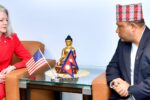
Nepal’s Minister for Labor, Employment, and Social Security, Sharatsingh Bhandari, reached an agreement with Saudi Arabia’s Deputy Minister for International Affairs, Tariq Al Hamad, to facilitate the employment of Nepali workers. The agreement, made during a bilateral meeting in Geneva, paves the way for immediate deals on the certification of general and skilled workers. However, negotiations are ongoing regarding domestic worker arrangements.
Gwarko flyover being paved, may face delay due to rain
Blacktopping work has begun on the Gwarko flyover, which started in the second week of Jestha after completion of structural works. Although the project was scheduled to finish by the end of Jestha, rain disruptions may delay its completion, according to Pradeep Bhandari, spokesperson for the Department of Roads’ Quality Research and Development Center.
Bagmati Province finalizing budget for 2025/26 fiscal year
The Bagmati Provincial Government is in the final stage of preparing its budget and policies for the upcoming fiscal year 2082/83 (2025/26), aiming to unveil it on Asar 1 (June 15). To maintain confidentiality, provincial ministries have shut their offices and even paused internal discussions. Minister for Economic Affairs and Planning Kundan Raj Kafle stated that the new budget will prioritize production. Earlier government policies had emphasized agriculture and tourism promotion, inclusive economic growth, infrastructure development, and environmental conservation.
Kulekhani reservoir water level continues to fall
Water levels at the Kulekhani reservoir, Nepal’s only storage-based hydropower facility, have been decreasing steadily. By Monday evening, the level at Indrasarovar had dropped to 1,486.39 meters above sea level. Project chief Taradatta Bhatta explained that Kulekhani I, II, and III are all operating continuously at full capacity due to increased electricity demand and a lack of rainfall. He noted that the level could drop further to a minimum of 1,484 meters if needed.
Karnali lags in capital budget implementation
Karnali Province continues to show poor performance in executing its capital budget for the current fiscal year 2081/82 (2024/25). Despite having a strategic plan, tangible progress remains minimal as the fiscal year nears its end. However, the provincial government claims that spending will increase, citing the acceleration of multi-year and sequential development projects. Chief Minister Yamlal Kandel has been visiting various districts to inspect infrastructure works and to push for better capital expenditure.
Mirchaiya–Katari–Ghurmi road construction to start next fiscal year
The government plans to begin construction of the Mirchaiya–Katari–Ghurmi road in the upcoming fiscal year to improve connectivity in six districts. The 72.02-kilometer stretch falls under the Siddhicharan Highway (classified as a feeder road) and is expected to significantly enhance transportation and economic activities in Solukhumbu (Salleri), Sankhuwasabha, Okhaldhunga, Khotang, Udayapur (Katari), and Siraha (Mirchaiya). The current single-lane road will be upgraded to a double-lane route, according to the Department of Roads.
2,200 VAT-registered taxpayers suspended by Nepalgunj tax office
The Inland Revenue Office in Nepalgunj has suspended 2,200 VAT-registered businesses for failing to submit their returns. Chief Purna Prasad Neupane said that their transactions have now been frozen. The Inland Revenue Department has intensified efforts to enforce compliance, targeting those who haven’t filed returns in over six months.
Heatwave drives crowds to Trishuli River for rafting and cliff jumping
With the monsoon stalled and temperatures rising, more people are heading to the Trishuli River to escape the sweltering heat. Just a two- to three-hour drive from Kathmandu and Chitwan, the river has seen a surge in visitors. Many are enjoying not only rafting but also cliff jumping into its cool waters, making it a popular spot to beat the heat.
Nepal SBI Bank joins NepalPay network under agreement with NCHL
Nepal SBI Bank has signed a deal with Nepal Clearing House Limited (NCHL) to obtain principal membership in the NPS–NCS and the domestic NepalPay card scheme. The agreement was signed by the bank’s Deputy CEO and Chief Operating Officer Bikash Anand and NCHL CEO Nilesh Man Singh Pradhan.
Stalls allotted for Nepal Mobility Expo 2025
All stall allocations have been completed for the Nepal Mobility Expo 2025, set to take place from Shrawan 21 to 25 (August 6–10) at Bhrikutimandap, Kathmandu. Organized by the Nepal Automobile Importers and Manufacturers Association (NAIMA), the event will feature 50 brands across four-wheelers, two-wheelers, and commercial vehicles. Out of 48 stalls, 21 have gone to four-wheeler brands, 18 to two-wheelers, and 9 to commercial vehicles. NAIMA President Ritu Singh Vaidya confirmed that all stalls are now booked.


Comment