




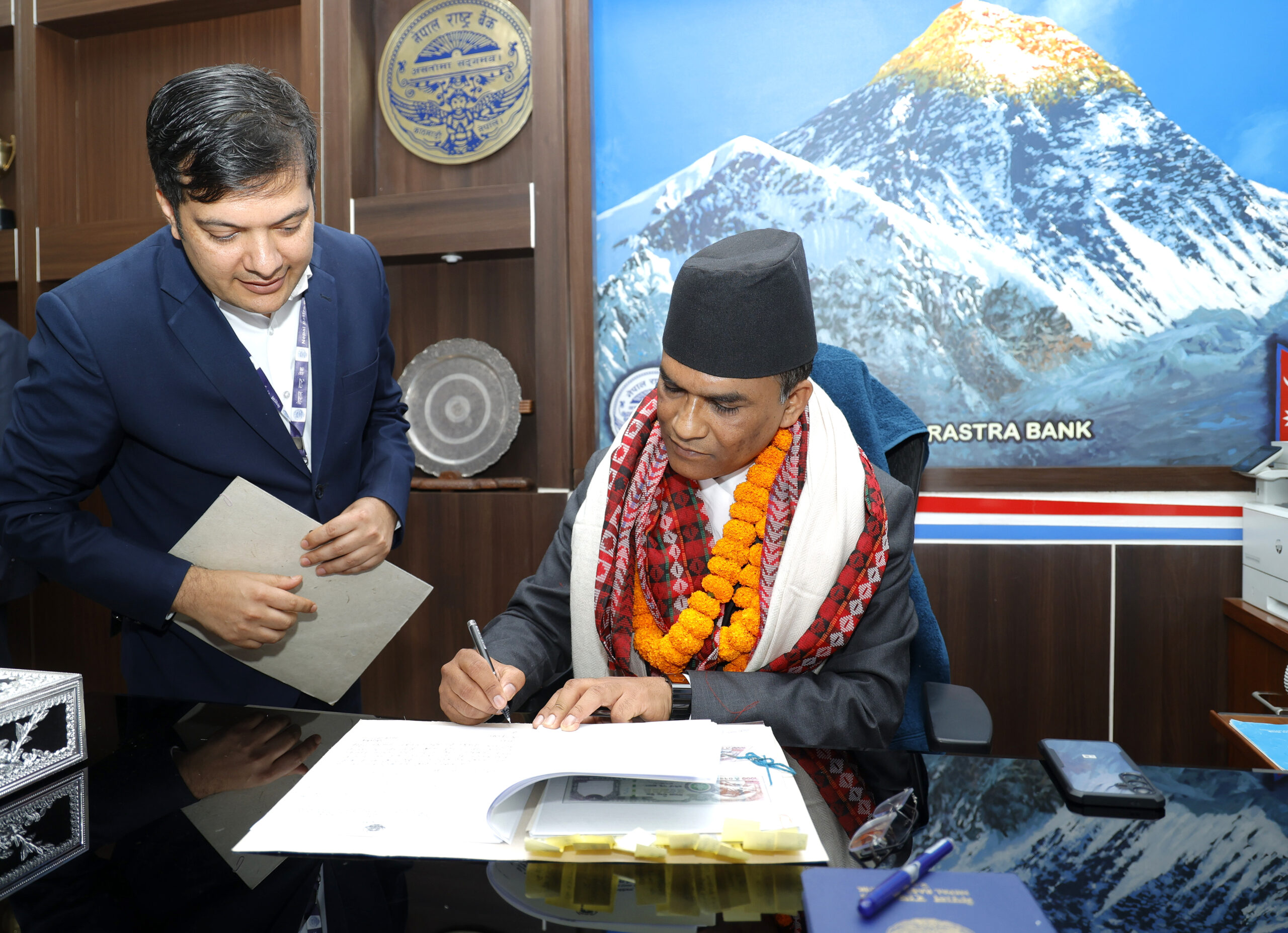
KATHMANDU: After a prolonged tussle, the government on Tuesday appointed economist Dr. Biswo Nath Poudel as the Governor of Nepal Rastra Bank (NRB).
Dr. Poudel holds a PhD from the University of California, USA, and is an expert in economics, agricultural resources, resource management, labor economics, and economic history.
He has previously served in various international organizations, worked as a visiting professor at multiple universities, and was also the Vice-Chairman of the National Planning Commission. While some criticisms have surfaced linking his appointment to political affiliations, his capability to lead the central bank has not been questioned.
Analysts say Governor Poudel faces multiple challenges, including the country’s weak economy, Nepal being placed on the FATF grey list, increasing investable liquidity in the banking sector, coordination with fiscal policy, and alignment with NRB staff.
According to experts, Poudel will also likely face legal challenges due to his political ties. His main challenges can be outlined in the following eight points:
Building a credible banking sector
Economist Keshav Acharya noted that international institutions, especially the IMF, lack full trust in Nepal’s banking sector and have sought to conduct their own assessments of major banks. Thus, one of Poudel’s major tasks will be to restore trust in the sector.
“There are international concerns about Nepal’s banking system, implying doubts over NRB’s supervision and auditing standards,” Acharya said. “There’s also the issue of rescheduling loans that had matured.”
He emphasized that rebuilding the credibility of the banking sector lies squarely on Poudel’s shoulders.
Removing Nepal from the FATF grey list
Nepal is currently on the Financial Action Task Force (FATF) grey list, which negatively affects foreign trade, remittance inflows, foreign investment, and the overall economy. Experts argue that it is the Governor’s critical responsibility to lead efforts to get Nepal off this list.
Data released Tuesday by NRB showed a sharp rise in suspicious transactions in 2024 compared to 2023. However, only 20.6% of these transactions were analyzed by the Financial Information Unit, highlighting a severe gap in scrutiny.
Former Governor Dr. Dipendra Bahadur Kshetry stated that since FATF raised issues in the banking sector, the central bank bears the primary responsibility for resolution.
Mobilizing liquidity
According to NRB’s latest data, there is over Rs 10 trillion in investable liquidity in Nepal’s banking sector, but demand remains low. Mobilizing this liquidity is a key challenge for Governor Poudel.
Former Governor Kshetry said that although deposit levels are high and interest rates have dropped to single digits, investment has not followed suit. Economist Acharya added that creating an investment-friendly environment is essential.
Acharya also highlighted the increasing number of blacklisted borrowers—now over 100,000 in a small economy like Nepal—adding pressure to boost employment, revenue, and overall economic activity through efficient banking operations.
Coordinating monetary and fiscal policy
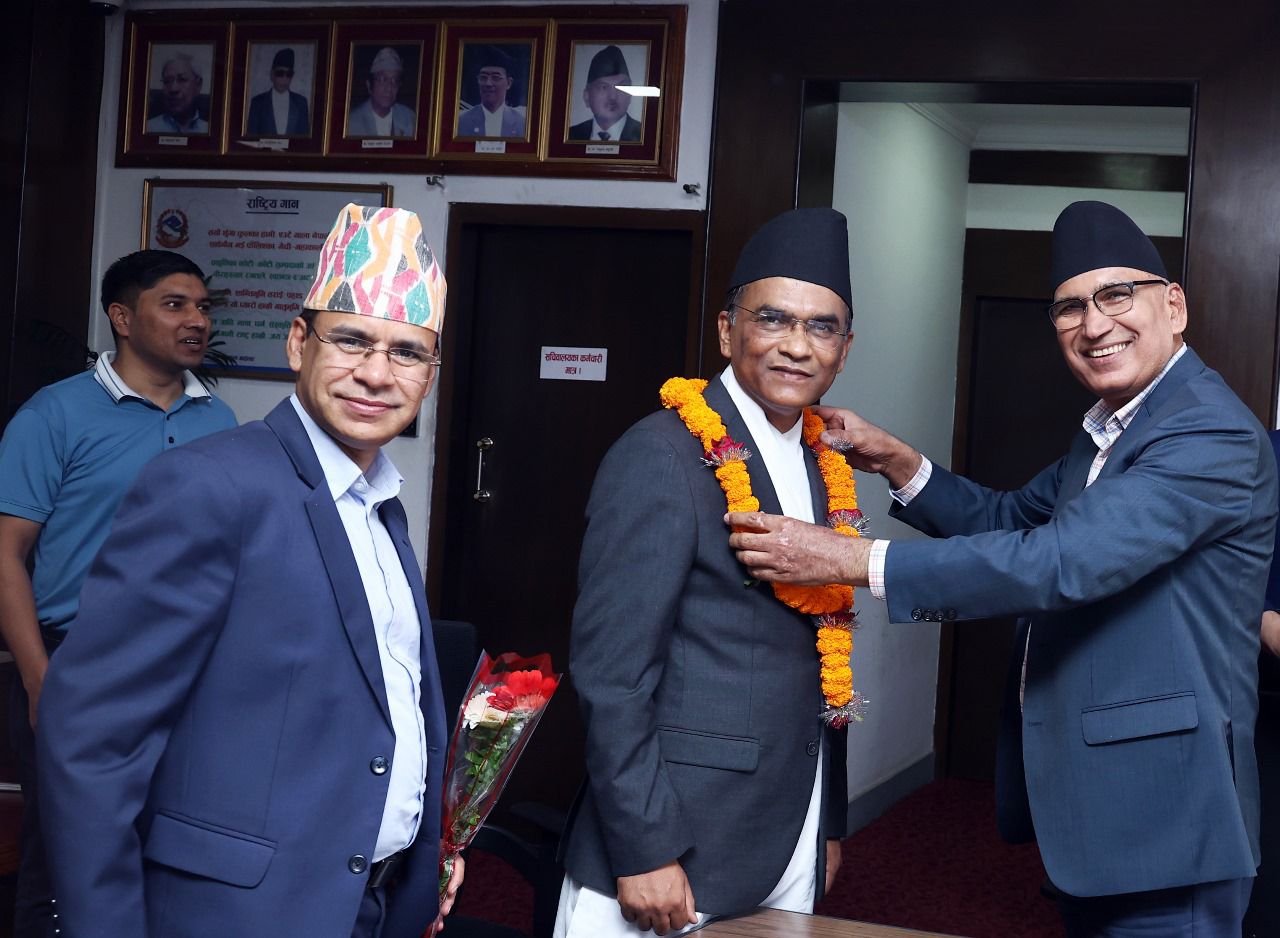
Governor Poudel’s predecessor, Maha Prasad Adhikari, had significant conflicts with finance ministers. The government led by Prime Minister Pushpa Kamal Dahal even attempted to remove Adhikari from office.
During Adhikari’s tenure, poor coordination between monetary and fiscal policy was heavily criticized by the private sector and analysts alike. Experts emphasize that maintaining harmony with the government’s fiscal policy is a key responsibility of the central bank governor.
“Even the private sector pointed out this discord. The governor must coordinate with the government effectively,” said Acharya.
Unifying the central bank internally

Poudel was appointed from outside NRB, despite internal competition from Deputy Governors and Executive Directors. He is known to be close to the Nepali Congress and even ran as a parliamentary candidate for the party in 2022, though he lost.
Experts say winning the trust of NRB’s trade unions and employees will be a tough task. Acharya noted that NRB has never been as politicized as it is now and emphasized that Poudel must work diligently to unify the institution.
“If he behaves in a partisan way inside NRB, it could lead to serious problems,” Acharya warned. He added that NRB houses many talented individuals who need encouragement and inclusion.
Former Governor Kshetry also stressed the importance of building good relations with internal staff, given that only one faction had supported Poudel’s appointment.
Legal challenges
The Nepal Rastra Bank Act, 2002, prohibits political party members from being appointed as Governor. Former Governor Adhikari faced controversy for allegedly being linked to the UML party.
Now, with Poudel having actively served under the Nepali Congress and being publicly appointed on that basis, legal challenges may arise. “He was appointed as a Congress nominee, so there may be legal consequences, which both he and the government will have to address,” said Kshetry.
Effective supervision of the banking sector
NRB data shows a rising volume of non-performing loans (NPLs) across all categories of banks, with an average NPL ratio reaching 5.24%.
Experts argue that weak supervision under the previous governor led to problems in institutions like Karnali Development Bank. Strengthening regulatory oversight will be a crucial responsibility for the new governor.
Regulation of microfinance and cooperatives
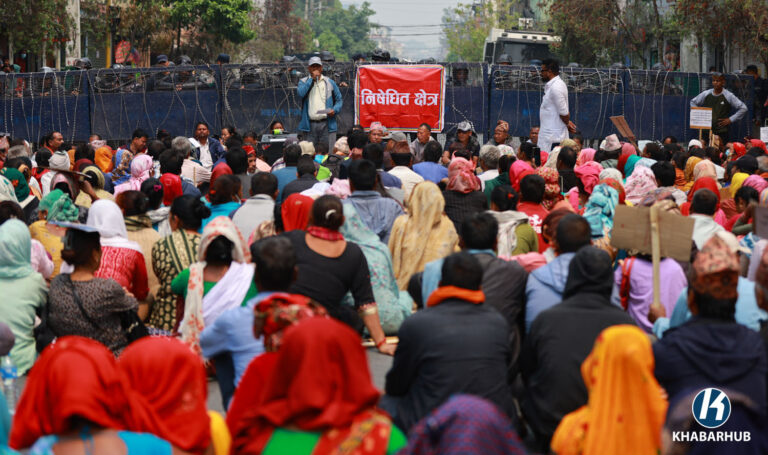
The microfinance and cooperative sectors have been facing long-standing issues, with affected stakeholders even staging prolonged street protests. Regulating and resolving problems in these sectors is another major responsibility for Dr. Poudel.
Former Governor Kshetry pointed out that as Nepal prepares to graduate to a developing country by 2026 and aims to meet Sustainable Development Goals (SDGs) by 2030, NRB must play a pivotal role in resource mobilization.






Comment