




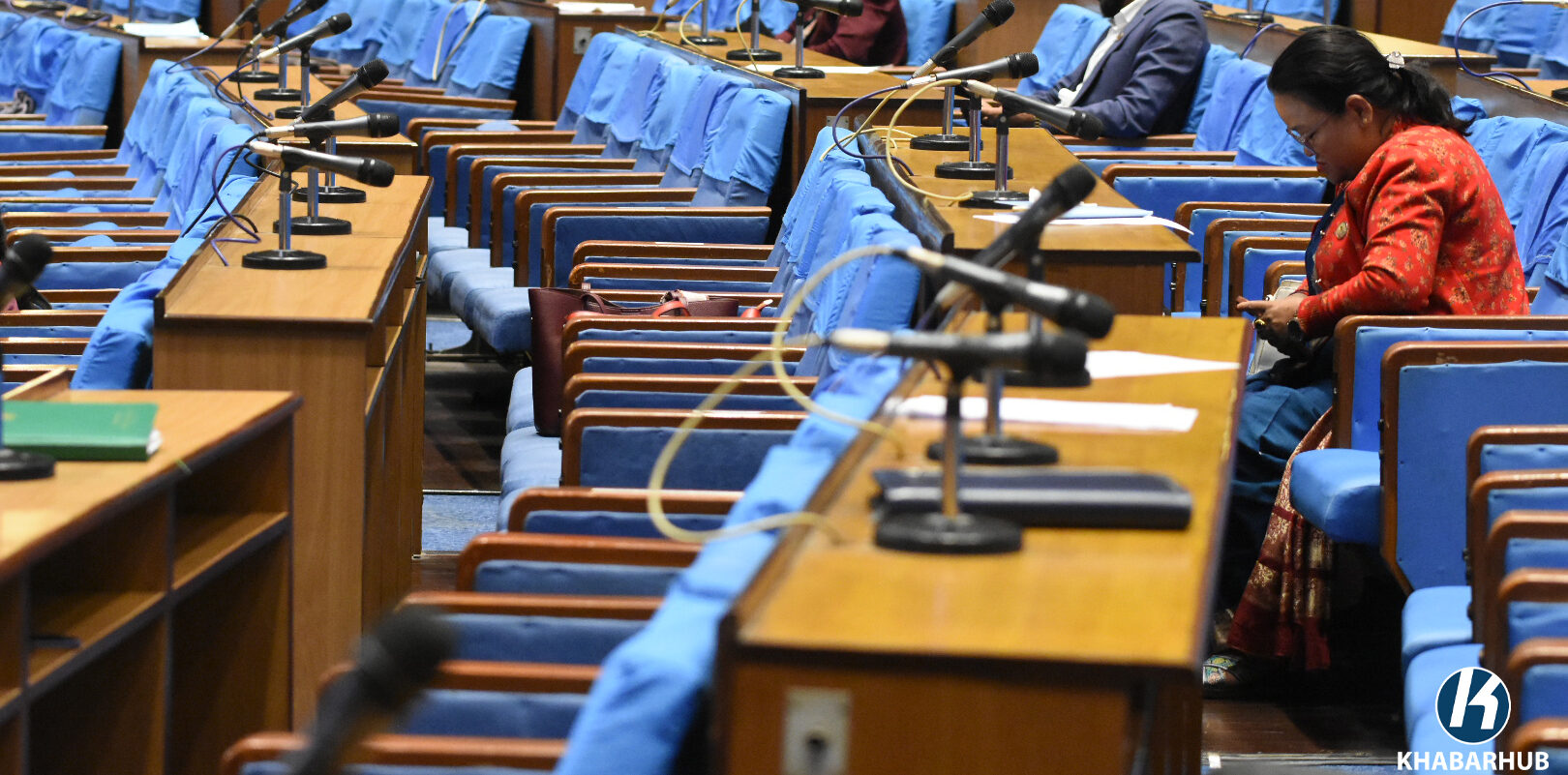
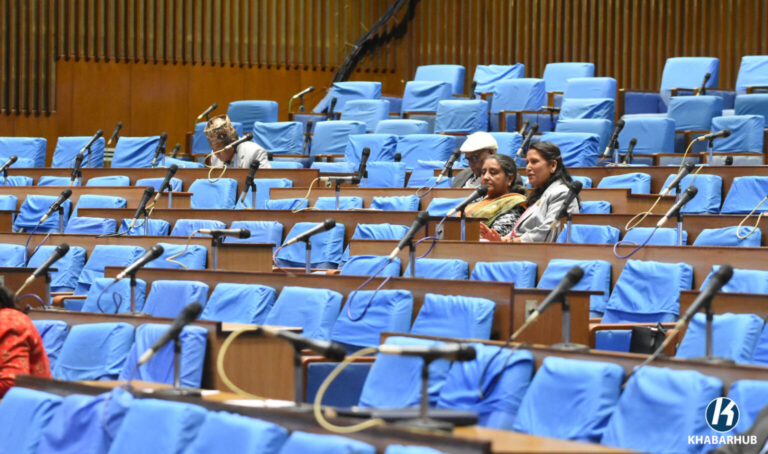
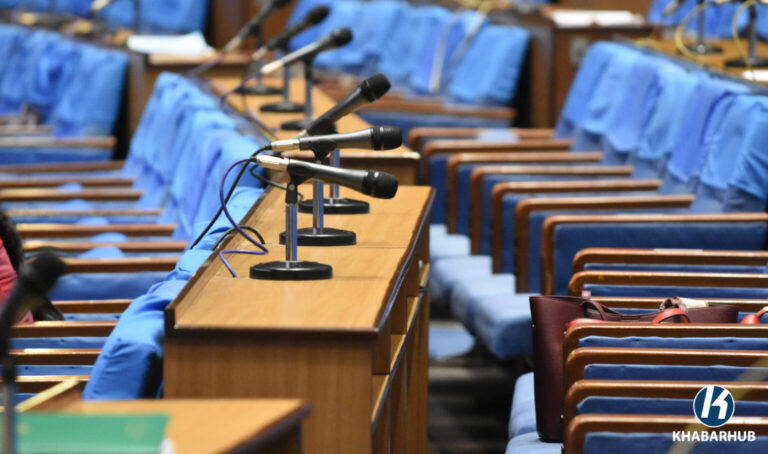
KATHMANDU: In a striking display of political apathy, the House of Representatives (HoR) sat eerily half-empty on Tuesday as lawmakers failed to show up for one of the year’s most critical debates — the discussion on the government’s policies and programs for the upcoming fiscal year.
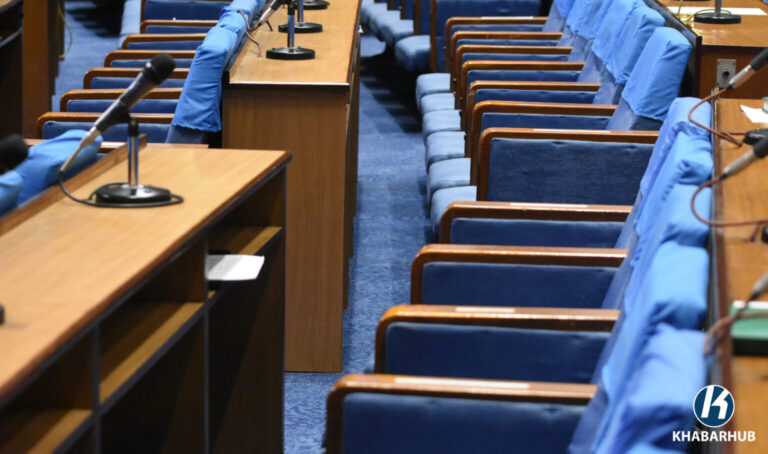
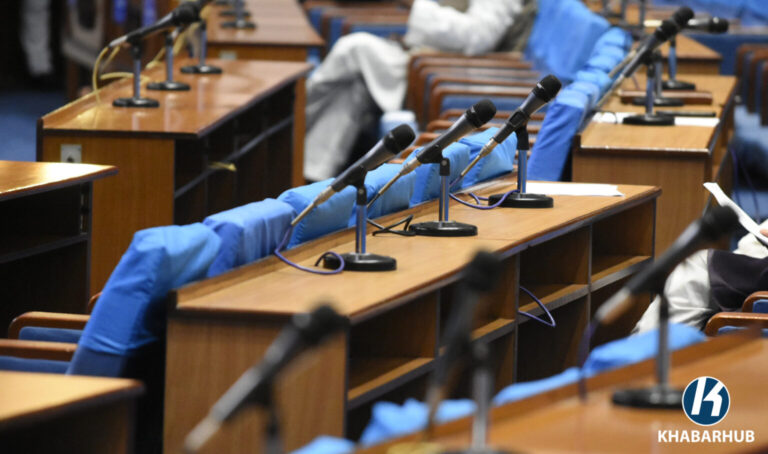
Presented with pomp and ceremony by President Ram Chandra Paudel last week, the policies and programs were expected to ignite spirited deliberation in the chamber. Instead, rows of empty chairs told a different story — one of disinterest, disconnect, and disregard.
Though the government, backed by a nearly two-thirds majority, had hoped to rally support around its annual plan, even members of the ruling coalition were noticeably absent. Opposition lawmakers, meanwhile, dismissed the document as a tired ritual, offering little in the way of hope or innovation.
But beyond political rhetoric, what resonated most on Tuesday was the silence — a chamber designed for discourse, now reduced to a hollow echo of parliamentary democracy. The symbolic weight of empty seats during such a pivotal session has not gone unnoticed by observers and citizens alike.
In a country where every policy affects livelihoods, development, and national direction, the lawmakers’ absence from such a forum raises serious questions: Who is listening? Who is debating? And most importantly, who is accountable?
Photos: Nepal Photo Library





Comment