




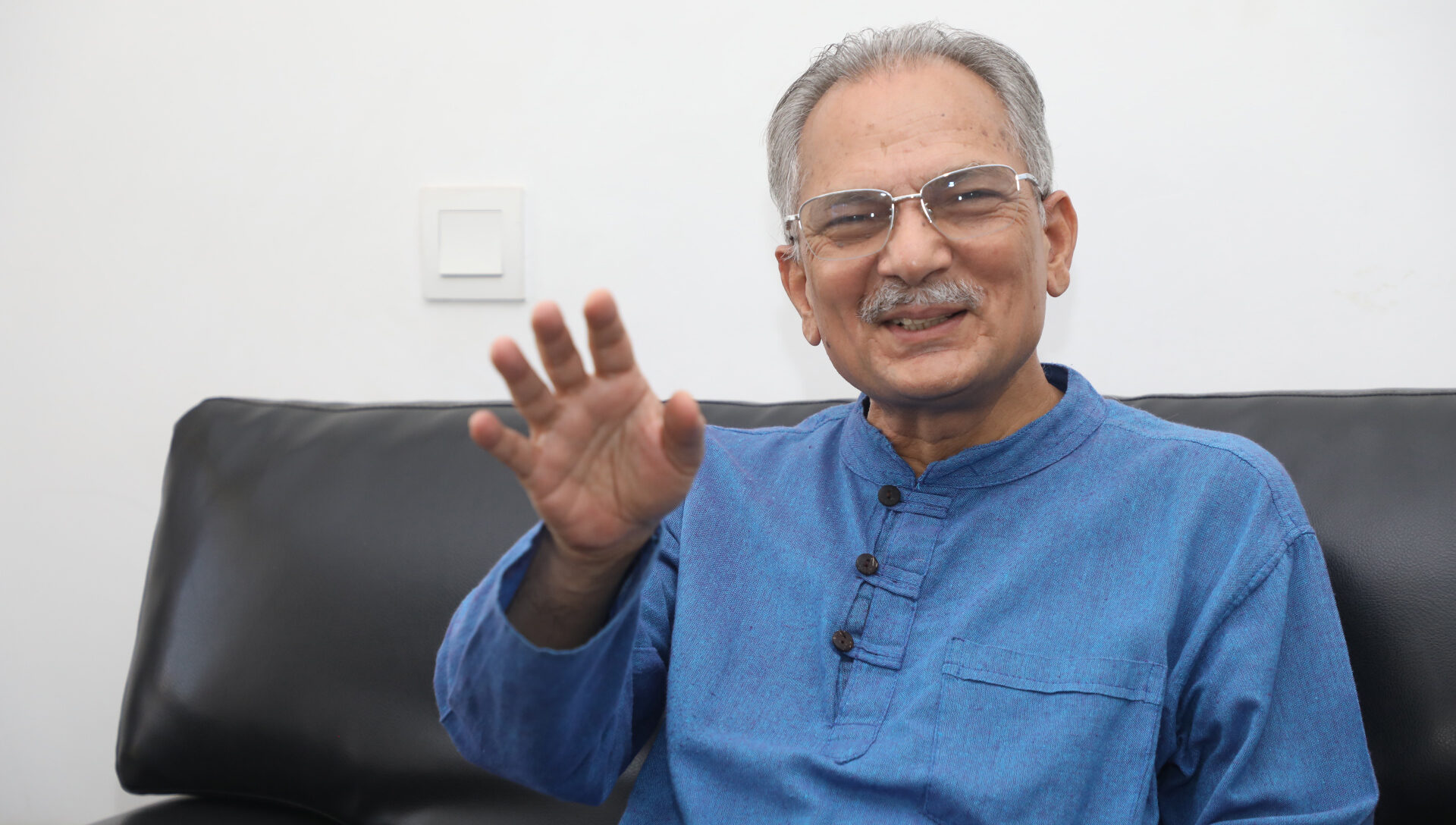
KATHMANDU: Amid growing diplomatic silence between Nepal and India, former Prime Minister Dr. Baburam Bhattarai returned from a visit to Delhi, calling for high-level talks between Prime Minister KP Sharma Oli and Indian Prime Minister Narendra Modi.
He also confirmed that the long-stalled Eminent Persons Group (EPG) report is effectively defunct and proposed moving forward through direct bilateral dialogue.
Dr. Bhattarai’s visit comes at a time when relations between the two countries appear strained. Prime Minister Oli has not visited India since assuming office last year, and concerns have been raised in Kathmandu over perceived Indian media support for Nepal’s royalist movement.
Some royalist leaders have even suggested that the BJP-led Modi government is sympathetic to restoring the monarchy in Nepal.
Amid this diplomatic chill, Bhattarai traveled to India earlier this week to attend an event organized by the Progressive Nepali Society, a sister organization of his party.
While in Delhi, he held talks with Indian Defence Minister Rajnath Singh, EPG member Bhagat Singh Koshyari, senior diplomats familiar with Nepal-India relations, political party leaders, and members of the media at the Press Club of India.
EPG Chapter Closed
Speaking to journalists upon his return at Tribhuvan International Airport on Tuesday, Dr. Bhattarai said it is now clear that India has effectively rejected the EPG report, and it is time to seek alternative approaches.
The EPG, comprising four experts each from Nepal and India, was formed in 2072 B.S. to review bilateral treaties and border issues.
The group finalized its joint report in 2075 BS , but India has yet to accept or officially receive it.
“I held detailed discussions with Indian leaders, including Rajnath Singh and Bhagat Singh Koshyari. Based on these conversations, it’s evident that India no longer sees the EPG report as a viable path forward,” Bhattarai said.
“Therefore, I proposed high-level talks between the prime ministers of both countries as the next logical step.”
Bhattarai explained that although the EPG was originally envisioned as the best mechanism to resolve bilateral issues, it is now apparent—based on conversations at the highest levels in India—that the process has stalled permanently.
“Rather than revisiting a dead-end, both countries should now focus on direct dialogue at the leadership level,” he said.
Need for High-Level Dialogue
Dr. Bhattarai emphasized that lingering issues such as border disputes and open border management are harming Nepal’s economy and should be prioritized in bilateral talks.
“We are at a disadvantage in any prolonged standoff. India’s economy is 100 times larger than ours. We cannot afford to let these problems fester,” he warned.
He stressed that economic and political issues should be addressed through direct engagement between the two leaders, while less urgent matters could be resolved gradually.
“I raised this view consistently during my meetings—with Indian leaders, diplomats, and the press—and there seemed to be a general consensus on the need for high-level dialogue,” he said.
Bhattarai expressed optimism about the outcome of his visit. “I sensed a spirit of goodwill and trust. This is the right moment for both sides to create a conducive environment for dialogue,” he concluded.
On pro-monarchy movement
Another concern that has drawn attention in India is whether the nature of the current movements in Nepal is directed against the existing system—whether these movements could undermine democracy and push the country backward.
This suspicion is serious. What I have emphasized in all forums is that Nepal has reached the stage of a federal democratic republic through a long and hard-fought struggle.
Apart from a small minority, the overwhelming majority of Nepalis have no desire to return to the past. Therefore, the federal democratic republic is secure, and both our neighbors and the international community can be assured of this stability.
The various protests taking place in Nepal today—by teachers, doctors, civil servants, and cooperative victims—are based on their specific demands.
These are issue-based movements, and while some reactionary elements may try to exploit the situation for their own agenda, the core of these protests is not aimed at undermining the system.
After I clarified that our political system is stable and secure, I believe a positive and reassuring message has been conveyed both domestically and internationally.
There were also concerns within Nepal about possible external influence—questions about whether some reactionary forces had gained encouragement from our neighbors.
However, after engaging at various levels, I came to understand that this is not the case in reality. While individuals may hold such assumptions, the Indian government and its key political actors have not been involved in any activities aimed at supporting regressive forces or overturning Nepal’s political system, nor would such actions serve their interests.
We Nepalis are fully capable of determining our own future. As long as we maintain balanced and respectful relations with our neighbors, there is no reason for us to be discouraged.



Comment