




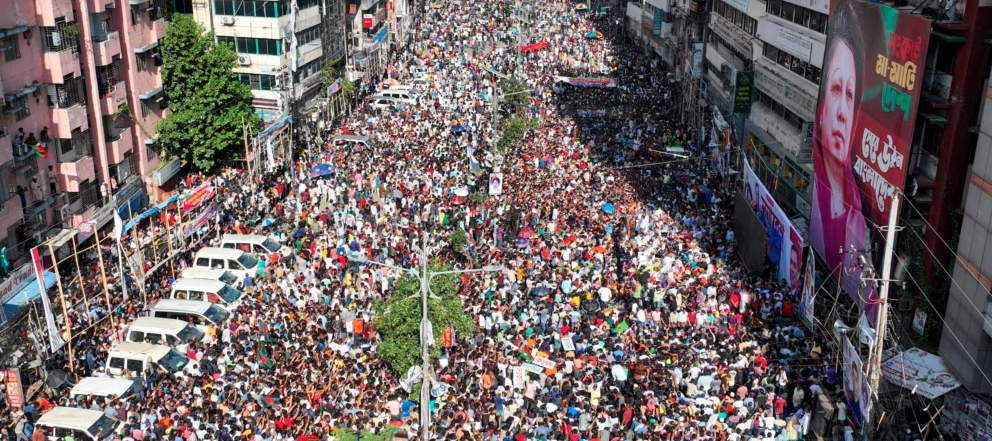
DHAKA, BANGLADESH: A student-led uprising in Bangladesh against government hiring rules culminated this week in the prime minister fleeing, with Nobel Peace Prize winner Muhammad Yunus set to lead a caretaker government.
At least 450 people were killed in more than a month of deadly protests that ended the autocratic rule of 76-year-old prime minister Sheikh Hasina.
Here are five key dates explaining how the protests toppled the government in the South Asian nation of about 170 million people.
July 1: Blockades begin
University students build barricades blocking roads and railway lines to demand reforms to a quota system for sought-after public sector jobs.
They say the scheme is used to stack the civil service with loyalists of Hasina’s ruling Awami League.
Hasina, who won a fifth term as prime minister in January after a vote without genuine opposition, says the students are “wasting their time.”
July 16: Violence intensifies
Six people are killed in clashes, the first recorded deaths in the protests, a day after bitter violence when protesters and pro-government supporters fought in Dhaka with sticks and hurled bricks at each other.
Hasina’s government orders the nationwide closure of schools and universities.
July 18: Hasina rebuffed
Students reject an olive branch from Hasina, a day after she appeals for calm and vows that every “murder” in the protests would be punished.
Protesters chant “down with the dictator” and torch the headquarters of state broadcaster Bangladesh Television and dozens of other government buildings.
Clashes escalate despite a round-the-clock curfew, the deployment of soldiers and an internet blackout.
Days later, the Supreme Court rules the decision to reintroduce job quotas was illegal.
But its verdict falls short of protesters’ demands to entirely abolish reserved jobs for children of “freedom fighters” from Bangladesh’s 1971 independence war against Pakistan.
August 5: Hasina toppled
Hasina flees Dhaka by helicopter as thousands of protesters storm her palace, with millions on the streets celebrating, some dancing on the roof of armored cars and tanks.
Bangladesh army chief General Waker-Uz-Zaman announces in a broadcast on state television that Hasina had resigned and the military would form an interim government.
August 8: Yunus to lead
Nobel Peace Prize winner Yunus, 84, flies to Dhaka to lead a caretaker government.
He is expected to be sworn in later in the day, to begin what the army chief has vowed will be a “beautiful democratic process.”
VOA





Comment