




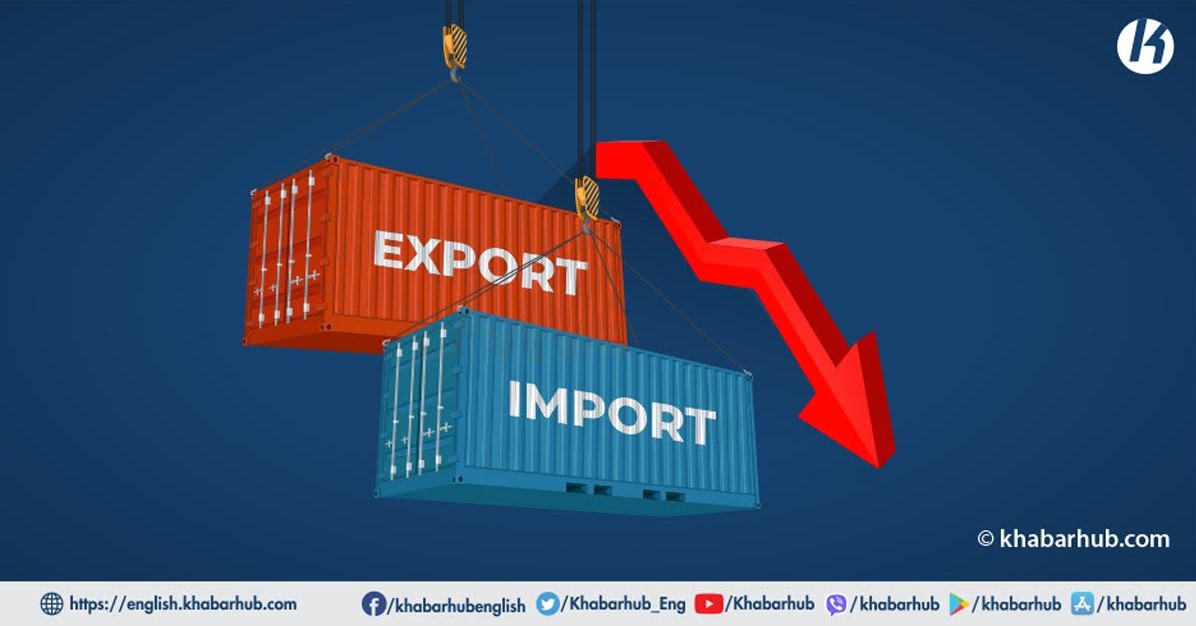
KATHMANDU: In the first 11 months of the current fiscal year, Nepal’s imports amounted to Rs 1.4537 trillion.
According to the Department of Customs (DOC), imports decreased by 1.84 percent compared to the same period last fiscal year, totaling Rs 1.4537 trillion.
Similarly, exports in the current fiscal year fell by 3.01 percent compared to last year.
From August to June of this fiscal year, exports amounted to Rs 139.26 billion, while during the same period last year, exports were Rs 143.58 billion.
With the decline in both imports and exports, the trade deficit has also decreased by 1.72 percent.
Last fiscal year’s trade deficit was Rs 1.3374 trillion, while in the same period of the current fiscal year, it stood at Rs 1.3144 trillion.
Major imports from foreign countries included diesel, petrol, and LPG gas.
In 11 months, the highest import was diesel, amounting to Rs 129.20 billion.
Additionally, Rs 62.87 billion worth of petrol and Rs 51.073 billion worth of LPG gas were imported.
The main exports from Nepal included carpets, cardamom, and iron and steel.
In the first 11 months of the current fiscal year, carpets worth Rs 9.7318 billion, cardamom worth Rs 7.47 billion, and steel worth Rs 6.166 billion were exported, according to the department.






Comment