




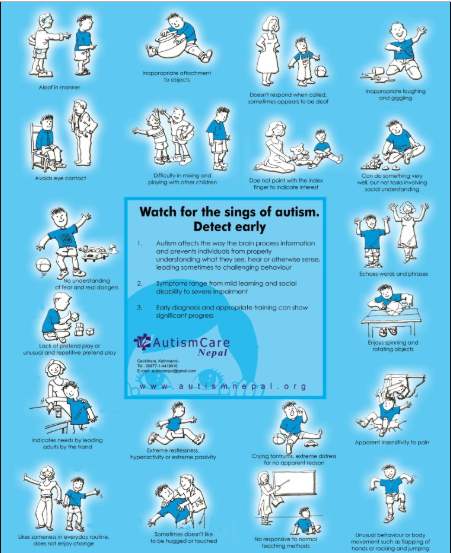
JANAKPUR: Around 300,000 Nepalis have been suffering from the autism in Nepal, according to Autism Care Nepal Society.
A recent report made public recently, every child out of 59 births is born with autism throughout the world. It is a disease that affects the brain and hampers the day-to-day activities of a child, and cannot be cured.
Dr Sunita Maskey, a doctor involved in treating autism, informed that patients of this disease need special care since they become dependent throughout the life. Speaking at a program in Janakpur today, she said a patient can be independent to some extent provided that the disease is identified on time.
“There are no medical tests for diagnosing autism. The accurate diagnosis is based on the observation of the individual’s level of communication, behavior and development,” Dr Archana Kayastha informed. Doctors recommend occupational therapy, communication, vocational training, social therapy and special and distinct education to make the patient’s life better.
Though autism is considered to be a heredity disease, the reason is still under ambiguity. A patient with autism has symptoms such as lack of or delay in verbal language, repetitive use of language, motor mannerisms (hand-flapping, twirling objects), little or no eye contact, lack of interest in peer relationships, lack of spontaneous or make-believe play, and persistent fixation on parts of objects.


Comment