




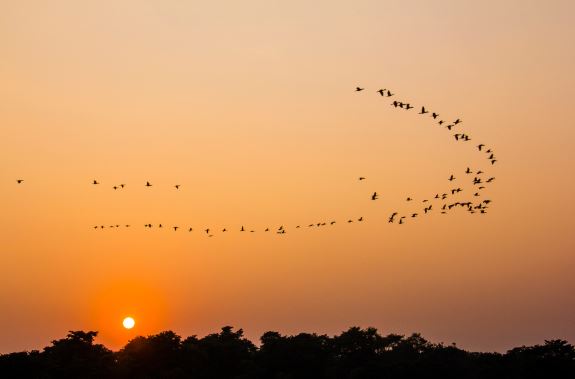
KATHMANDU: Sometimes, a captivating sight graces the sky as flocks of birds arrange themselves in wrinkled V-shaped formations.
The vibrant-hued avian creatures commencing their annual migration present a delightful spectacle.
Bird enthusiasts are equally thrilled by the prospect of encountering new, unfamiliar bird calls.
Nepal serves as a temporary haven for numerous migratory animals and birds.
Nepal’s climate offers a relatively gentle summer, coupled with ample food supply, making it an optimal environment for birds to spend their warmer months.
Migratory species are characterized by their seasonal movement between distinct habitats, prompted by factors such as food availability, sunlight, temperature, and climatic conditions.
For some migratory birds and mammals, these journeys can span thousands of miles or kilometers.
These migratory routes entail nesting locations and require suitable habitats before and after each migration.
The timing of these movements is often influenced by changes in daylight duration.
Birds on migration rely on cues from celestial bodies like the sun and stars, Earth’s magnetic field, and internal cognitive maps for navigation.
Migration Methods:
Permanent residents: These birds remain in place year-round due to consistent food availability.
Short-distance migrants: These birds undertake minor movements, such as descending from higher to lower elevations on a mountainside.
Medium-distance migrants: Covering a few hundred miles, these birds embark on moderate journeys.
Long-distance migrants: These birds undertake extensive journeys across countries, searching for optimal conditions and habitats for feeding, breeding, and raising their offspring. The speed of their flight varies based on species and terrain.
Altitude during Migration: According to the Texas Parks & Wildlife Department, most migratory birds fly at low altitudes, typically below 7400 feet.
Smaller birds flying at night maintain altitudes between 800 and 1600 feet, while daytime flights often remain below 200 feet.
Some exceptions, like the Bar-headed Goose, fly considerably higher, with a record altitude of 29,500 feet above sea level over the Himalayas.






Comment