




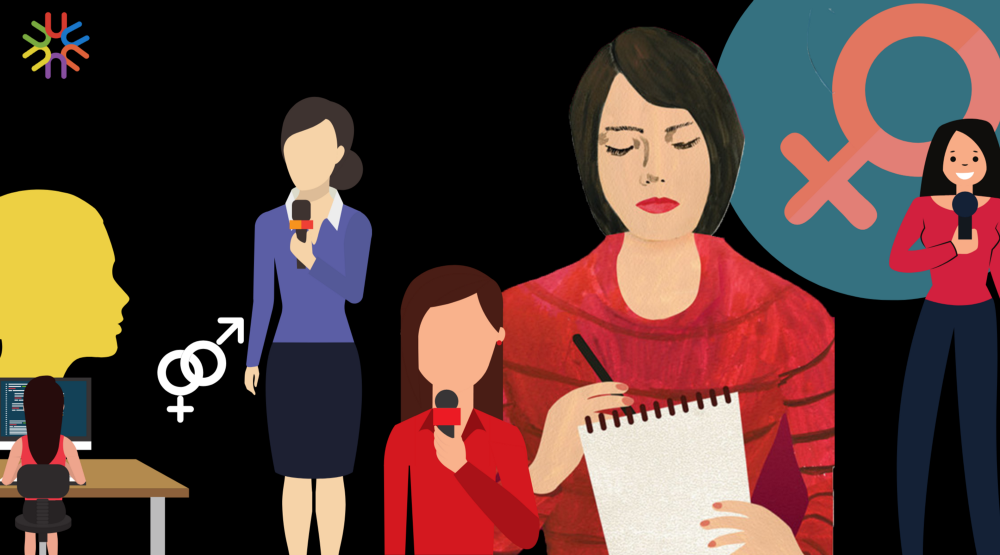
KATHMANDU: Speakers at a programme have expressed worry why women role in Nepali media was not recognized though women journalists performed bravely during Covid-19 crisis.
At a virtual programme entitled ‘gender mainstreaming in journalism education in Covid-19’, Dr Manju Mishra said working women journalists had a tough time to balance responsibilities in public and private spheres during the crisis. “Though Covid-19 crisis had its impact on every quarter of life, women suffered more than male,” she was sharing her views on the basis of her research finding.
The Principal of College of Journalism and Mass Communication further said overall women faced an increased burden of family responsibilities and they found no platform to share their issues. “ More cases of domestic violence against women such as sexual harassment, rape were reported during the crisis as women were confined to home round-the-clock being close to their abusers,’’ Dr Mishra said.
In the male-dominated society, the crisis affected the women severely. There were cases that men chose intake of drugs and alcohol in their leisurely time which could lead to the rise in the cases of violence against women, according to her.
Similarly, giving her presentation on ‘gender mainstreaming in journalism education’ media and gender researcher Samikchhya Koirala said, “Though the number of female journalism students was up above 60 percent, gender-shift has not been reflected in the newsroom.” Basing her presentation on the finding of her research, she said the presence of female media workers was limited to just 25-30 percent.
She spoke the need of finding out root causes behind a gap between journalism graduates and the presence of female journalists in the newsroom. According to her, Nepali media is yet to be gender sensitive.
Women are presented in stereotypical way. “Journalism education curricula do not incorporate ideas about mainstreaming the issues concerning marginalised community,” she argued. Koirala appreciated female journalists doing their best to hit the barriers and were advocating gender equality.
Her suggestions are building gender literacy in journalism education, widening perspective on gender and gender issues, integrating issues of gender and marginalised population in curricula and research.
The participants shared what they experienced as journalists- they are given ‘soft’ beats, suggested to focus on just social issues; discouraged to work on political issues; discriminated in the newsroom.
The programme organised by the Working Women Journalists in coordination with the CJMC had the participation of 35 working women journalists from different parts of the country.





Comment