




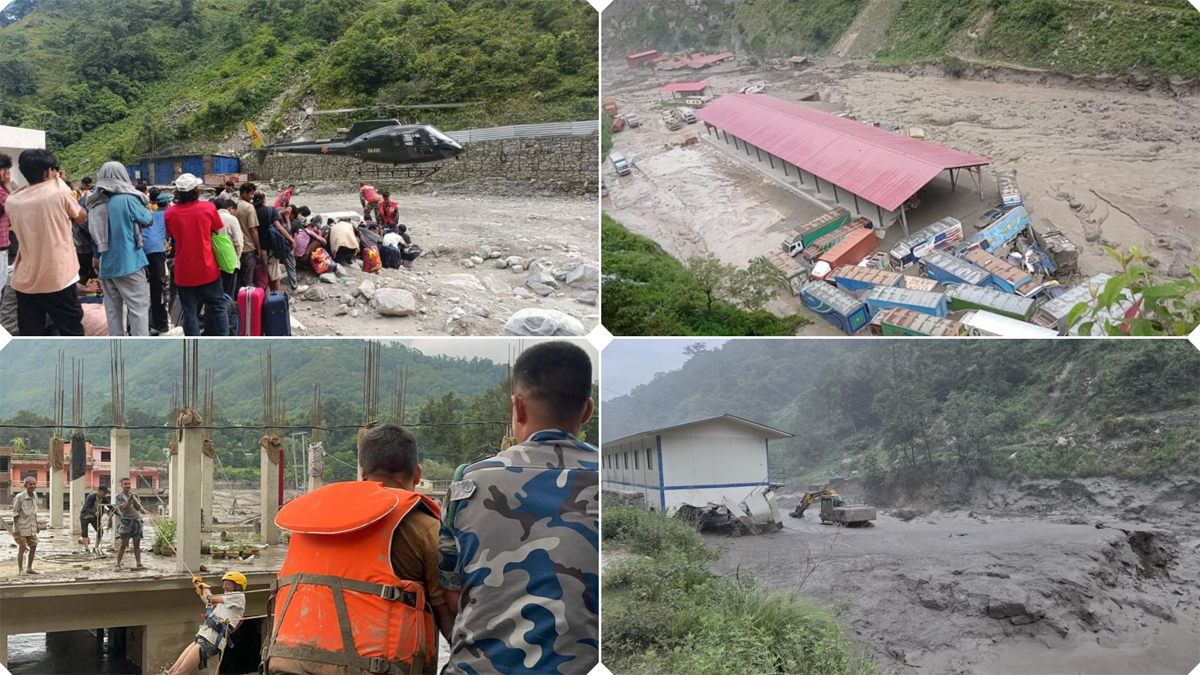
RASUWA: Six days after the devastating flood in the Bhotekoshi and Trishuli rivers, residents of flood-hit Rasuwa continue to face fear, shortages and uncertainty, with many people still missing and rescue operations unable to reach several affected settlements.
The flood on August 26 caused extensive damage to roads, bridges, electricity and communication infrastructure in northern Rasuwa, particularly in settlements across Uttargaya, Gosainkunda and Aamachhodingmo rural municipalities.
Local residents say they are still searching for missing family members, while some injured people may remain stranded or unconscious in inaccessible areas. The lack of reliable information has further intensified concerns about the situation in remote parts of the district.
Concerns grow in areas above Timure
Journalist from Rasuwa, Anu Acharya said several people remain out of contact in the area stretching from Timure through Ghattikhola to Rasuwagadhi.
She said requests to deploy helicopters and use drones to search forests, ravines and other difficult-to-access areas had not received an effective response from the concerned authorities.
Acharya has urged authorities to conduct a thorough search of the area and make the actual situation public, saying families continue to hope that their missing relatives may still be found alive.
Lack of information raises concern
Local resident and hydropower technician Binod Thing has also called on national and international media to reach Rasuwa and report the situation from the ground.
Thing said the reality at the disaster’s ground zero had not been adequately brought to public attention, stressing that the suffering of Rasuwa’s residents could not be represented by statistics alone.
He also offered his technical experience to assist search and rescue teams in hydropower facilities, saying he was familiar with various structures of the 216 Hydropower project.
Relief reaches Dhunche, but upper areas remain inaccessible
A team including Baigyanik Samajbadi Party Nepal leader Himanshu is currently in Dhunche.
Himanshu claimed that more than 300 people, including nine foreign nationals, were reportedly trapped at the Upper Trishuli-1 hydropower project, although concrete rescue efforts had yet to be made there.
He also said relief had reached Timure and Syafrubesi only five days after the flood, while there was still no reliable information about how many people remained alive in those areas.
Food shortages add to crisis
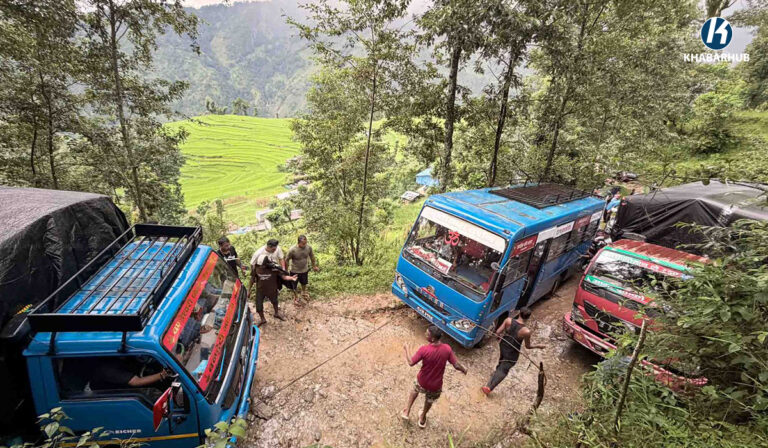
The disruption of roads and bridges has also affected the supply of essential goods in the district.
Pratap Lama, a practitioner at the Ayurveda and Alternative Hospital in Dhunche, said residents were increasingly unable to purchase food even with money available.
Supplies of rice, lentils, cooking oil, salt, cooking gas, petrol and vegetables have been affected after bridges connecting Rasuwa were swept away by the flood.
Lama warned that the situation could become severe if no solution is found within a day or two.
Calls for more flexible relief distribution
CPN-UML youth leader Prakash Paudel, who visited Rasuwa to assess the relief situation, urged authorities not to stop individuals and organisations carrying relief supplies in the name of a one-door distribution system.
He suggested maintaining records at entry points and documenting which local government areas the relief materials are intended for, arguing that excessive restrictions could prevent assistance from reaching people in need.
According to him, relief supplies have accumulated in some locations while other areas remain underserved.
Local representatives seek emergency medical support
Sandeep Paudel, ward chairperson of Kalika Rural Municipality-5, said local authorities were struggling to respond because of limited resources.
He called for immediate helicopter evacuations, adequate ambulances and emergency vehicles, hospital upgrades, alternative roads and a permanent emergency medical rescue system.
He said the priority should be to prevent further deaths among those who survived the initial disaster.
Tunnel rescue remains a major concern
The possibility of people being trapped inside hydropower tunnels has emerged as one of the most difficult aspects of the disaster.
People working at several hydropower projects along the Bhotekoshi and Trishuli corridors are feared to be trapped inside tunnels. Nepal Army-led rescue teams have entered some tunnels, but access remains difficult in certain locations.
Authorities have yet to establish how many people may be inside the tunnels, their condition or the safest way to bring them out. Locals have called for foreign experts and advanced technology if domestic resources and equipment prove insufficient.
Calls for additional security personnel
Journalist Prakash Dumre, who observed the relief and rescue operation up to Betrabati Bazaar, called for additional Nepal Army, Nepal Police and Armed Police Force personnel to be deployed in flood-affected areas of Rasuwa.
He said the existing force may not be sufficient given the scale of the crisis and warned that conditions on the ground were considerably worse than what is visible through social media.
Dumre also highlighted the need for psychological counselling alongside medical assistance, saying many survivors are deeply distressed after witnessing family members being swept away or remaining unaware of their relatives’ fate.
Uneven relief distribution and damaged roads
Relief distribution remains uneven, with some areas receiving more supplies while others continue to face shortages.
Efforts are being made to transport relief by road, but damaged and unstable roads remain a major obstacle. Some local governments have arranged excavators and bulldozers, although continuing rainfall has caused roads to become blocked again.
In some areas, residents are unable to determine what is happening across the river. Damaged homes remain inaccessible, leaving uncertainty over whether people or bodies may still be inside. Local residents have reported fears that hundreds of people may be missing, although no confirmed figures are currently available.
Focus shifts to sustained rescue and recovery
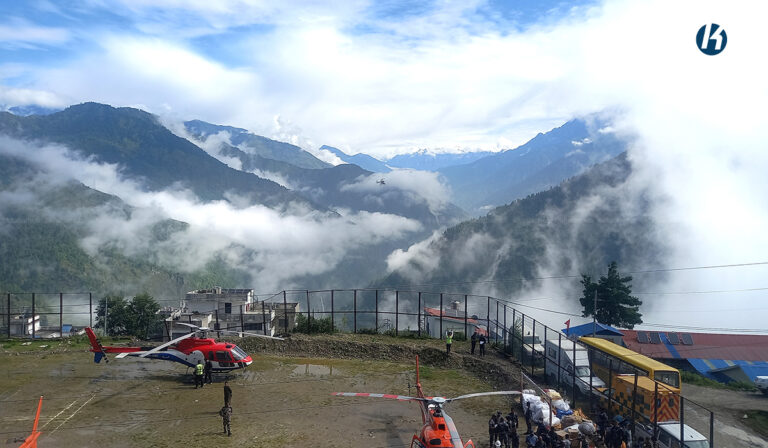
Government agencies, including the Nepal Army, Nepal Police and Armed Police Force, as well as local representatives and volunteers, are carrying out rescue and relief work. However, local voices say the scale of the disaster has exceeded the capacity of existing response mechanisms.
Immediate priorities identified by people on the ground include expanded search and rescue operations, intensified searches inside hydropower tunnels, foreign technical assistance where necessary, additional security personnel, emergency helicopter and ambulance services, manpower for managing bodies, regular supplies of food, fuel and medicine, alternative arrangements for blocked roads and bridges, safe shelter and psychological support.
Effective coordination among the federal, provincial and local governments has also been identified as critical to the response.
For residents of Rasuwa, the disaster is no longer just a story of damaged infrastructure. Families are still searching for missing relatives, survivors are facing shortages of essential goods, and uncertainty continues over people who may remain trapped or inaccessible.
Local voices say what Rasuwa needs now is not only assurances, but a visible and sustained state presence on the ground.






Comment