




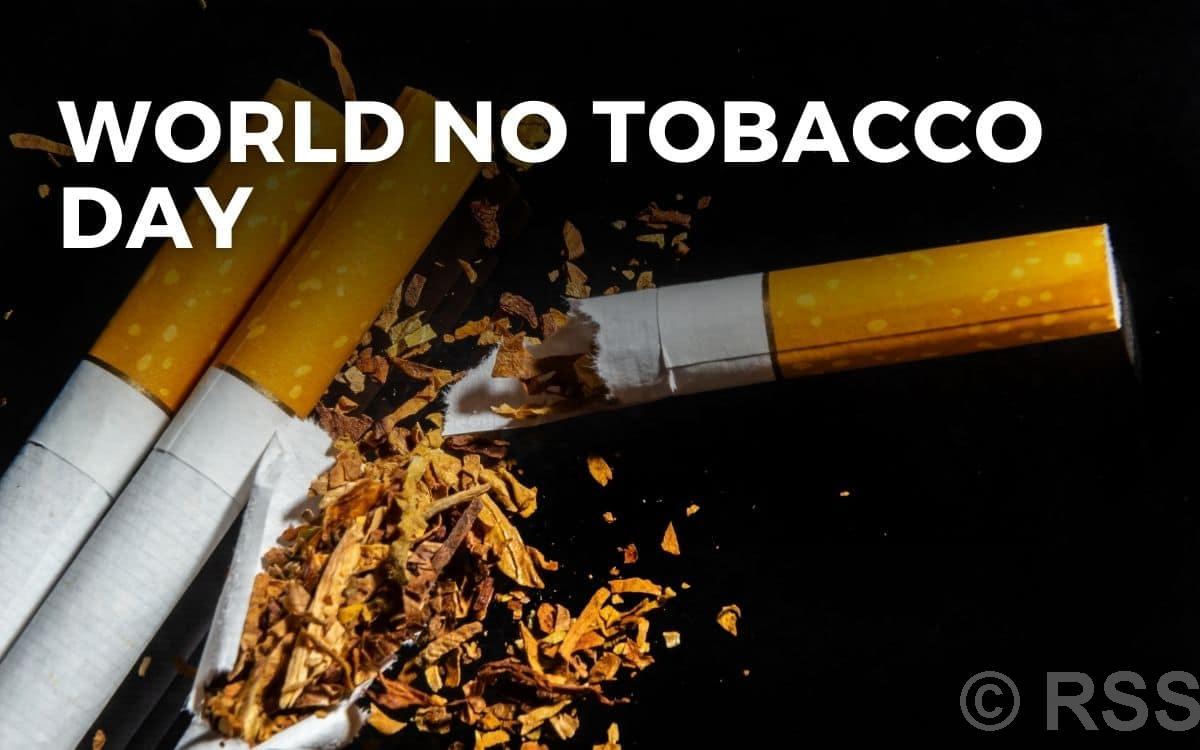
KATHMANDU: World No Tobacco Day is being observed today with awareness-raising programmes in various countries around the world.
The day, observed every year on May 31, aims to raise awareness about the health risks of tobacco use, the commercial strategies of the tobacco industry, ongoing efforts by the World Health Organization (WHO) for tobacco control, and measures needed to promote healthy living and protect future generations.
WHO Member States initiated the observance in 1987 to draw global attention to the tobacco epidemic and the preventable deaths and diseases caused by it. Following Resolution WHA 40.38 adopted in 1987, April 7, 1988, was first observed as ‘World No Tobacco Day’. Since then, in line with Resolution WHA 42.19 adopted in 1988, it has been observed on May 31 each year.
According to WHO, about 1.3 billion people worldwide currently use tobacco products, most of them in low- and middle-income countries. Although tobacco use has declined in recent years, one in five adults globally still uses some form of tobacco. Tobacco causes more than 8 million deaths annually, including around 1.2 million deaths from passive smoking.
On this year’s occasion, WHO has urged governments to protect younger generations from tobacco and nicotine addiction. According to the organisation, at least 40 million children aged 13 to 15 use tobacco products globally, while the use of electronic cigarettes (e-cigarettes) and nicotine pouches is rising among young people.
The WHO states that tobacco and nicotine companies are designing products to be more attractive, easier to use and harder to quit, with a particular focus on adolescents and youth through flavoured e-cigarettes, nicotine pouches and similar products.
Dr Etienne Krug, Director of the WHO Department of Health Determinants, Promotion and Prevention, said that despite millions of deaths each year, companies continue to adapt strategies to recruit a new generation of nicotine users. He said aggressive marketing of flavoured products is increasingly targeting young people.
Nicotine is highly addictive and harmful, and its impact can be especially severe on children and adolescents whose brains are still developing. An estimated more than 100 million people worldwide use e-cigarettes, with rapid growth among teenagers.
A recent WHO report on nicotine pouches says they are being widely promoted by social media influencers through attractive packaging, sweet flavours and lifestyle-oriented advertising.
The report adds that around 160 countries still lack clear legal and regulatory frameworks for nicotine pouches. Despite rising global sales, weak regulation continues to expose millions to risk.
WHO has called on governments to ban flavoured nicotine products, prohibit advertising, promotion and sponsorship, ensure smoke- and vape-free public indoor spaces, and strengthen enforcement measures. It has warned that the growing use of tobacco and nicotine products could seriously harm future generations and stressed coordinated global action to build a healthier society.






Comment