




There is growing uncertainty over whether the country will even reach the March 5 elections, and, even if it does, what direction it will take afterward. Elections that were originally scheduled for 2027 have been brought forward to 2025, raising serious questions about whether this early poll can genuinely address the country’s current political and social challenges.
According to reports of the investigation commission into incidents during the Gen-Z movement, government property worth around Rs 80 billion was damaged, excluding losses to private property. Meanwhile, the elections themselves are estimated to cost about Rs 20 billion.
Together, the country is bearing a burden of nearly Rs 100 billion, an amount far beyond what the economy can absorb in a single year through capital expenditure. The critical question, therefore, is whether a process that costs the nation Rs 100 billion will actually put it back on track.
The election was not the only option. Parliament could have been restored. The key question is why Parliament was dissolved in the first place, when alternatives existed. At the time, however, the intensity of the movement created an environment in which dialogue was nearly impossible.
Even within our own party, the CPN-UML, there was debate. Many felt that restoring Parliament in its previous form would not make much sense. With that in mind, I submitted a six-point proposal outlining what such a Parliament could realistically have done: issue key policy declarations, form an all-party government acceptable to all sides, including Gen-Z activists, undertake minimum constitutional amendments, and strengthen institutions through laws related to good governance and anti-corruption.
The upcoming election cycle is fraught with complexities. Still, events must not be allowed to unfold in a disorderly or destabilizing manner. It is essential to issue timely warnings and engage all stakeholders, including civil society, so that this process becomes a means of resolution rather than further crisis.
However, political parties and stakeholders failed to speak with one voice. Instead, the Sushila Karki-led government was formed as an alternative, pushing these broader reform agendas into the background. The legality of Parliament’s dissolution remains under review at the Supreme Court, but with the election process already underway, restoration is no longer a practical option.
Historically, revolutions in Europe during the 17th and 18th centuries dismantled old power structures outright. Nepal’s political transformations, however, have followed a different path. From 2007 to 2046 BS and later to 2062/63 BS, change has largely come through compromise. Those excluded from power in these processes remain dissatisfied. Although the outcome of 2047 BS was positive, it was not sustained. Today, elections are being held under similar unresolved conditions.
At present, the Sushila Karki-led government lacks constitutional validity and faces serious questions over its political legitimacy. After the election, a new government will emerge through a procedurally elected Parliament, granting it constitutional legitimacy. The strength of its political legitimacy, however, will depend on whether it can truly represent and engage with the people, something the current government has struggled to do.
There are also unresolved questions surrounding the Gen-Z movement. Who represents that movement politically? Its so-called independent representatives raise questions about the events of August 23, yet avoid accountability for what happened on August 24. These two days must be examined separately.
While the then government must answer for September 8, responsibility for September 9, 2025 remains unclear, especially when many young people present at the scene are now contesting elections under the RSP banner. Without addressing such issues, the election risks becoming an unsafe political landing.
This uncertainty has eroded confidence, not only among voters and political actors, but also among businesspeople and investors. The private sector and foreign investment climate are deeply discouraging. Reports suggest that after the September 8-9, 2025 incidents, nearly 10,000 apartments were booked by Nepalis in Dubai alone. With each apartment costing around Rs 10 million, an estimated Rs 20-25 billion may have flowed out of the country in this way, with possibly more elsewhere.
Looking ahead, provincial and local elections will follow within a year, bringing additional financial strain. On one hand, elections are being portrayed as an exit strategy; on the other, the country appears to be heading toward a deeper crisis. As a UML leader, I acknowledge that elections are naturally energizing, campaigns mobilize people, and victory offers the chance to govern. But the fundamental question remains: will this election actually provide a solution?
Public anger is rising, and that anger must be carefully assessed. Otherwise, we risk marching toward March 5 without clarity or collective sanity. There is no turning back now.
March 5 will come and go, a leadership will emerge, and discussions will resume. The problem is that, at present, there is no credible forum for such discussion. There is no Parliament, and the government lacks legitimacy. The question remains: where, and with whom, can the nation sit down to resolve its crisis?
It appears that Prime Minister Karki is rushing toward March 5 , driven by panic and a desire for a quick exit. But speed alone will not guarantee stability, or a way forward.
The March 5 elections will result in a government endorsed by the people, after which the mandatory process of constitutional amendment will move forward. However, under the current circumstances, forming a House of Representatives like those in the past will not be easy. When two major parties were unified earlier, they commanded a two-thirds majority in the lower house, and constitutional amendments were relatively smooth, even in the National Assembly, through cooperation with a third party. Despite that numerical strength, internal disputes ultimately prevented unity.
In the new House, constitutional amendments will require cooperation among multiple parties with differing and often incompatible agendas. If the lessons of the past 10 to 12 years are not institutionalized through constitutional amendments, particularly on issues such as the electoral system and good governance, the country will again struggle to find the right direction.
The upcoming election cycle is fraught with complexities. Still, events must not be allowed to unfold in a disorderly or destabilizing manner. It is essential to issue timely warnings and engage all stakeholders, including civil society, so that this process becomes a means of resolution rather than further crisis.
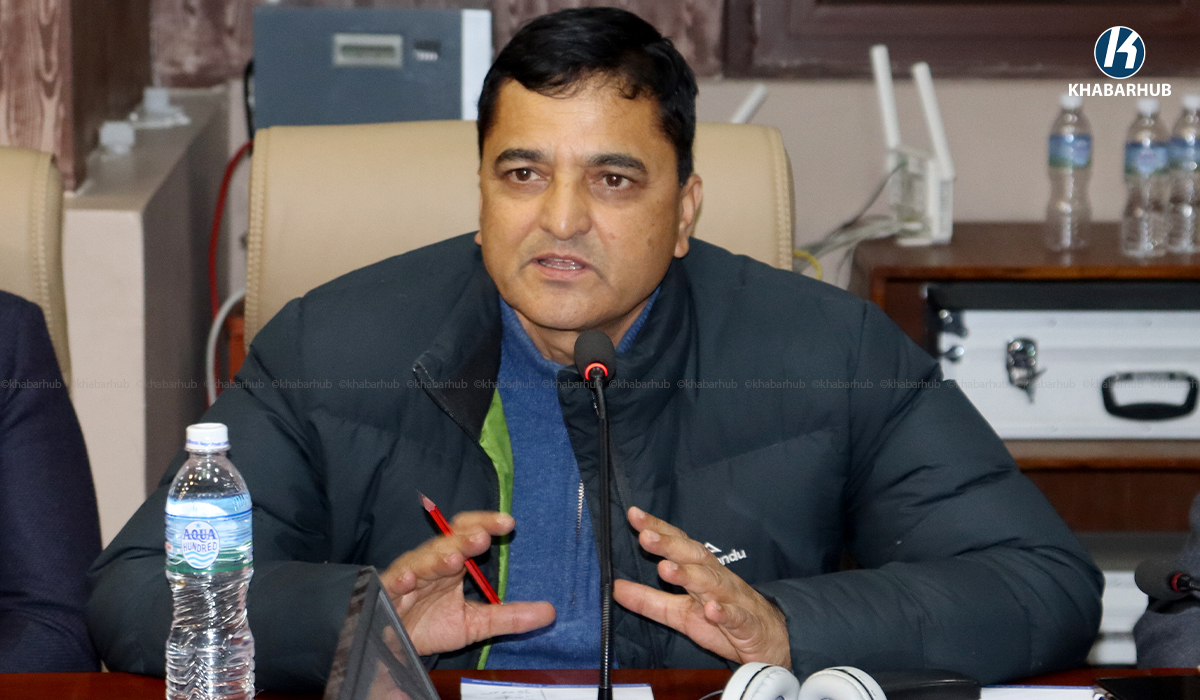
(These views were expressed by CPN-UML Deputy General Secretary Yogesh Bhattarai while speaking at a discussion program organized by the Institute for Strategic and Socio-Economic Research in Kathmandu on Wednesday)




Comment