




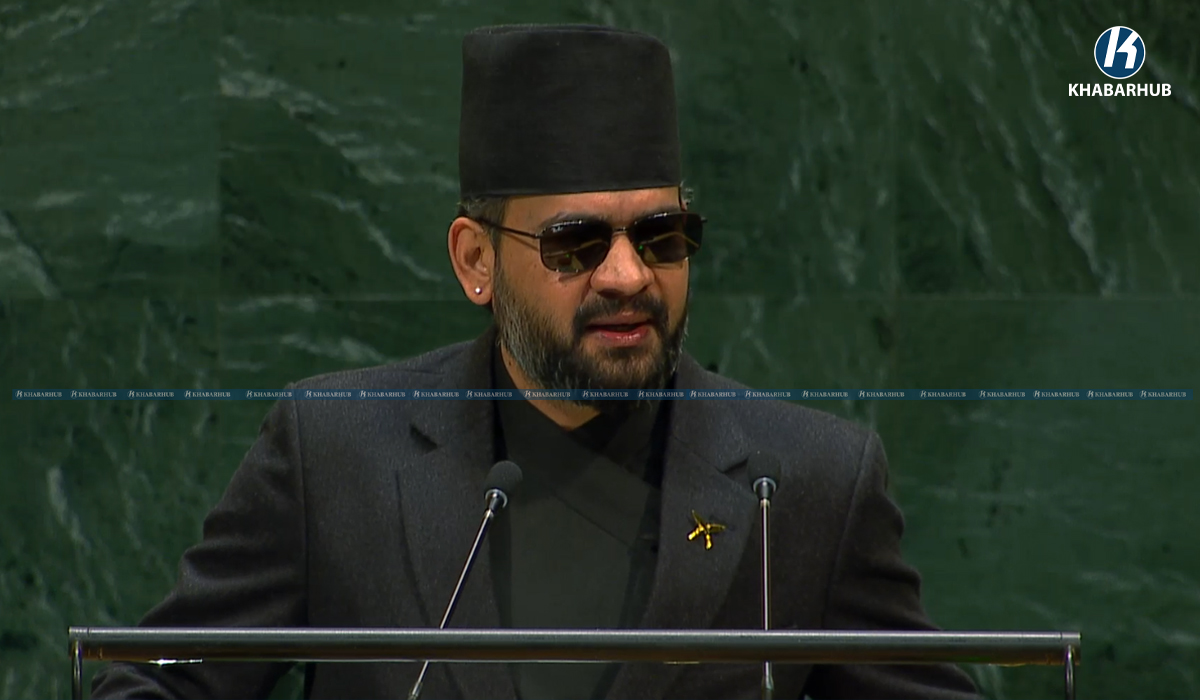
KATHMANDU: The Balendra Shah-led government has achieved a significant diplomatic success by securing an additional three years for Nepal to prepare for graduation from the Least Developed Country (LDC) category, following unanimous approval by the United Nations General Assembly (UNGA).
Under Resolution 81/L.8, adopted during the Assembly’s 81st session in New York, Nepal and Bangladesh have been granted an extended preparatory period until November 24, 2029, postponing their previously scheduled graduation date of November 24, 2026.
The decision marks an important achievement for the Shah government, which formally approached the United Nations in May 2026, seeking additional time to address the country’s economic vulnerabilities, strengthen productive capacity and prepare institutions for the challenges associated with graduation.
Foreign Minister Shisir Khanal conveyed Nepal’s request through a letter dated May 13 to the chairperson of the UN Committee for Development Policy (CDP), seeking a three-year postponement.
The government argued that graduating under the prevailing economic circumstances could expose Nepal to considerable risks, particularly the possible withdrawal of international trade preferences and other support measures available to LDCs.
Foreign Ministry has earlier said the request was based on several economic and geopolitical concerns, including the effects of conflicts in West Asia, disruptions to international supply chains, declining growth prospects and vulnerabilities in remittance-dependent sectors.
The government also cited a World Bank projection that placed Nepal’s economic growth at 2.3 percent for the current fiscal year. Officials warned that the withdrawal of duty-free and quota-free market access following graduation could put employment in productive sectors at risk, with potential losses estimated at up to 35 percent.
The CDP subsequently conducted a crisis assessment under its enhanced monitoring mechanism and concluded that extending Nepal’s preparatory period would be appropriate, provided the government developed and implemented a clear, time-bound plan to revise and reprioritise its Smooth Transition Strategy.
The UN Economic and Social Council (ECOSOC), in a decision adopted on July 21, took note of the committee’s conclusions and recommended that the General Assembly take a decision before Nepal’s original graduation deadline.
The General Assembly’s unanimous endorsement of the extension represents an important outcome of Nepal’s diplomatic engagement and efforts to secure international recognition of its economic challenges.
Nepal had originally been scheduled to graduate in November 2026 following a General Assembly decision in 2021. At that time, the country received an exceptional five-year preparatory period instead of the standard three years because of the socioeconomic disruptions caused by the COVID-19 pandemic.
The latest extension provides the government with additional time to strengthen economic resilience, improve competitiveness, expand productive capacity and prepare for the eventual withdrawal of LDC-specific international support measures.
The decision is particularly significant given the country’s fragile post-pandemic recovery, exposure to climate-related risks, dependence on remittances and vulnerability to external economic shocks.
However, the additional time also brings greater responsibility. The government will need to accelerate implementation of Nepal’s Smooth Transition Strategy, strengthen institutional capacity, diversify exports, improve industrial productivity and reduce structural economic vulnerabilities.
The extension should therefore be viewed not simply as a postponement of graduation but as an opportunity for the Balen Shah government to build stronger economic foundations and ensure that Nepal’s eventual transition from LDC status is sustainable and beneficial.




Comment