




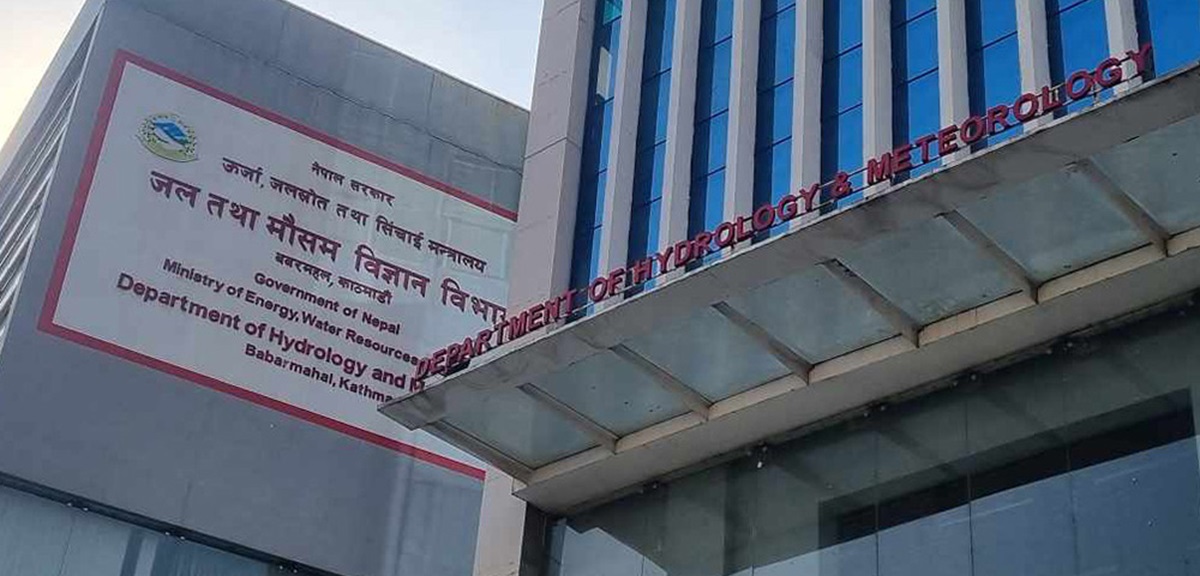
KATHMANDU: Rain-producing weather systems over Nepal have weakened, with the monsoon withdrawal date approaching and the influence of westerly winds gradually increasing across the country.
According to the Weather Forecasting Division, the weather is partly cloudy in the mountainous areas of Karnali and Sudurpaschim provinces, while the weather is generally clear in the hilly areas, with partial cloud cover in some places. Fog has been reported in a few places in the Terai.
The Division said the monsoon trough is currently near its average position. The influence of monsoon winds remains across the country, while westerly winds are also having a partial influence.
The weather is expected to remain generally cloudy in the mountainous and hilly areas of Koshi and Bagmati provinces and the hilly areas of Gandaki, Karnali, and Sudurpaschim provinces today. The mountainous areas of Karnali and Sudurpaschim provinces are expected to remain partly cloudy.
The Terai is likely to remain partly cloudy. Light rain or snowfall is possible at one or two places in the mountainous areas, while light rain or snowfall is also possible at a few places in the hilly areas.
Similarly, the weather is expected to remain generally cloudy in the mountainous and hilly areas of Koshi and Bagmati provinces and partly cloudy in the mountainous and hilly areas of Gandaki, Lumbini, Karnali, and Sudurpaschim provinces.
The Terai is likely to remain partly cloudy. Light rain or snowfall is possible at one or two places in the mountainous and hilly areas of Koshi and Bagmati provinces.
According to meteorologists, the weather systems currently responsible for rainfall in Nepal have weakened.
The low-pressure system over India that caused continuous and heavy rainfall in Nepal several days ago has become inactive, while the monsoon trough has also shifted farther away from Nepal.
Meanwhile, the average date for the withdrawal of the monsoon from Nepal, October 2, is approaching. However, meteorologists note that this is only an average date, and the monsoon may withdraw a few days earlier or later.
During the monsoon, Nepal is primarily influenced by monsoon, or easterly, winds. As the monsoon season comes to an end, the influence of westerly winds gradually increases. This influence has already begun in the western parts of the country since Asoj 1.
After the complete withdrawal of the monsoon, the post-monsoon season begins. It generally lasts for two months, October and November, followed by winter from December.
Winter is considered to last for three months, from December through February. Pre-monsoon begins on March 1 and continues through March, April, and May. However, the pre-monsoon period is considered to continue until the onset of the monsoon.
According to meteorologists, Nepal’s weather cycle is broadly divided into four seasons: pre-monsoon, monsoon, post-monsoon, and winter.




Comment