




BETRAWATI: Helicopters continue to fly over the skies of Nuwakot as the devastating flood in the Bhotekoshi-Trishuli river system leaves roads connecting one market to another severely damaged.
Reaching Betrawati, which is normally easily accessible, has itself become a challenge following the flood.
Betrawati, an important junction along the Trishuli River connecting Nuwakot and Rasuwa, was a busy market filled with people and vehicles until five days ago. Within minutes, however, a massive flood completely transformed the familiar landscape.
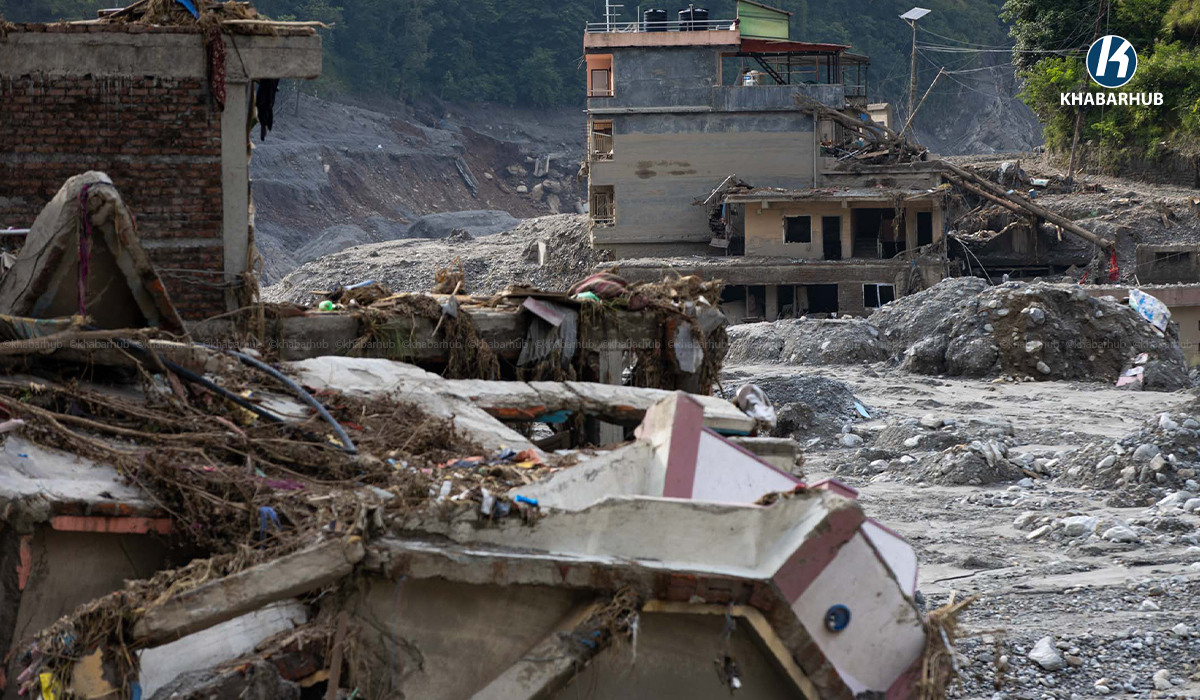
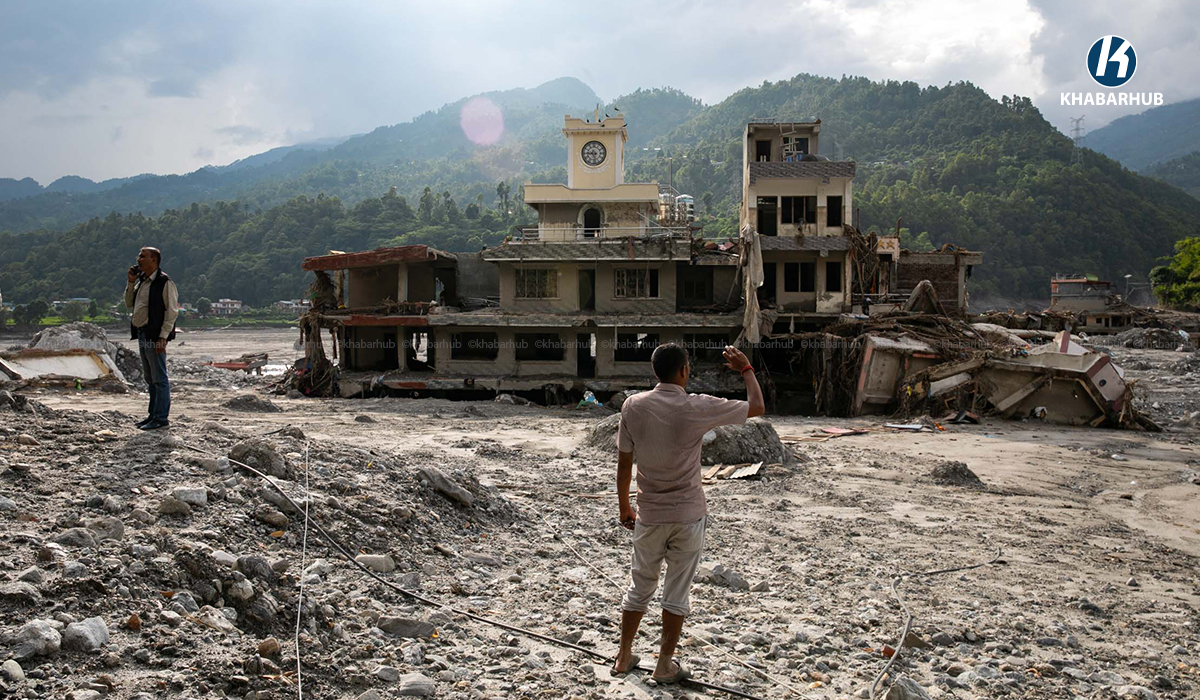
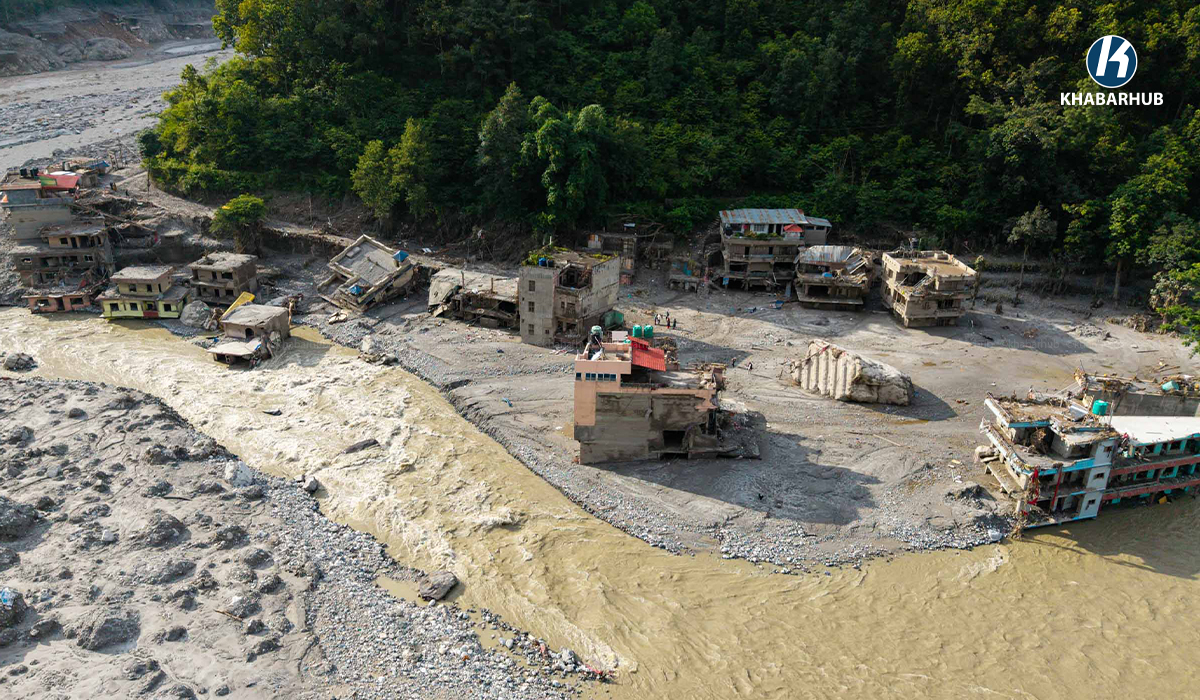
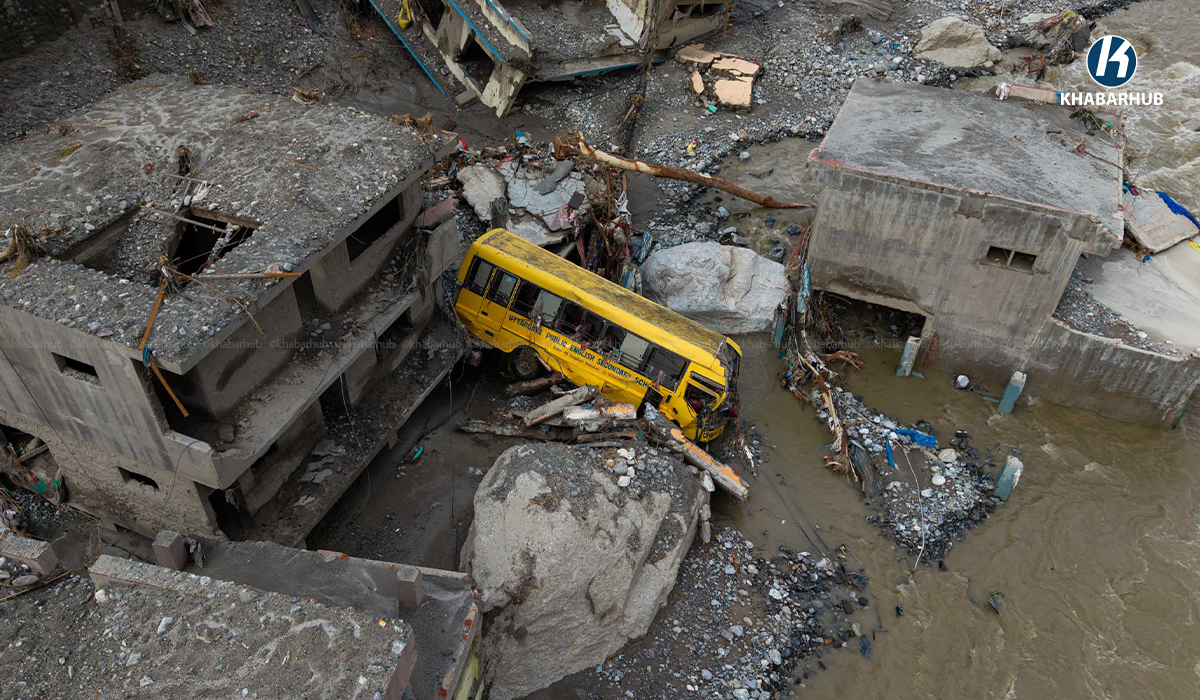
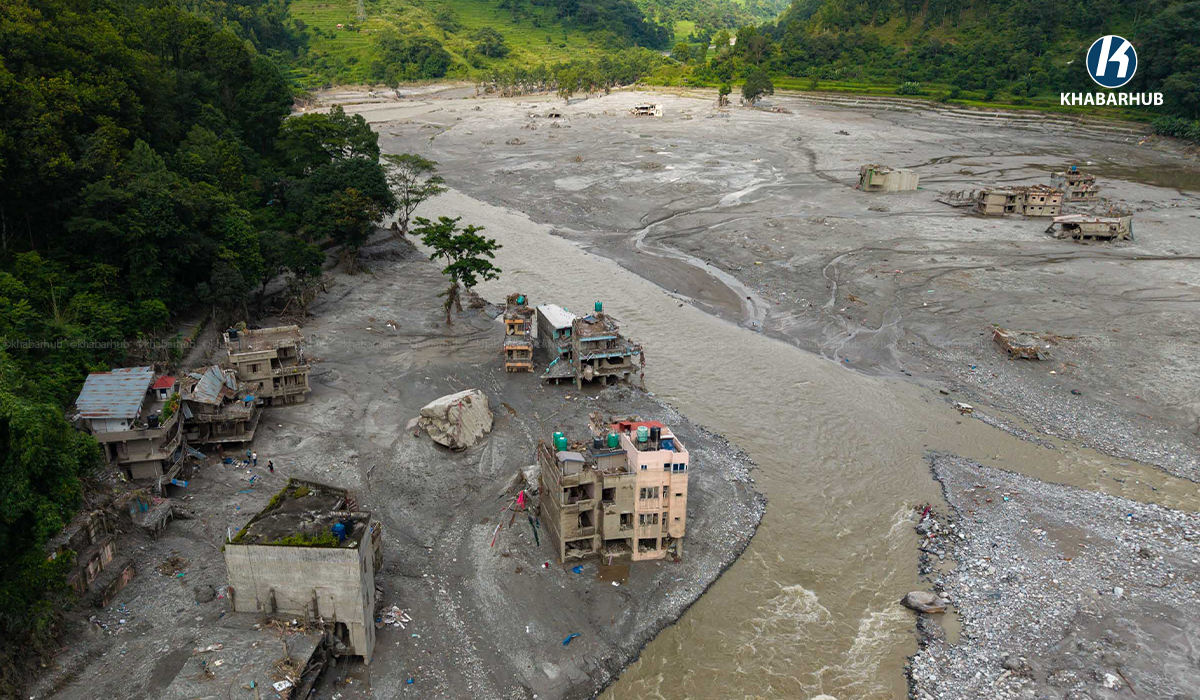
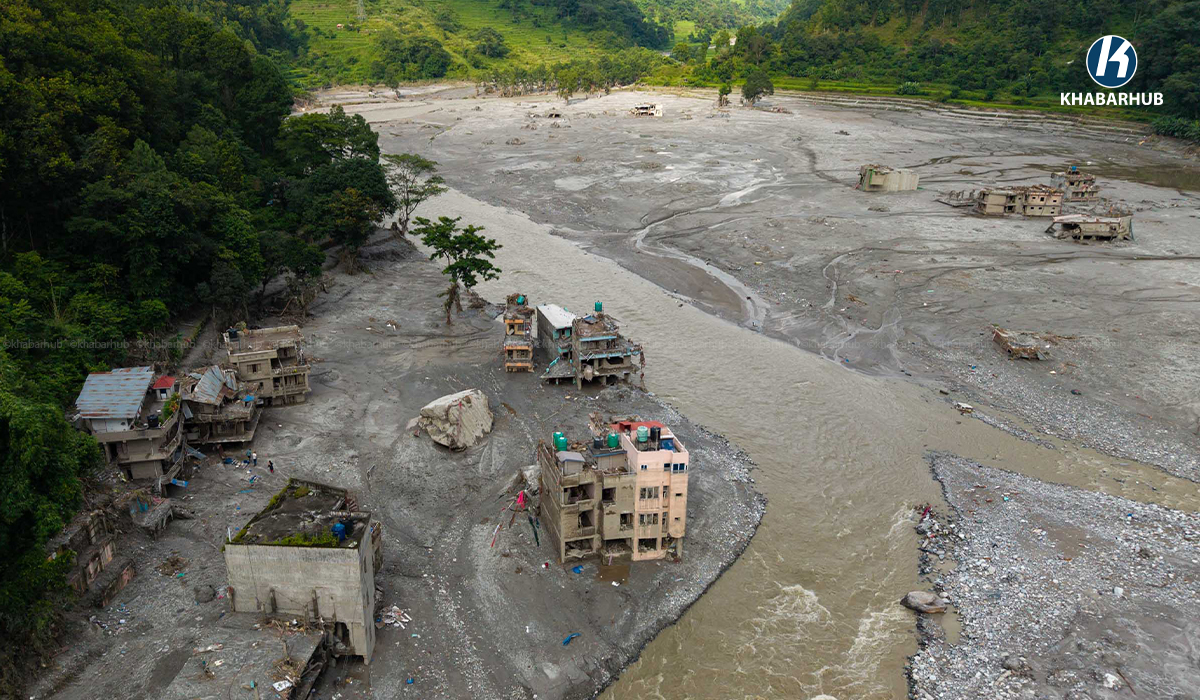
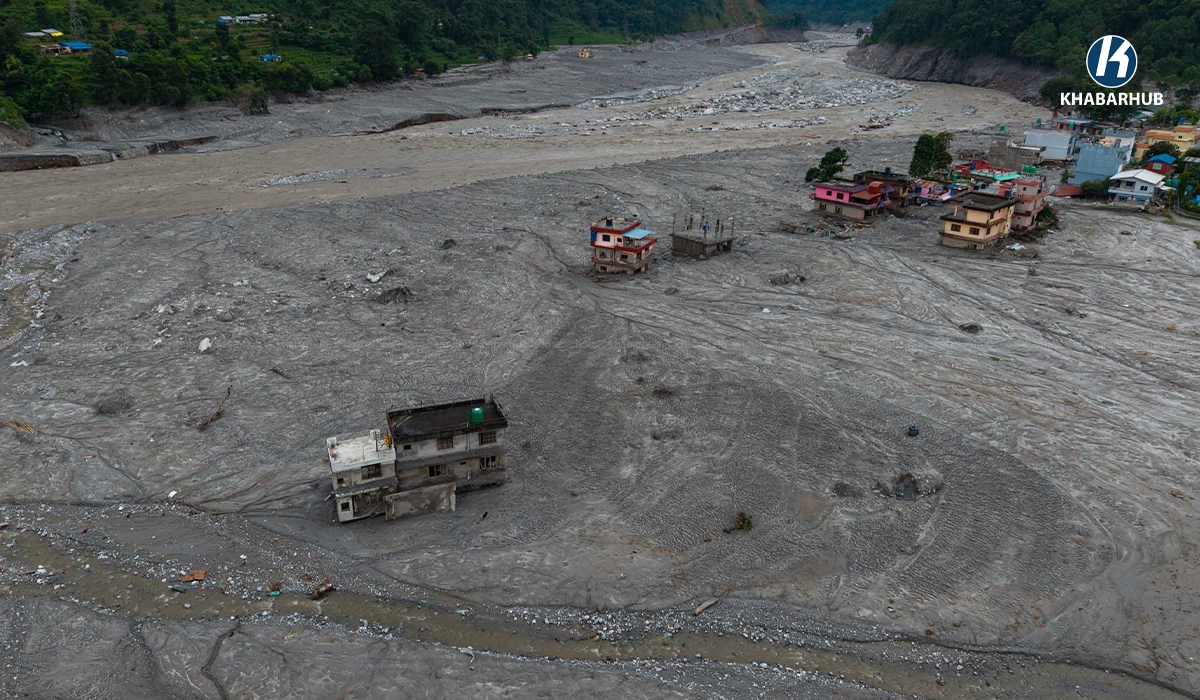
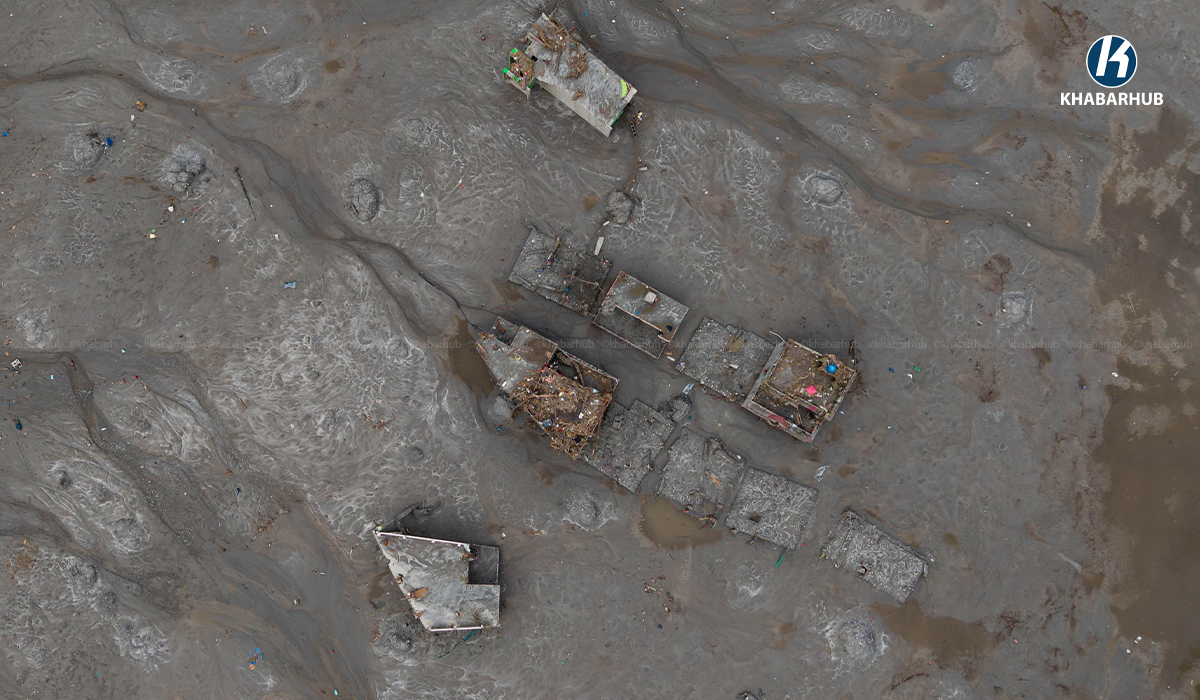
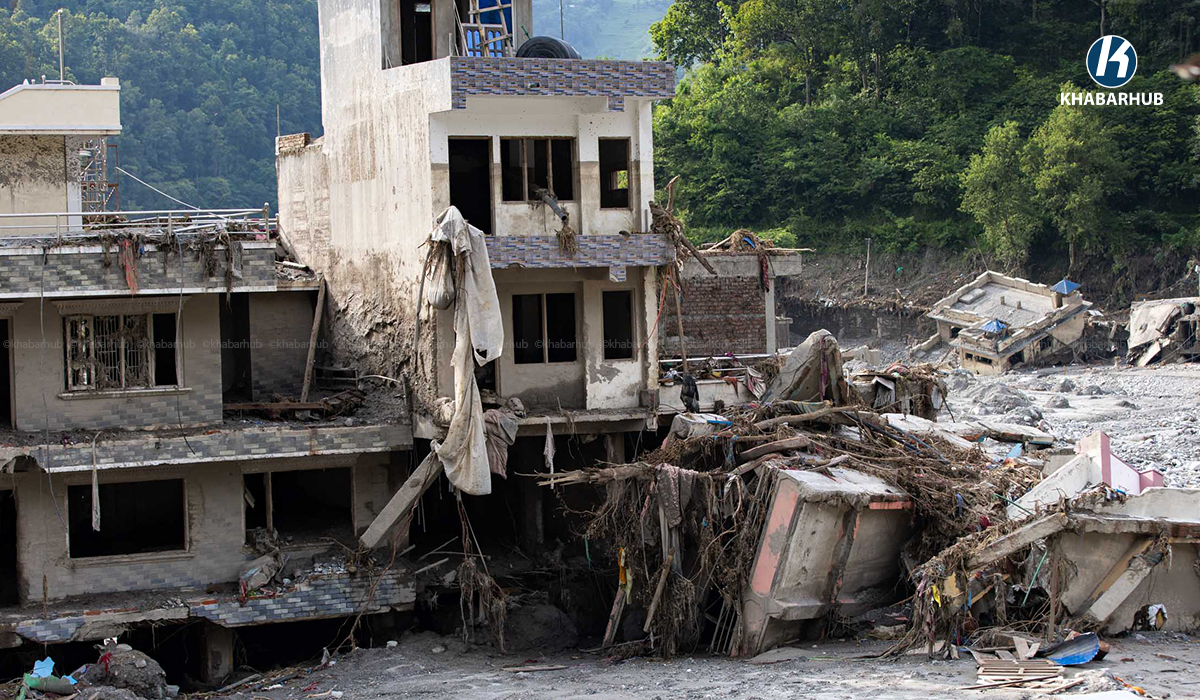
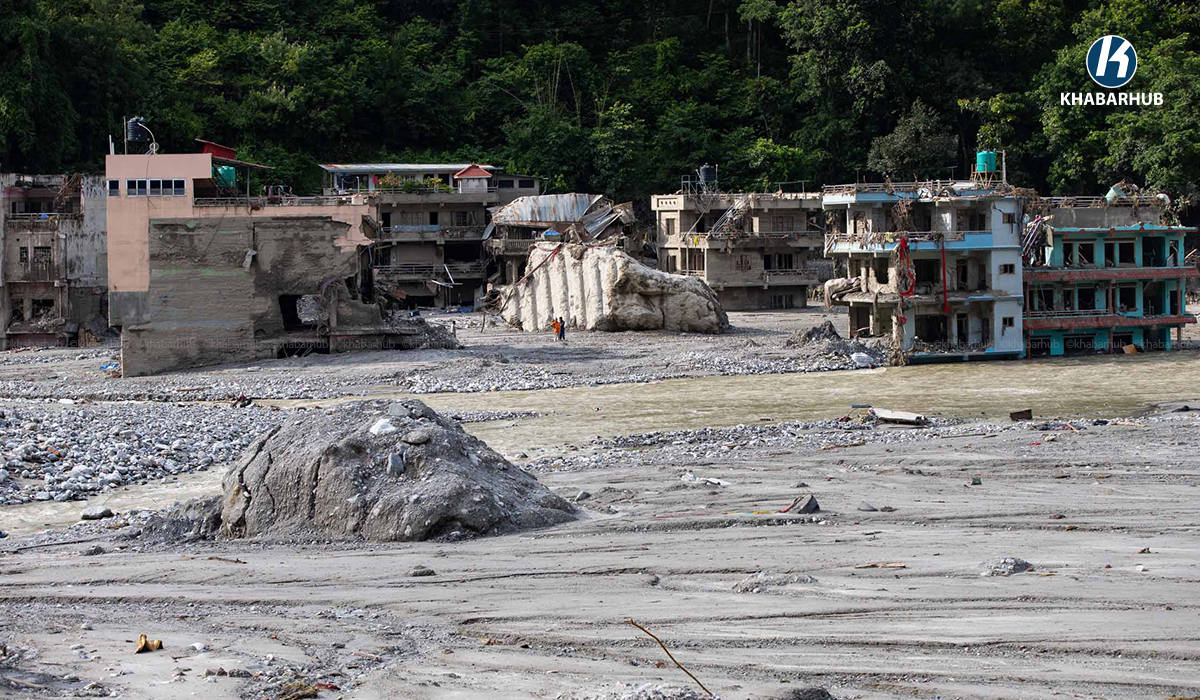
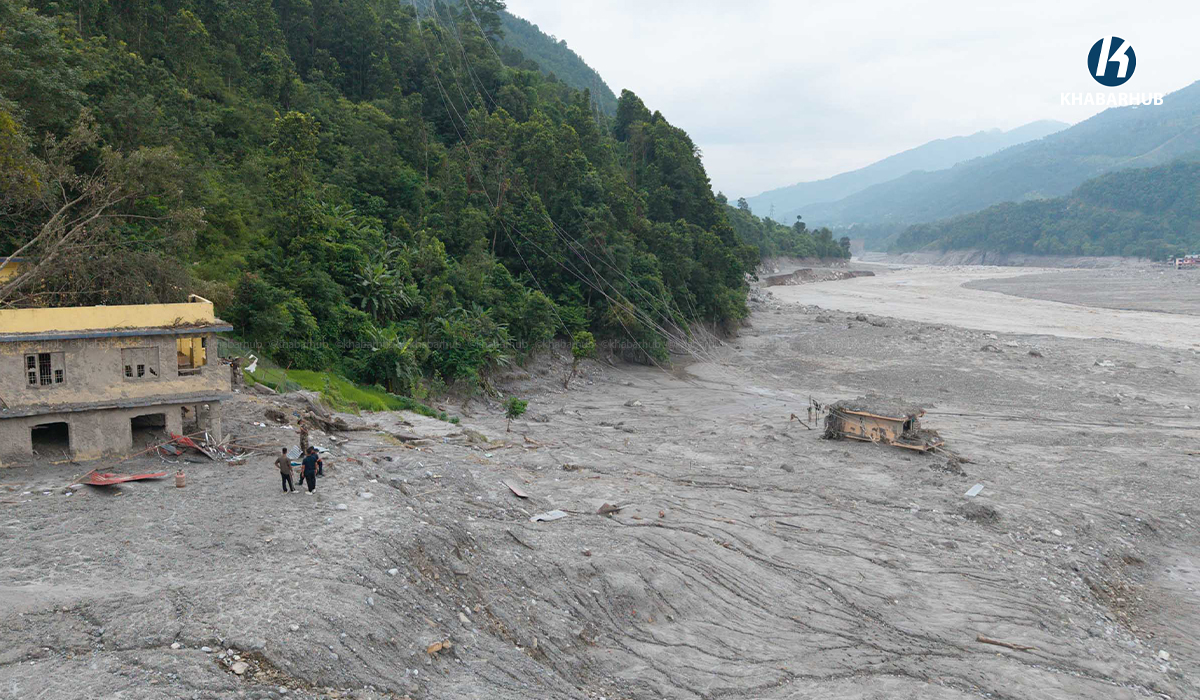
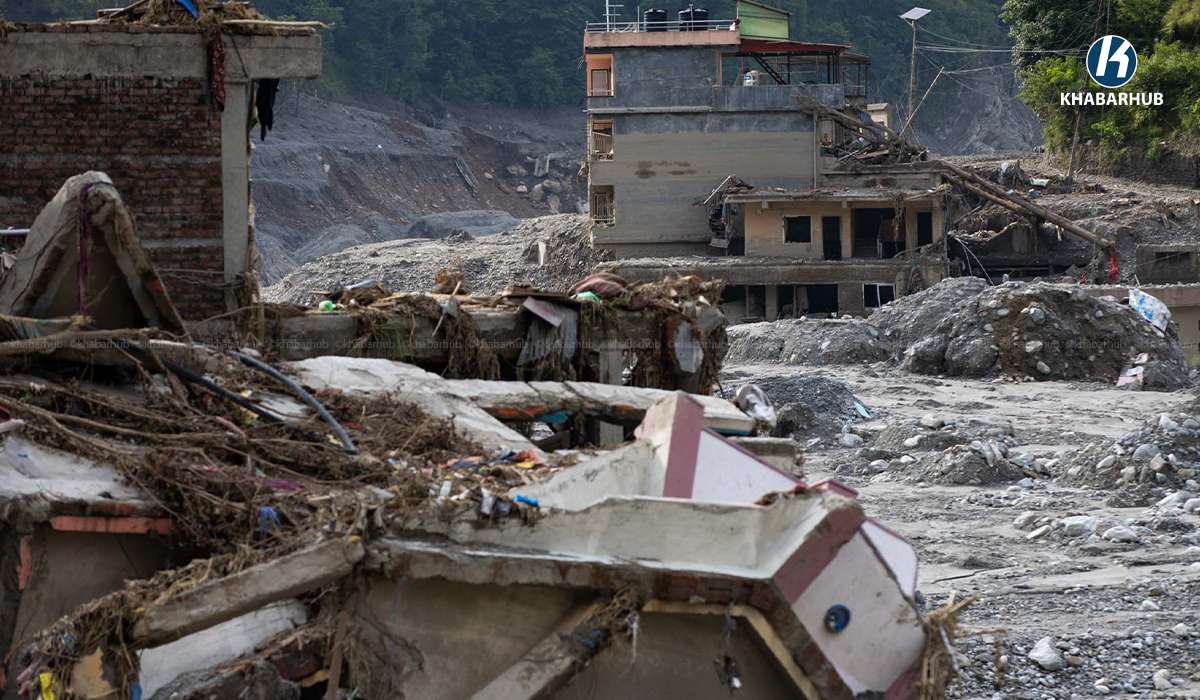
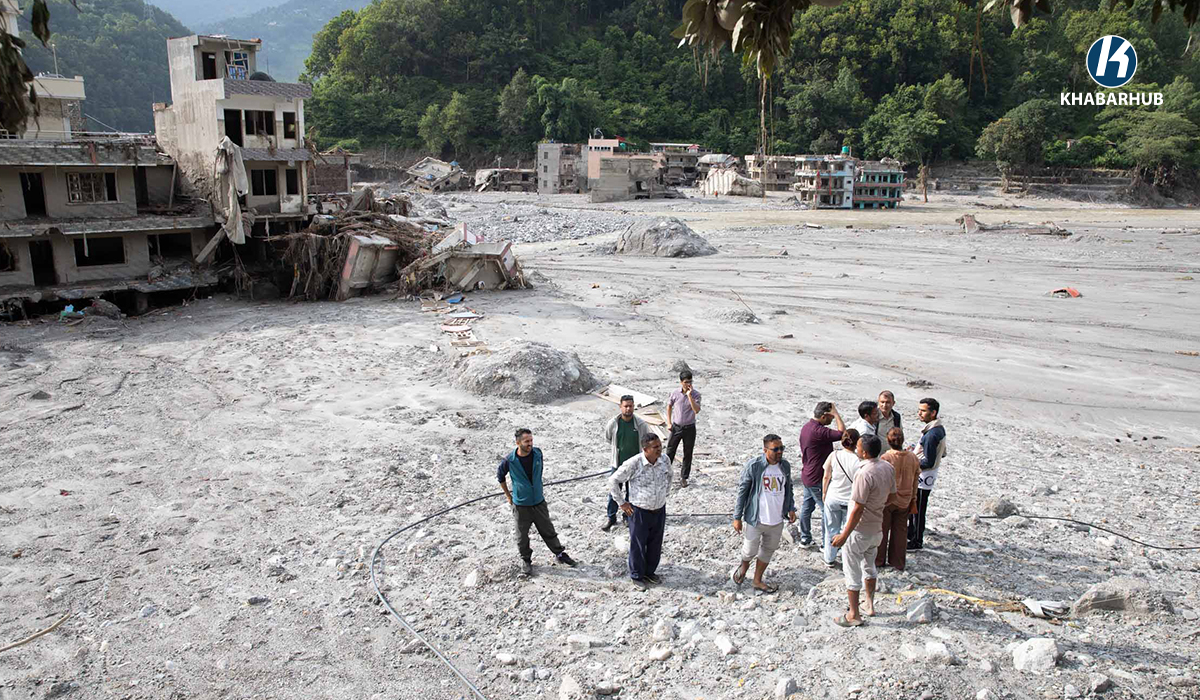
Where houses once stood, there are now piles of stones, mud, debris and wreckage carried by the floodwaters. Some structures are partially collapsed, while household goods and other structures swept away from elsewhere are scattered across the area.
‘We knew a flood was coming, but we did not know it would be like this’
Four days after the disaster, we reached Betrawati after travelling for nearly three hours along an alternative dirt road.
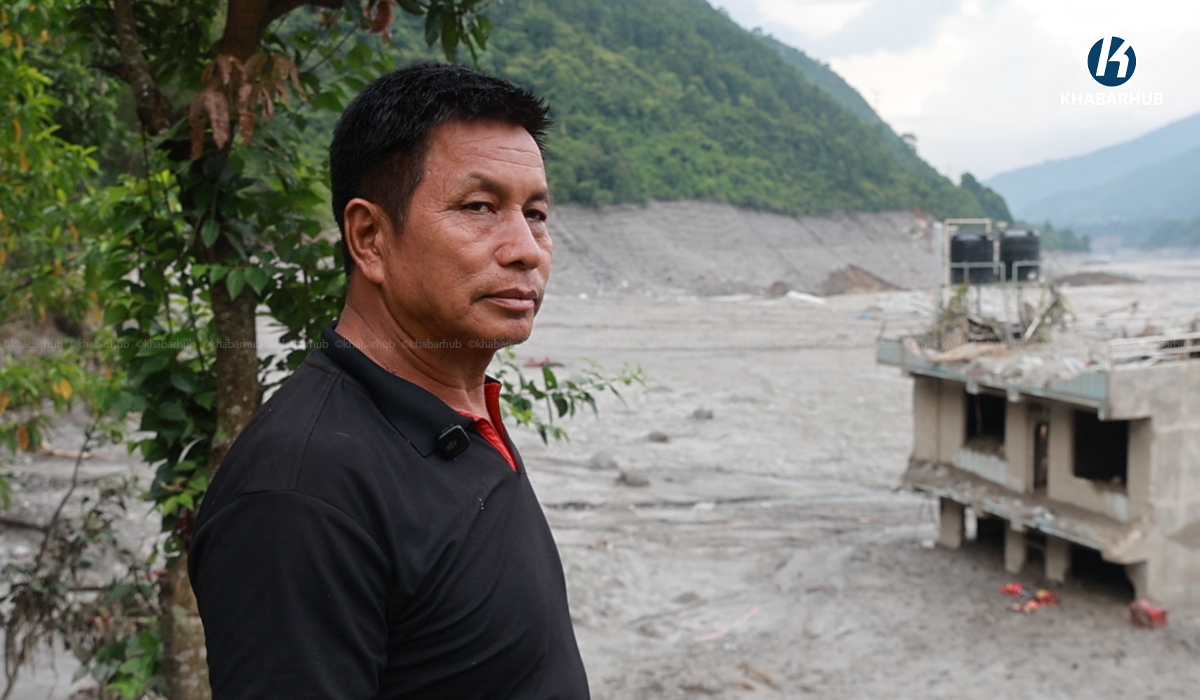
There, we met local resident Indra Bahadur Magar, who recounted what happened before and after the disaster.
According to Magar, residents had only four to five minutes to flee to safety after receiving information that the flood was approaching.
“We only knew about the approaching flood four or five minutes beforehand. Nobody imagined that such a massive flood would come,” he recalled.
According to him, there were around 120 to 125 houses on one side of the bridge alone. The New Pul area across the bridge had around 100 houses. Including other nearby settlements, hundreds of houses have been affected.
But for Betrawati residents, the greatest concern now is not the loss of houses and property.
It is the question: Where are our people?
Magar estimates that nearly half of Betrawati’s population is missing.
“Nearly 50 percent of the population is missing,” he said. “Two members of some families were swept away, three from others. In some houses, only one person survived. In some, no one is left.”
Magar was in Rasuwa when the flood struck. His family was at their home in Betrawati.
Local resident Anand Lal Shrestha alerted Magar’s daughter Anita that the river was rising. Anita immediately ran out of the house with her son. Their decision to flee within minutes saved their lives.
“My daughter and grandson survived. I don’t know what would have happened if the neighbour had not warned them,” he said.
Locals said the flood swept away people even before they could cross the road. Many who were inside their homes, trying to escape or searching for safer places were caught in the violent current.
Magar’s own house was also swept away.
“I am staying in a village uphill now. I had a small one-room house before. We are staying there now. When I came here to look, there was nothing left,” he said sorrowfully.
After the disaster, Magar sent his family to Kathmandu. He has remained in Betrawati.
“I have 10 pigs. I have to come back to feed and give them water,” he said. “I sent my family to Kathmandu. I come back here with food for the pigs and then return to the village uphill to spend the night.”
Residents around Betrawati were not unfamiliar with flooding.
In previous years, the river would rise during smaller floods, and people would even gather on the bridge to watch the water.
But this time, the flood proved their years of experience and assumptions wrong.
“The river used to rise before too. When there was a flood, we would even go to watch it. But nobody thought it would come with such force that it would sweep away the entire settlement,” Magar said.
Searching for bodies a major challenge
The search for missing people and recovery and management of bodies have now become a major task for police and security personnel in Betrawati.
A team led by Senior Superintendent of Police Bimala Das Kandel has been deployed to Betrawati from Nepal Police Headquarters for body management.
According to Kandel, as many as six bodies have been recovered in the Betrawati area in a single day. Three additional bodies were found near the Uttargaya School area. Police said one of them was a student and two were women.
Recovering the bodies safely has become a major challenge for security personnel.
The debris, mud and damaged terrain left behind by the flood have made it difficult for rescue teams to reach the sites and retrieve bodies. Roads have also disappeared in some locations.
In some cases, helicopters have been required to recover bodies.
“In some places, helicopters cannot even land. We have to hover and lift the bodies from the site,” Kandel said.
There is no longer a settlement in many parts of Betrawati, and there are few places for people to stay. Security personnel involved in search and rescue operations are also working under difficult conditions.
Only a handful of houses remain suitable for accommodation in the affected area. Most have been damaged, while many residents have already moved to safer locations.
Food and accommodation have become equally challenging.
Even basic logistical support requires a journey of around three hours to reach the district headquarters in Bidur. With nearly six hours spent travelling back and forth, providing necessary supplies and managing teams involved in search operations has become difficult.
Survivors safe, but facing shortages
Many families who survived the flood have moved to villages uphill, relatives’ homes or Kathmandu. But reaching safety has not ended their problems.
Food shortages have begun emerging in the villages where flood survivors have taken shelter.
Magar said rice, flour and other food supplies available with local residents are running low.
“People have gone to stay in the villages. The food used to be enough for the people who already lived there,” he said. “But now so many displaced people have arrived and everyone needs to be fed. Rice and flour are running out.”
The lack of electricity has made the situation even more difficult.
Although villages have supplies such as rice and maize, residents are unable to process them into food because of the disruption to electricity and other basic facilities.
Locals have also complained that government relief has not reached the affected areas adequately.
Although some individuals, communities and organisations have distributed relief materials, residents say assistance has yet to reach all affected settlements.
The water level in the Trishuli has now receded in Betrawati.
But the pain has not.
Some are searching for missing family members. Others are waiting to identify recovered bodies. Many families are struggling with hunger and shortages in temporary shelters.
Standing amid what remains of the settlement where he and other residents spent most of their lives, Indra Bahadur Magar and other Betrawati residents are still struggling to believe what happened on Bhadra 10.
But the devastation they witnessed with their own eyes is undeniable.
Where hundreds of houses once stood and a densely populated market once bustled with life, little remains today.
Words/Photos: Prabin Ranabhat/Nepal Photo Library





Comment