




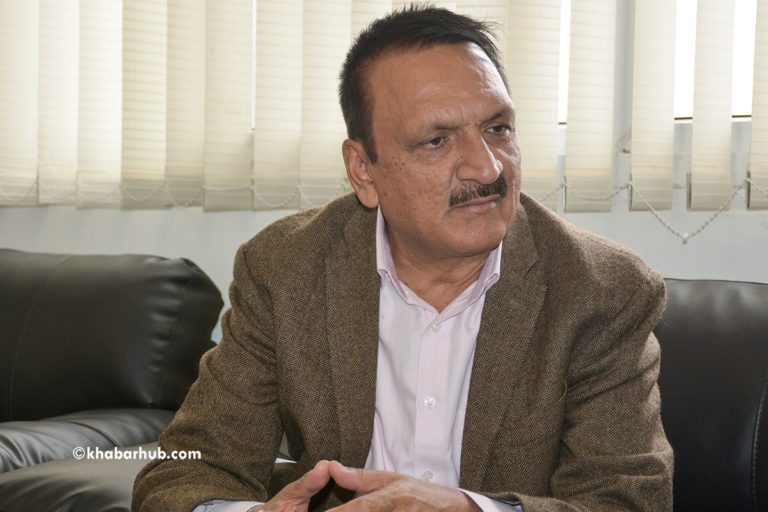
KATHMANDU: Former Finance Minister and Nepali Congress (NC) leader Dr. Prakash Sharan Mahat has described the new budget as ambitious. Commenting on the budget presented by Finance Minister Dr. Swarnim Wagle on Friday, Mahat said the Rs 2.124 trillion budget exceeds the country’s actual economic capacity.
According to him, the budget is not fully practical given the country’s current economic situation. He argued that the government risks increasing the debt burden on citizens without ensuring adequate resources for implementation. However, he also acknowledged that the budget includes several positive provisions. Here are edited excerpts from a short conversation with Dr. Mahat:
How do you analyse this budget?
There are some positive aspects as well. The size of the budget is Rs 2.124 trillion, which is somewhat ambitious. However, increasing the salaries of employees at this stage is justified, as salary adjustments had been halted for the past two or three years.
It appears the government wanted to present a large budget in terms of expenditure and show higher allocations in several sectors. But the challenge lies in raising Rs 1.41 trillion in revenue. The remaining amount is expected to come from domestic and foreign loans. Managing a budget of over Rs 2.1 trillion will be difficult. Resource mobilisation itself will be challenging, and I also doubt whether the government will be able to spend effectively.
Capital expenditure has also been increased. If capital spending can actually be implemented effectively, that would be positive. But we must also consider the practical realities.
The government already spends more than Rs 400 billion annually on interest payments for existing debt. Excessive dependence on borrowing is increasing our liabilities. That is why I feel the budget should have been framed more practically rather than with a populist approach. Many provisions are good, but some targets appear overly ambitious.
Is the budget too ambitious? Many in the private sector seem optimistic.
Overall, implementation will be difficult because of limited resources. If spending capacity remains weak, many announced programmes will not materialise. Larger allocations across sectors may look attractive at first glance, but revenue generation and spending efficiency remain serious concerns.
The National Planning Commission had reportedly recommended a budget of around Rs 1.9 trillion, but the government introduced a budget exceeding Rs 2.1 trillion. At the same time, they have proposed reducing certain taxes. The income tax exemption threshold has been increased from Rs 500,000 to Rs 1 million annually. Some relief was necessary, but I believe the measures should have been introduced more cautiously and realistically.
If implemented properly, can the budget generate positive momentum?
Every government expresses commitment to implementation. However, I think implementation will be difficult. There is also the risk of inflationary pressure. That said, many provisions in areas such as health, education and social security are positive.
What should the government have prioritised?
We had already suggested focusing more on increasing domestic production. To strengthen production, Nepal must be able to compete with imports and substitute imported goods. Domestic agricultural and industrial production should be encouraged. Customs duties on some imported goods that compete with locally produced items should be increased. Production-based subsidies should also be introduced.
The government has announced agricultural loans of up to Rs 20 million and a 40 percent increase in subsidies for farmers. However, we must also ensure whether such support is actually reaching productive sectors.
Did you criticise the budget from the opposition’s perspective?
On one hand, the government says it does not want to impose a heavy tax burden, but on the other hand, it expects to significantly increase revenue collection. The remaining gap is expected to be covered through borrowing.
The same leaders who previously argued against excessive borrowing are now relying heavily on loans. Public debt has already reached around 43 percent of GDP. If the country continues adding debt upon debt, the burden on the economy will only increase.
If the government manages to implement the budget successfully, that will be positive for the country and the government itself. However, we believe it is not appropriate to further burden the country with excessive debt in pursuit of ambitious and populist policies. Overall, I extend my best wishes to the government.





Comment