





KATHMANDU: The newly formed government led by Prime Minister Balendra Shah on Saturday unveiled a 100-point agenda, prioritizing good governance and easing the difficulties citizens face in accessing public services.
Among the key measures, the government has announced plans to amend the Public Procurement Act 2007 within a month to reform the public procurement system and improve project management.
Under the section on public procurement and project management reform in the agenda, the government stated that the law will be revised within 30 days to make procurement processes and development projects more effective, transparent and time-bound.
“The amendment aims to control delays, cost overruns, poor-quality work and corruption in public procurement,” the document states.
Following the amendment, concepts such as quality-based evaluation, life-cycle costing, electronic government marketplace and performance-based contracting will be introduced.
The government also plans to fully digitize procurement processes to ensure transparency and encourage competition.
National project pipeline
The agenda states that a national-level project pipeline will be developed to manage priority development projects. Projects will be ranked based on economic, social and environmental considerations.
The National Planning Commission (Nepal) has been tasked with completing the preparatory work within two months.
The government also plans to review projects that have remained stalled for a long time or have failed to meet deadlines.
According to the agenda, problems related to budget allocation, land acquisition, environmental impact assessment approval and procurement procedures will be simplified.
A study team will be formed within 30 days to assess the feasibility and justification of sick projects and those where contracts have been terminated.
Fast-track mechanism for major projects
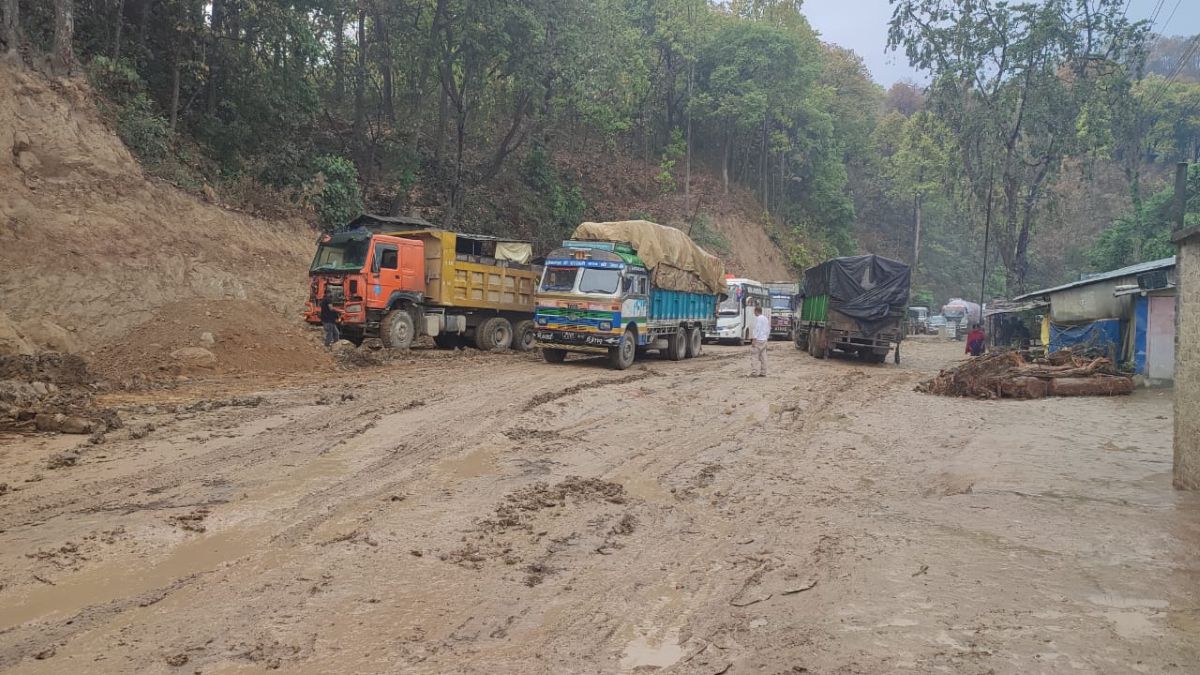
To accelerate implementation of national pride and strategic projects, the government plans to introduce a fast-track mechanism.
Processes related to land acquisition, compensation determination, tree felling and approval of environmental impact assessment reports will be integrated and automated.
The government also plans to eliminate unnecessary delays and duplicate procedures while setting clear timelines for implementation.
New laws and monitoring system
Infrastructure projects that fail to attract bidders after two attempts will be implemented directly through government infrastructure construction companies. Necessary legal arrangements for this will be prepared within 30 days.
To prevent irregularities in project selection, contracting and payment processes, the government will introduce a data-based end-to-end electronic procurement monitoring system within 90 days.
The government will also draft an umbrella law on project facilitation within 60 days to address complexities in project approval and implementation processes.
Additionally, authorities plan to immediately introduce a monitoring schedule to ensure timely completion of major road and transport infrastructure projects that have long caused inconvenience to the public.
A study will also be conducted in risk-prone areas along highways to install weighbridges within 45 days.
Contractors welcome reform plan
President of the Federation of Contractors’ Associations of Nepal Rabi Singh said the government’s plan to amend the procurement law and reform the public construction sector is welcome.
He noted that many projects face delays because they are put out to tender without ensuring budget availability, site clearance and completion of other legal procedures such as forest clearance.
“Projects should be tendered only after ensuring budget allocation, site clearance and completion of all required legal processes,” Singh said.
According to him, the government has signed agreements for projects worth Rs 1.9 trillion in the current fiscal year, but only about Rs 400 billion has secured funding.
He said awarding contracts solely on the basis of the lowest bid has also led to declining quality in construction projects. Proper evaluation of both cost and quality could help address public complaints.
Singh further said contractors currently have to go through as many as 37 different administrative desks to receive payments for completed work.
“Even after completing the process, payments can be delayed unless additional payments are made to officials,” he claimed, stressing the need to implement a faceless system to end such practices.
He also urged the government to strengthen the role of the Public Procurement Monitoring Office and align procurement laws with international practices.
Singh pointed out that provisions under Section 59 of the procurement law, which require contractors to bear costs after a contract termination, are complex and uncommon in international procurement practices.
He said the new government should prioritize reforming such provisions.






Comment