




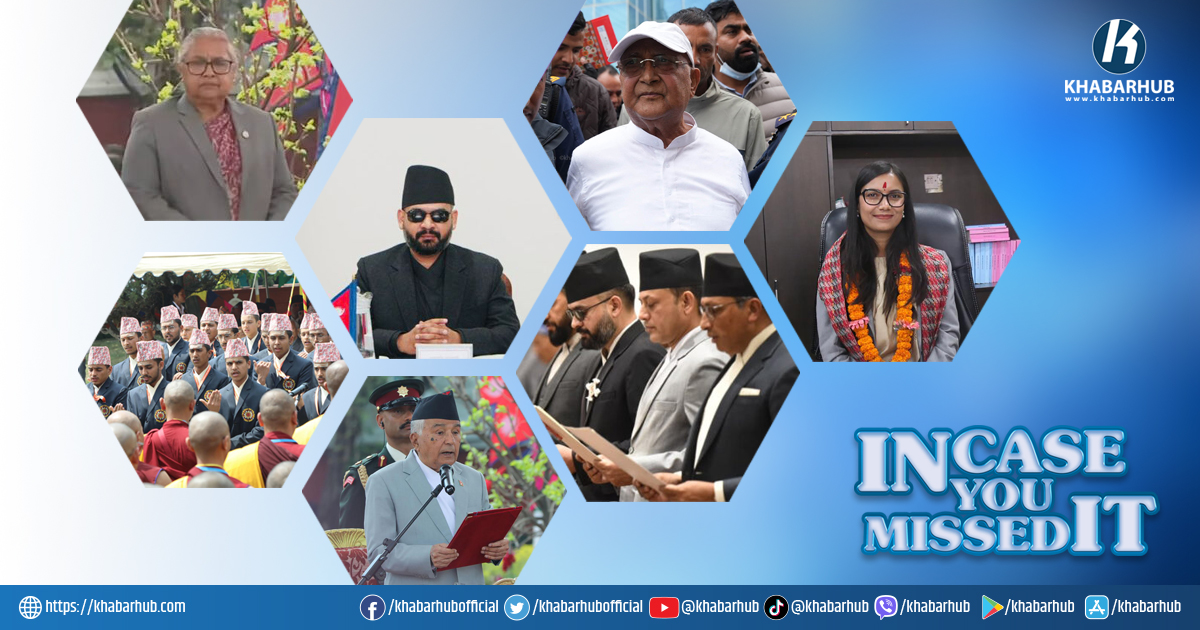
KATHMANDU: The past week marks one of the most consequential turning points in Nepal’s recent political history. The swearing-in of Balen Shah as Prime Minister, followed by the dramatic arrests of former Prime Minister KP Sharma Oli and former Home Minister Ramesh Lekhak, signals not merely a change in leadership but a deeper restructuring of Nepal’s political order.
When viewed alongside anti-corruption actions, institutional developments, and foreign policy signals, these events collectively suggest that Nepal may be entering a phase of political recalibration driven by public demand for accountability, generational change, and governance reform.
The Rise of Balen Shah
The elevation of Balen Shah to the premiership represents a profound shift in Nepal’s political culture. His trajectory, from an independent mayor of Kathmandu to the leader of a parliamentary majority under the Rastriya Swatantra Party, reflects the growing appeal of anti-establishment politics. Unlike traditional leaders who rose through party hierarchies, Shah’s legitimacy is rooted in urban governance, technocratic appeal, and youth mobilization.
His victory over KP Sharma Oli in Jhapa-5 is symbolically significant. Oli, a dominant figure in Nepal’s communist movement, represents the old guard of centralized, personality-driven politics. Shah’s decisive margin suggests a rejection of that model, especially among younger voters and urban constituencies.
However, Shah’s rise is not without contradictions. His tenure as Kathmandu mayor was marked by both innovation and controversy. While he gained praise for waste management reforms and attempts to regulate urban chaos, he also faced criticism over heavy-handed enforcement actions. This dual image, reformer versus authoritarian modernizer, will likely shape perceptions of his premiership.
More importantly, Shah’s leadership raises structural questions: Can a movement-driven political force transition into stable governance? The Rastriya Swatantra Party’s overwhelming parliamentary majority (182 seats) gives it legislative strength, but its relative inexperience may test its ability to manage complex state institutions.
Arrests: Justice or political consolidation?
The arrests of KP Sharma Oli and Ramesh Lekhak represent an unprecedented moment in Nepal’s democratic history. While Nepal has witnessed political instability and corruption scandals before, the detention of a former prime minister and home minister on the basis of an inquiry commission’s findings is rare.
The government, led by Home Minister Sudan Gurung, has framed these actions as the “beginning of justice,” emphasizing the principle that no one is above the law. This narrative aligns with public sentiment following the violent suppression of the Gen-Z protests in September 2025, which resulted in significant casualties and widespread destruction.
In essence, Nepal stands at a crossroads, between transformative reform and recurring turbulence. The direction it takes will depend on how effectively its new leadership balances ambition with restraint, and justice with inclusivity.
Yet, the timing and execution of these arrests also invite scrutiny. The swift implementation of the inquiry commission’s recommendations immediately after Shah’s government took office raises questions about due process and political motivation. Critics may argue that such actions risk being perceived as selective accountability or even political vendetta, particularly given the ongoing protests by UML supporters.
The reaction on the streets, burning tires, road blockades, and rising tensions, indicates that these arrests could deepen political polarization. If mishandled, they may undermine the very legitimacy the government seeks to build through its anti-corruption and accountability agenda.
The Gen-Z movement and state accountability
At the heart of these developments lies the legacy of the Gen-Z protests. The leaked report of the commission led by Gauri Bahadur Karki provides a chilling account of state failure during the protests. The destruction of critical infrastructure, loss of life, and breakdown of security coordination point to systemic weaknesses in Nepal’s governance architecture.
The testimony of STF Commander Samunnat Adhikari highlights key institutional gaps: lack of coordination among security agencies, absence of clear mandates, and inadequate preparedness for large-scale civil unrest. These findings suggest that the issue was not merely one of political decision-making but also of structural inefficiency.
The government’s decision to act on the report is therefore significant, but it must go beyond arrests. Without deeper reforms in policing, intelligence coordination, and crisis management, similar failures could recur. The challenge for Shah’s administration is to translate accountability into institutional strengthening.
Anti-corruption drive
The filing of a major corruption case related to the Pokhara Regional International Airport project signals an intensified anti-corruption push. The involvement of senior bureaucrats, multiple institutions, and international contractors underscores the systemic nature of corruption in large infrastructure projects.
The scale of alleged financial irregularities, over Rs 461 million, points to entrenched collusion between political, bureaucratic, and corporate actors. If pursued rigorously, this case could set a precedent for accountability in public procurement.
However, the effectiveness of this anti-corruption drive will depend on consistency. Nepal’s history is replete with high-profile investigations that failed to result in meaningful convictions. For the current efforts to be credible, they must be insulated from political interference and applied across party lines.
Political realignment and party crisis
While the Rastriya Swatantra Party consolidates power, traditional parties are undergoing internal crises. The Nepali Congress, led by Gagan Kumar Thapa, is struggling to recover from electoral defeat. The announcement of its 15th general convention schedule reflects an attempt to reorganize and regain relevance.
Similarly, the UML faces a leadership vacuum following Oli’s arrest. These developments suggest a broader realignment in Nepal’s political landscape, where legacy parties are being challenged by newer, more agile political formations.
The long-term question is whether this transition will lead to a more competitive and programmatic party system or further fragmentation and instability.
Governance and institutional developments
Amid political upheaval, several governance-related measures indicate attempts at institutional continuity. The swearing-in of new lawmakers under constitutional provisions reinforces the formal functioning of democratic institutions.
Similarly, the Immigration Department’s policy mandating trekking guides in restricted areas reflects a pragmatic approach to tourism management, balancing safety, regulation, and economic opportunity. While seemingly minor, such policies contribute to state capacity and public service delivery.
Foreign policy signals
The statements by Chinese Ambassador Zhang Maoming highlight the external dimension of Nepal’s political transition. China’s emphasis on stability, infrastructure development, and investment reflects its strategic interest in Nepal as part of its broader regional engagement.
The ambassador’s remarks also underscore key challenges: investment security, policy clarity, and bureaucratic inefficiencies. These are long-standing issues that have hindered Nepal’s ability to attract foreign investment.
For Shah’s government, managing foreign relations will require a delicate balance. Nepal’s geopolitical position between India and China necessitates a nuanced approach that avoids overdependence on either side while maximizing economic opportunities.
Conclusion: A critical juncture
Taken together, last week’s events represent a critical juncture in Nepal’s democratic evolution. The rise of Balen Shah symbolizes a break from traditional politics, driven by public demand for change. The arrests of former leaders reflect a push for accountability but also carry risks of political polarization. Anti-corruption efforts and institutional reforms indicate a willingness to address systemic issues, though their success remains uncertain.
The central challenge for the new government is to convert momentum into sustainable governance. This requires not only political will but also institutional capacity, legal rigor, and public trust. If Shah’s administration can navigate these complexities, it may usher in a new era of governance in Nepal. If not, the current moment could devolve into another cycle of instability.
In essence, Nepal stands at a crossroads, between transformative reform and recurring turbulence. The direction it takes will depend on how effectively its new leadership balances ambition with restraint, and justice with inclusivity.




Comment