




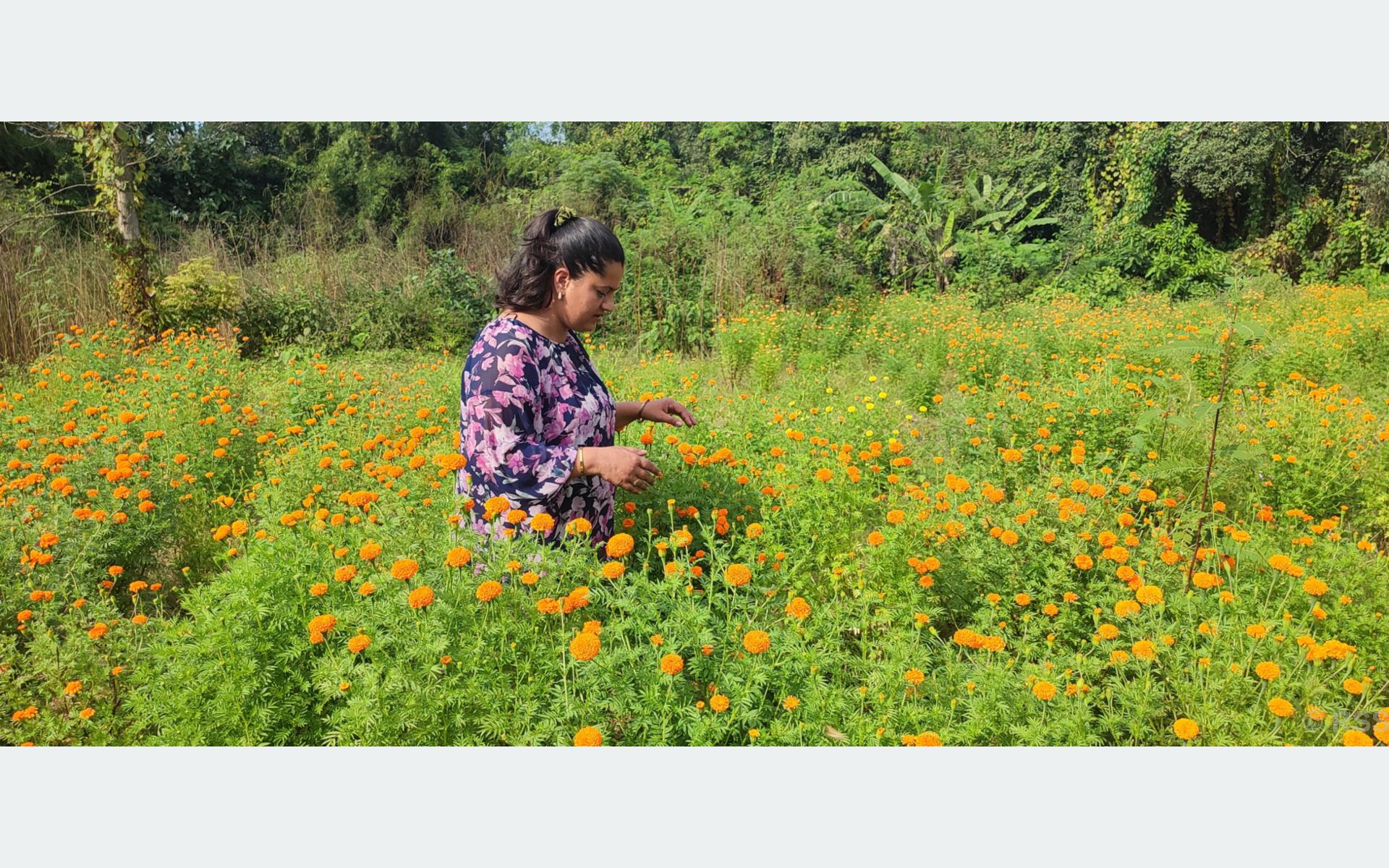
KANCHANPUR: Flower traders in Kanchanpur are optimistic as advance orders for flowers begin to arrive ahead of the Tihar festival.
After facing losses in previous years due to a lack of markets and flowers rotting in their fields, local flower growers have welcomed the early demand this year.
Sirjana Joshi of Bhimdatta Municipality-1, who has been involved in flower farming for seven years, said she had suffered significant losses in the past because she could not find buyers for her produce.
“Until two years ago, our flowers often rotted in the fields because there was no market for them,” Joshi said. “Last year, we earned a good income after the flowers found a market.”
She attributed the improved market for locally grown flowers last year to restrictions imposed by the local administration on plastic garlands and flowers imported from India.
“After our flowers found a market last year, I expanded cultivation this year. We have already started receiving advance orders ahead of Tihar, which has made us excited,” she said, adding that 20 kilograms of flowers had been booked so far.
Joshi began her flower business with 300 plants seven years ago. She now cultivates flowers on 15 katthas of leased land, paying an annual rent of Rs 30,000.
In the second year of her business, she planted 1,000 flower plants, but the entire harvest went to waste due to a lack of buyers. The following year, she increased cultivation to 4,000 plants, only to see the flowers rot while being transported to Kathmandu for sale.
“Just two years ago, around two quintals of flowers were wasted because we could not sell them,” she said.
Last year, Joshi cultivated flowers on 10 katthas of land and earned a good return after finding a market for her produce.
“After deducting the expenses for workers and labourers, I earned Rs 150,000,” she said. Encouraged by last year’s earnings, she has expanded cultivation this year.
Joshi hopes the growing demand will help her recover the losses she incurred in previous years. She believes locally grown flowers should be prioritised for Tihar and other festivals and events.
“We have struggled a lot to find markets for locally produced flowers. People should use locally grown flowers during Tihar and other celebrations,” she said.
According to Joshi, flower farming generates nearly three times as much income as traditional farming, making it an attractive alternative for farmers.
This year, she aims to sell four quintals of flowers during Tihar, with the selling price set at Rs 500 per kilogram.
Megha Rawal of Bhimdatta Municipality-15 has also entered the flower business, encouraged by its growing commercial potential. Rawal has cultivated 2,400 flower plants on four katthas of land.
“Demand for locally grown flowers has increased, and we expect to earn up to Rs 100,000 from flower sales during Tihar,” Rawal said. The cultivation cost amounted to Rs 25,000.
Rawal plans to expand flower farming next year if the current harvest secures a good market.
Marigold flowers have become increasingly popular during Tihar, when they are widely used to make garlands and decorate homes and places of worship. Demand also remains strong for weddings, cultural celebrations and other events, encouraging local farmers to expand commercial flower cultivation.






Comment