




KATHMANDU: Questions are mounting over the government’s handling of the communal unrest in Sunsari’s Dewanganj after Prime Minister Balen Shah and Home Minister Sudan Gurung faced criticism for what many political leaders, analysts, and members of civil society describe as an inadequate public response.
The criticism comes in the wake of Sunday night’s violent incident in Dewanganj-3, Kaptanganj, which has heightened concerns over the country’s security situation and the government’s crisis management.
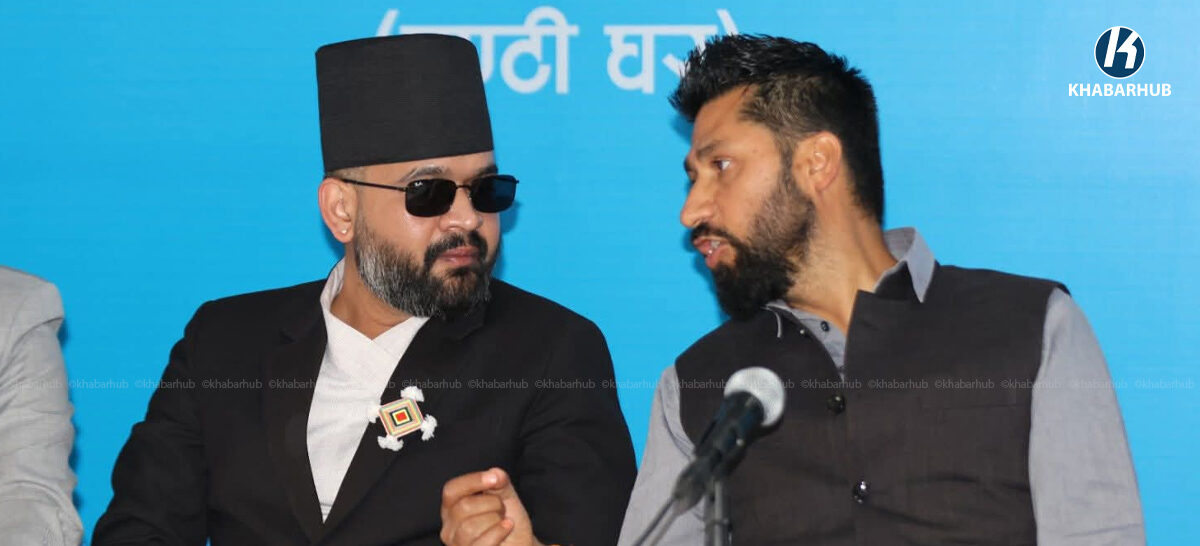
Amid growing criticism of the government, Rastriya Swatantra Party (RSP) Chair Rabi Lamichhane has drawn praise for taking a more visible role in political outreach. Some observers have even begun asking, “Who is Nepal’s Prime Minister—Balen Shah or Rabi Lamichhane?” arguing that Lamichhane has appeared to be taking on responsibilities traditionally associated with the head of government.
Before assuming office, Shah was known for frequently criticizing previous governments through social media and public platforms. Critics now argue that, following the Sunsari unrest, he has limited his public response to a Facebook post issued late Tuesday, without delivering a detailed public address.
As protests, arson, vandalism, and communal tensions spread across parts of Sunsari after the Dewanganj incident, Shah has not made a comprehensive public statement. Home Minister Sudhan Gurung has also been criticized for focusing primarily on deploying security forces rather than taking broader political initiatives to defuse the crisis.
The Home Ministry, however, has said that security agencies have been instructed to conduct investigations and legal proceedings, while district authorities have been directed to take necessary measures to maintain law and order.
Against the backdrop of growing concerns over religious and social harmony in Nepal’s multiethnic and multireligious society, calls have intensified for stronger leadership from the country’s executive branch.
On Wednesday, Lamichhane convened an all-party meeting to discuss the situation. Prime Minister Shah and Home Minister Gurung did not attend the meeting, prompting renewed questions from political observers about the government’s visibility during the crisis.
Following the meeting, Lamichhane met President Ram Chandra Paudel at Shital Niwas to brief him on the meeting’s conclusions and the evolving political situation. Commentators noted that such briefings are typically conducted by the Prime Minister, fueling further debate over the government’s leadership during the crisis.
Several political analysts and journalists have publicly questioned the Prime Minister’s response.
Political analyst Indra Adhikari said the Sunsari unrest was fundamentally a matter of public security and governance rather than economics, arguing that the Prime Minister, Home Minister, and other senior leaders should have attended the all-party meeting and coordinated directly with all stakeholders.
Journalist and author Sudheer Sharma also argued that many responsibilities expected of the Prime Minister—including issuing appeals for calm, convening political dialogue, coordinating with opposition parties, releasing joint statements, urging restraint, and briefing the President—had instead been undertaken by Lamichhane. While he said there was nothing wrong with Lamichhane’s involvement, Sharma argued that the Prime Minister should have demonstrated stronger leadership during such an extraordinary situation.
Senior journalist Kishore Shrestha described the all-party meeting as a positive initiative but maintained that matters concerning peace, security, and communal harmony should primarily be led by the Prime Minister and the Home Minister. He said their absence from the meeting sent an unfavorable message.
Journalist Poonam Paudel argued that the Prime Minister’s official position should be communicated through formal government channels rather than solely through a Facebook post, calling for an official statement from the Prime Minister’s Office.
Journalist Bimal Pokharel said the issue extends beyond whether the Prime Minister and Home Minister attended the meeting, describing it instead as a broader question of leadership during times of national crisis.
Former CPN-UML lawmaker Thakur Gaire also criticized the absence of the Prime Minister and Home Minister from the all-party meeting, saying it projected a lack of urgency and sensitivity toward the crisis unfolding in Sunsari.
The government’s handling of the Dewanganj unrest has continued to attract criticism from political commentators, with many arguing that all political parties and state institutions should work together to restore peace and preserve social harmony. Government officials, meanwhile, maintain that state agencies remain actively engaged in maintaining security, investigating the incident, and preventing further escalation.



Comment