




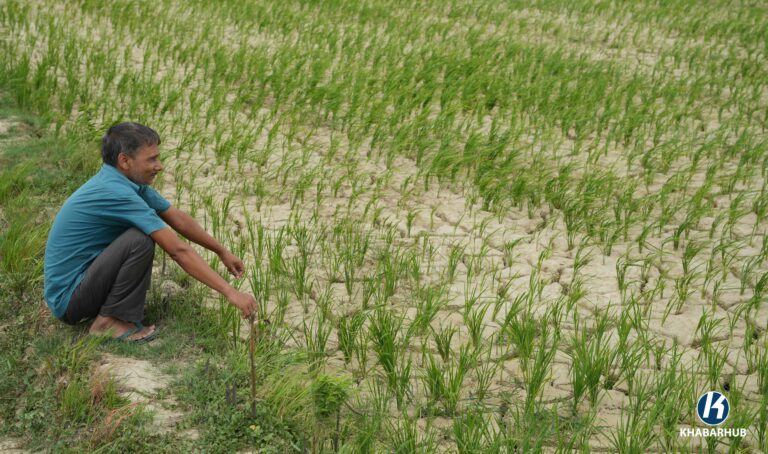
GULMI: Paddy transplantation has been severely affected in Gulmi district this year, with only 11 percent of the total targeted area planted so far due to insufficient rainfall and irrigation challenges.
According to the Agriculture Knowledge Centre, Gulmi, only 719.51 hectares—around 11 percent of the total 6,541 hectares earmarked for paddy cultivation—has been transplanted as of Sunday.
Information Officer Tikakam Nyaupane said that most farmlands remain barren as farmers continue to wait for adequate rainfall to begin large-scale plantation.
Centre Chief Naresh Dhital said the lack of sufficient rain has directly impacted paddy farming across the district. “Most major paddy-producing areas have not been transplanted yet due to water shortage. Planting will accelerate once rainfall improves,” he said.
Farmers in major agricultural pockets, including the large Chaurasi Faat in Isma Rural Municipality-6, have reported significant delays. Local farmer Krishna Ghimire said that while nearly 80 percent transplantation had been completed in the same area by Asar 15 last year, only around 15 percent has been completed so far this year.
He added that irregular rainfall, lack of irrigation facilities, and difficulty in accessing chemical fertilisers have further worsened the situation.
Another farmer from Dhurkot Rural Municipality-6, Meghnath Aryal, said paddy transplantation has been delayed entirely due to lack of water. “We have no irrigation source this year, so planting has been pushed back,” he said.
Agricultural officials warned that continued delay could negatively affect overall paddy production in the district.
Gulmi’s major rice-producing areas include Bhadigad Faat, Chaurasi Faat, Chhaldi, Nisti, Panaaha, Sudi, Khaireni, Khajryang, Shantipur and Majuwa, most of which still rely heavily on rainfall for cultivation.




Comment