




KATHMANDU: The government has announced deadlines for the construction of high-capacity transmission lines aimed at transporting generated electricity to major load centers, as well as enabling the sale and distribution of surplus power at regional and sub-regional levels.
The initiative is intended to address longstanding delays in transmission line construction and ensure projects are completed ahead of schedule. Measures have also been introduced to resolve issues related to tree felling, simplify compensation distribution, and diversify investment.
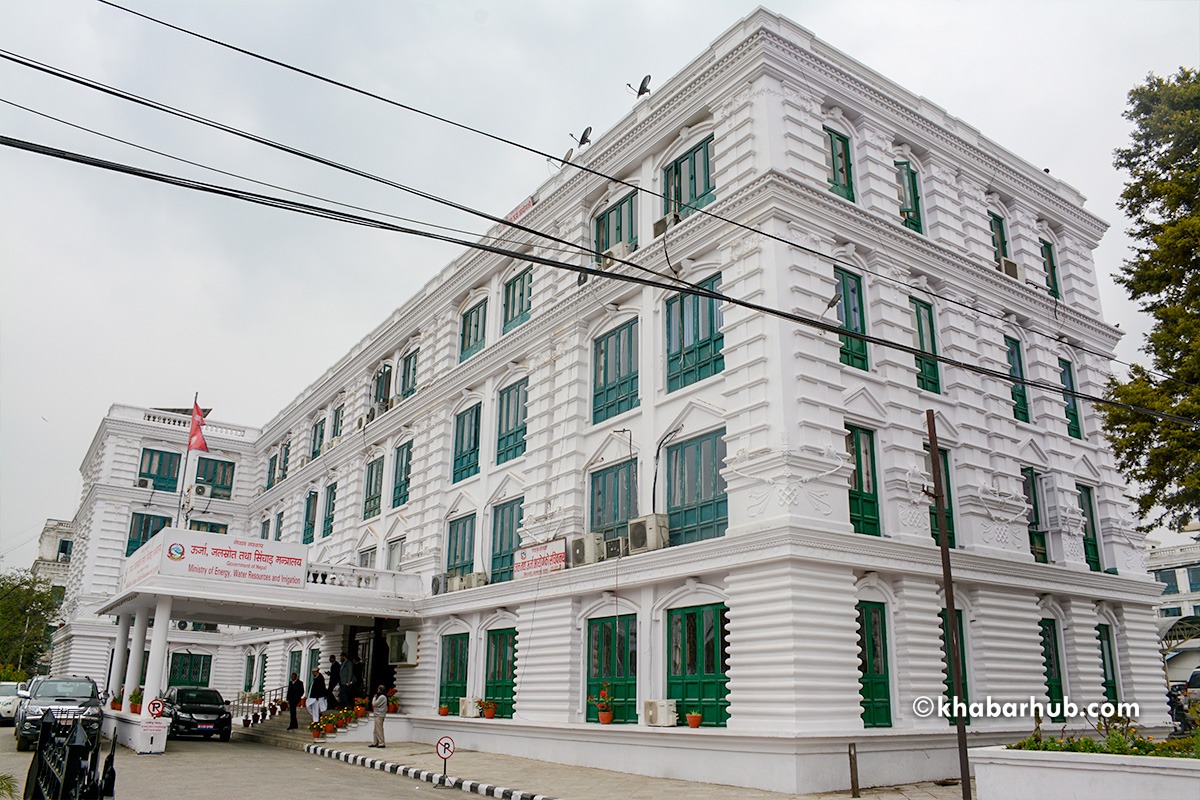
Under the Electricity Consumption Growth and Energy Export Strategy, 2082, unveiled by the Ministry of Energy, Water Resources and Irrigation, specific timelines have been set for key projects.
According to the strategy, the Hetauda–Dhalkebar section of the Hetauda–Dhalkebar–Inaruwa transmission line is to be completed by the end of the current fiscal year, while the Dhalkebar–Inaruwa section has already been finished.
The Nepal Electricity Authority (NEA) has been tasked with expediting the project, which had previously faced delays due to issues such as tree felling, forest land use, and compensation. These challenges have recently been addressed, allowing work to resume under the ministry’s initiative.
Similarly, the 400 kV Khimti–Barhabise–Kathmandu transmission line is targeted for completion by fiscal year 2084/85 BS (2029). Local governments and the Ministry of Forest and Environment have been assigned responsibility for resolving any construction-related obstacles.
The Hetauda–Ratmate–Lapsiphedi and New Damauli–New Butwal transmission lines, each with a capacity of 400 kV, are scheduled for completion by fiscal year 2086/87 BS (2030). The New Butwal–Lamahi transmission line is expected to be completed by fiscal year 2087/88 BS.
Other major projects include the Lamahi–Chinchu–Dododhara and Kimathanka–Haitar–Sitalpati transmission lines, both set for completion by fiscal year 2089/90 BS (2033). The Arun Hub–Inaruwa, Inaruwa–Anarmani, Phukot–Betan–Dododhara, and Tingla–Dudhkoshi–Dhalkebar transmission lines are targeted for completion by fiscal year 2090/91 BS.
Additionally, the Bheri Corridor and Seti Corridor transmission lines are expected to be completed by fiscal year 2090/91 BS (2034), while the Dododhara–Attariya–Lamki transmission line is scheduled for completion by fiscal year 2091/92 BS (2035). All of these projects have a capacity of 400 kV.
The government has given special priority to expanding transmission infrastructure to ensure efficient delivery of electricity to consumer centers. The strategy emphasizes structural reforms, policy clarity, and timely project completion. It also highlights the importance of developing international transmission lines and increasing cross-border capacity.
The Dhalkebar–Muzaffarpur international transmission line is targeted for completion by fiscal year 2083/84 BS (2027). Other priority cross-border projects include Butwal–Gorakhpur, Nanpara–Nepalgunj, Inaruwa–Purnia, Lamki–Berli, Lamahi–Lucknow, Nijgadh–Motihari, Chameliya–Jauljibi, and Chilime–Hub–Kerung transmission lines.
The strategy also focuses on increasing domestic electricity consumption and exporting surplus energy. Efforts will continue to modernize smart grids and substations, with a target to expand substation capacity to 40,000 MVA by fiscal year 2092/93 BS (2036).
In addition, the plan prioritizes agricultural modernization by extending electricity feeders to farmlands and completing underground distribution systems by 2085. By fiscal year 2092/93 BS (2036), subsidies on LP gas will be phased out and replaced with incentives for electric stoves.
The government also plans to expand the charging station network nationwide and promote electric buses and trolley buses in major cities.
Currently, Nepal’s total installed electricity capacity stands at 4,086 MW, with 98 percent of the population having access to electricity. The strategy aims to reduce dependence on fossil fuels and boost domestic consumption in line with the country’s commitment to achieving net-zero carbon emissions by 2045.
Nepal has already signed a long-term electricity trade agreement with India to export 10,000 MW of electricity over the next decade. At present, around 1,200 MW of electricity is being imported and exported between Nepal, India, and Bangladesh.
RSS






Comment