




KATHMANDU: The Nepali Congress (NC) remains divided into two factions nearly a month after its special general convention, with no signs of reconciliation.
The establishment faction and the dissident camp continue to operate through parallel organizational structures. Meanwhile, party president Gagan Kumar Thapa, who assumed office through the special general convention, has warned that members who fail to renew their digital active membership by the deadline will no longer be recognized by the party.
The warning has fueled criticism from within the party, with many leaders arguing that the leadership has focused more on administrative measures than on efforts to bridge the internal divide.
At the same time, the dissident faction has stepped up preparations for the party’s 15th General Convention by establishing an office in Chundevi, Maharajgunj, Kathmandu, and expanding its organizational activities.
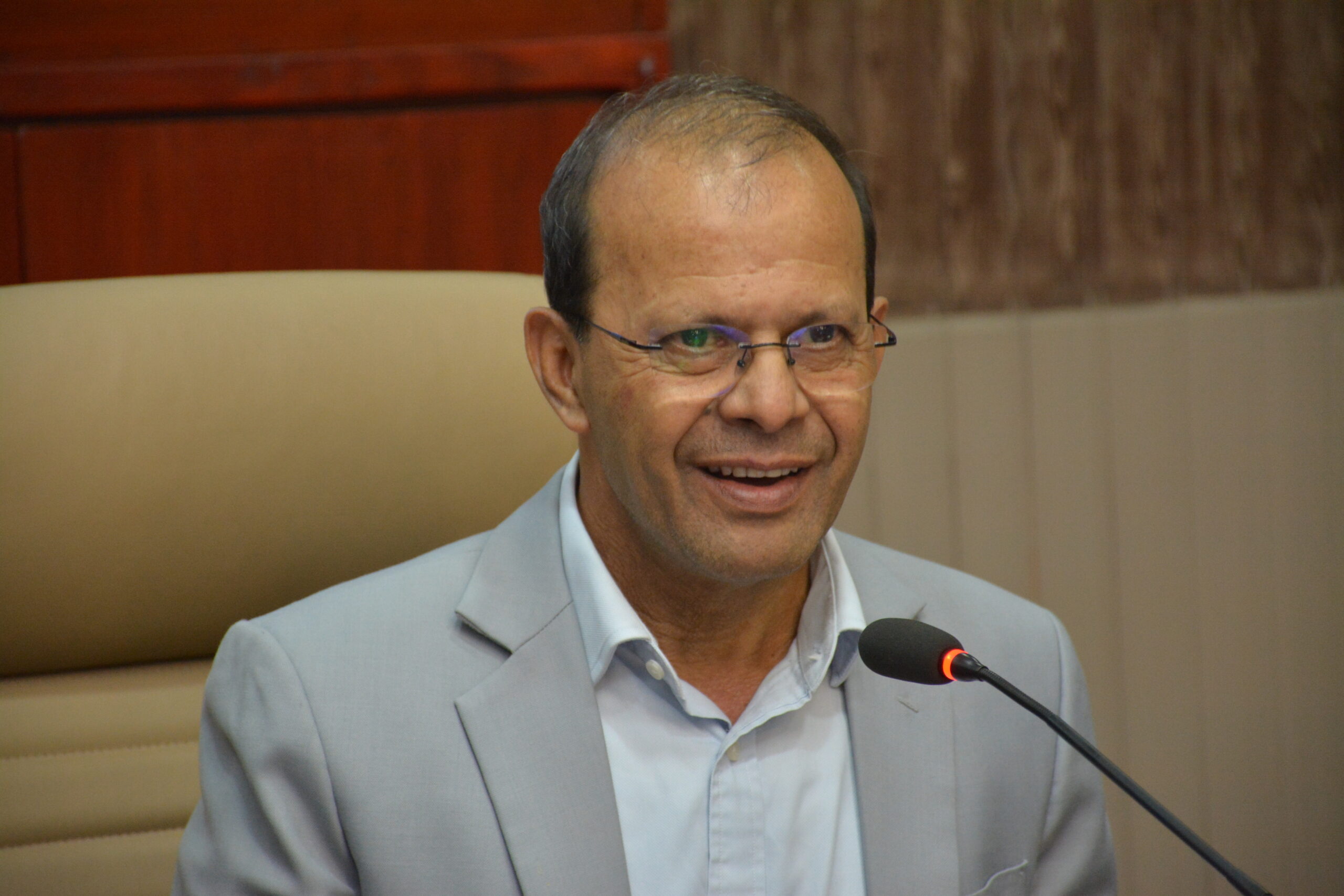
Against this backdrop, Khabarhub spoke with Nepali Congress leader and former minister Dr. Minendra Rijal about the party’s internal rift, the prospects for reunification, and the path toward the next general convention. The following is an edited excerpt from the interview.
Party President Gagan Thapa has warned that anyone who does not update their active membership by July 4 will not be recognized by the party. What is your view?
I have a different perspective from many of my colleagues. I was not in favor of holding the special general convention. However, after the convention, when those of us who opposed it were also given party tickets, I contested the election as an official candidate.
At that time, the matter was still before the court. Eventually, the court recognized Gagan Thapa as the legitimate party president.
I was not personally satisfied with the court’s verdict. But there was no option except to accept it. Accordingly, I updated my active membership in line with the court’s decision. It is no longer appropriate for us to keep debating that issue. We should all unite and focus on the work that lies ahead.
What, then, could be the formula for unity?
Some colleagues have suggested merging the old and the new working committees to resolve the dispute between the two factions. I do not agree with that proposal.
Those who supported the special general convention formed a new working committee because they believed the 14th Working Committee had failed to provide effective leadership to the party.
There is little point in debating who had the majority. Our side did not participate because we believed that process was not appropriate. Therefore, two working committees that emerged from fundamentally different positions should not simply be merged into one.
Ultimately, both the leadership that emerged from the special general convention and those dissatisfied with it want to move toward the regular 15th General Convention. During that process, members should be accommodated in both camps.
The working committee formed through the special general convention, along with its leadership, should be as inclusive and flexible as possible in bringing everyone into the process leading to the regular convention.
Likewise, the other faction should also accept the leadership that has been recognized by the court and work toward the regular general convention. Taking rigid, point-by-point positions is not helpful. Overall, neither side has adopted a solution-oriented approach.
Does that mean the solution is for everyone to update their active membership and accept the working committee elected through the special general convention, without creating additional positions?
Regarding the membership update, I had told the president in Baisakh, during a social event, that requiring members to visit ward offices in person was inconvenient and impractical. As a result, an online update system was introduced.
Now that the process can be completed easily from home, there is no reason to oppose it. However, even the government has struggled to ensure the security of digital records. In such circumstances, I urged the party leadership to pay special attention to information security, and I trust they will do so.
Therefore, my view is this: first, updating active membership is an easy step toward unity. Second, stronger measures are needed to ensure the security of members’ digital information. Third, the two working committees should not be merged.
Finally, neither side held an overwhelming majority. Regardless of what anyone claims, the balance would have been roughly 40–60. A political party cannot function if only one side is represented.
If the goal is the revival of the Nepali Congress, it is the responsibility of the party president and the leadership to find a way to bring everyone together. Otherwise, they risk reinforcing the perception that the Congress has steadily fragmented over the past decade.
Why have Nepali Congress leaders failed to unite even after six months?
There are shortcomings on both sides. That is why I do not want to blame any individual. My interest is in finding solutions, not in determining who is responsible.
Over the past five to ten years, all the leaders who are now trying to move the party forward have been involved in policymaking. I myself have not played an active role in the party for the last five years. Therefore, both factions must accept responsibility for the current situation.
There should certainly be an evaluation of what went wrong, but the priority today should be to reunite the Congress. That review can take place after unity is achieved. For that to happen, both sides must demonstrate flexibility. Unfortunately, neither side has done so. However, the greater responsibility naturally rests with the party president.
At the same time, senior leaders should not insist that their long experience alone entitles them to lead the party. Even those who pride themselves on being intellectuals and academics are expected to show flexibility. If they fail to do so, they are falling short of the standards they themselves advocate.
After I lost the election for general secretary at the last General Convention, I resigned from the Cabinet. The party took that as an act of defiance and even denied me the opportunity to contest from my own constituency.
As a result, I remained outside active party politics for nearly five years. During that time, I became engaged in other work. Yesterday one leadership sidelined me, and today another leadership has done the same.
At this stage of my life, I am not particularly concerned about remaining active within the party. I have enough other work to keep me occupied. That is why I have no interest in speaking loudly in favor of either side. I am prepared to remain outside and observe objectively.
There may be many others like you who still want to remain active in the Nepali Congress. Has the situation reached a point where they are simply being pushed aside?
The message conveyed by the current leadership’s behavior is: If you want to come, come. If you don’t, that’s your choice. Many leaders who have devoted decades to the party have taken that as an insult.
Their response has been that if they are going to be treated that way, they will either remain silent or continue working through parallel structures. In my view, neither response is appropriate.
Even if there is only one committed Congress worker who genuinely wants to remain active, the party leadership should make every effort to keep that person engaged. If it cannot do so, then we have to ask whether the real problem is that there are too many people in the party—or that the party is allowing its own people to walk away.
Leaders on both sides have failed to provide the initiative needed to resolve this crisis. Therefore, neither side can escape responsibility by saying, “It is not my fault; it is someone else’s.”





Comment