




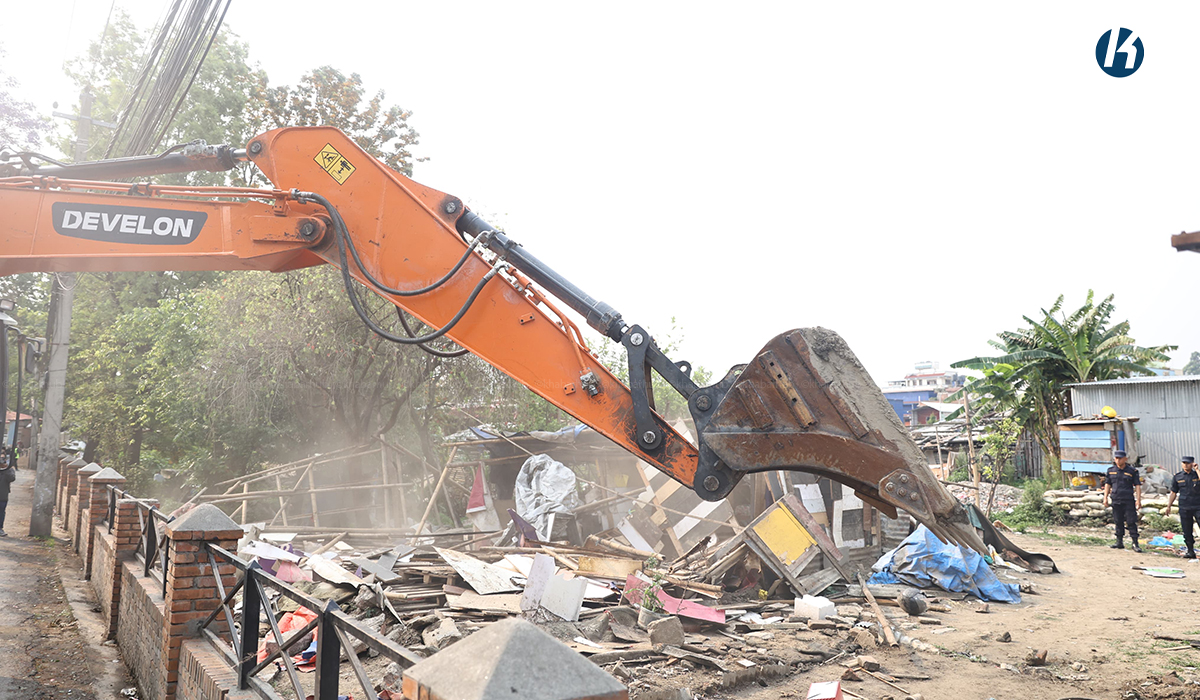
KATHMANDU: The government led by Balen Shah is preparing to transform recently cleared riverbank settlements in the Kathmandu Valley into green belts, open spaces, and public-use areas.
Authorities began removing informal settlements from high-risk river corridors on Saturday, targeting areas along rivers in Kathmandu and Bhaktapur. With the clearance now largely completed in several locations, focus has shifted to how the vacated land will be utilized.
Officials say the cleared zones will be developed under a long-term urban and environmental plan, prioritizing river corridor protection and public space development.
According to the Kathmandu Valley Development Authority, the first phase of the plan involves securing the cleared areas and preventing re-settlement. Acting chief of Kathmandu Metropolitan City, Sunita Dangol, has already directed authorities to install fencing in the vacated zones.
The development work will be led by the High Powered Bagmati Civilization Integrated Development Committee, which has been working on restoring the Bagmati River and its tributaries.
Chief Commissioner Januka Dhakal said the government’s priority is to convert the cleared riverbanks into green corridors.
“It is not appropriate for settlements to remain in high-risk riverbank areas. The cleared land will now be developed into green belts and open spaces,” she said.
Officials added that parks may also be constructed in suitable locations as part of the broader urban improvement plan.
The initiative comes amid growing public expectations, with social media flooded by AI-generated visuals showing parks and landscaped riverbanks. Observers say such reactions reflect citizens’ hopes for cleaner, more organized urban spaces.
However, authorities clarified that while the Shah-led government has set the direction, implementation will be carried out by designated agencies under existing development frameworks.
Alongside infrastructure development, the government is also managing displaced residents. Around 3,367 individuals from 822 families have been recorded after being removed from five settlements. They are currently housed in temporary facilities, with plans to relocate them to shelter homes within the Valley.
Officials say the government now faces the dual challenge of rehabilitating displaced populations while ensuring the cleared land is developed in a sustainable and planned manner.





Comment