




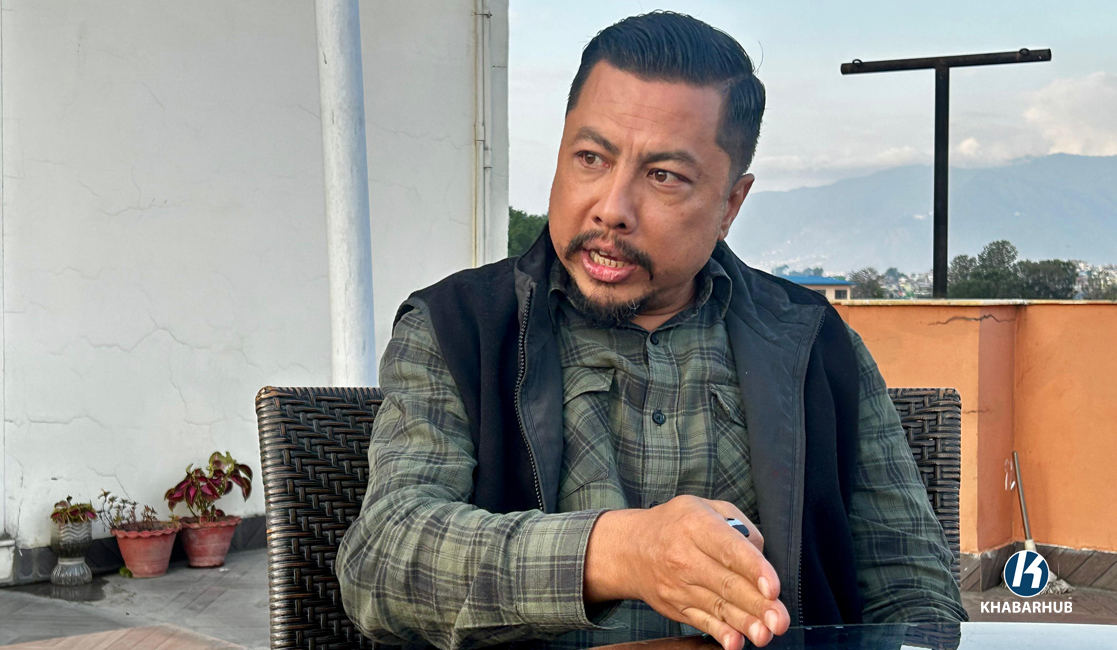
KATHMANDU: Energy, Water Resources and Irrigation Minister Biraj Bhakta Shrestha has said that Prime Minister Balendra (Balen) Shah maintains a non-interventionist approach, allowing ministers to carry out their responsibilities independently.
Shrestha, who previously served as Minister for Youth and Sports, said the Cabinet operates in a coordinated manner without any centralized dominance. He added that despite public perceptions, there is strong coordination between the prime minister and the party leadership, which has helped the government function smoothly.
Speaking about his daily routine, Minister Shrestha said he remains busy at the ministry from 8 am to 6 pm, while also making time on Saturdays to stay connected with constituents in his electoral area.
He noted that ministers have full access to the prime minister and can engage in open and direct discussions when needed. According to him, both the prime minister and the party chair are actively involved in coordination, meeting regularly—sometimes multiple times a week.
Reflecting on governance practices, Shrestha acknowledged that ministries have historically seen the influence of intermediaries pursuing vested interests. However, he claimed that the current government is working to avoid such practices and operate transparently.
On the issue of squatter settlements, he clarified that no formal Cabinet decision has been taken so far, but assured that the government will address the matter in accordance with existing laws and regulations.
Shrestha also pointed out longstanding challenges within his ministry, noting that several energy projects initiated 40 to 45 years ago remain incomplete.
In a candid conversation with Khabarhub, Shrestha discussed the government’s first month in office, its pace of work, coordination between the prime minister and party leadership, Cabinet functioning, and key priorities of the Energy Ministry, including upcoming budget plans.
It has been a month since the formation of the government. How do you evaluate its performance so far?
We came into office during a transitional phase, so the past month has largely been about reviewing and reassessing existing systems. One of the key areas we focused on from the beginning is policy auditing, which has helped identify processes that are unnecessarily complex and inconvenient for citizens seeking basic services.
We have started making improvements in those areas. At the same time, this period has shown that meaningful changes are possible if politics is guided by clear intent.
There are, of course, areas that still require reform. From the Ministry of Energy alone, two bills are currently moving forward, and preparations are also underway regarding civil service-related matters. Since this is also the time to prepare the budget, the government has an opportunity to initiate practical and impactful measures.
Although one month is a short time, we have used it to set a direction. Cabinet meetings have been constructive, with ministries openly discussing areas for improvement and ways to enhance public service delivery.
Broadly, our work can be seen in two areas: day-to-day service delivery and long-term structural reforms. We have begun addressing both by listening to citizens’ concerns, simplifying procedures, and working to resolve legal and administrative complexities.
How would you rate the government’s performance in this first month?
It would be premature to assign a score at this stage. Governance needs to be assessed over a longer period, and there are many dimensions to consider. That said, the government has shown encouraging momentum in terms of initiating work and setting priorities, though much remains to be done.
Large infrastructure projects, for example, take seven to eight years to complete, so progress must also be viewed from a practical and long-term perspective. From the standpoint of my ministry, I am focused on making the energy sector more reliable, efficient, and high-quality.
We are working to revive transmission line projects that have been stalled for three to four years—some have already resumed. There are even projects that have remained incomplete for 40 to 45 years, and we are actively exploring ways to move them forward.
It may be too early to assign exact numbers to the government’s performance. However, the pace of our work clearly shows that we are focused on delivering results. I also urge citizens to continue creating an environment that supports this momentum while keeping the government accountable.
I will come to the ministry’s work in a moment. But first, there is a concern being raised—that the Prime Minister is passing proposals in Cabinet meetings without proper discussion. Is that really the case?
From our experience, that is not true. Proposals are prepared within the respective ministries and then presented in the Cabinet. Even recently, both our ministry and others have tabled and passed proposals through this process.
It is not that the Prime Minister moves forward without discussion or bypasses ministers. The narrative outside does not reflect the reality inside, where the atmosphere is much more cooperative and respectful.
There are also claims that the Prime Minister listens only to members of his secretariat. However, the Council of Ministers follows a clear process.
Proposals are submitted, the Chief Secretary presents them, and discussions take place. Over the past month, the Prime Minister has listened to each minister carefully, giving space for their views and addressing them accordingly.
When needed, we also coordinate among ourselves on who will present which issue. In some Cabinet meetings, routine proposals are discussed and approved, while in others, broader discussions take place. The Prime Minister has also made himself accessible—ministers can approach him directly outside meetings to raise additional concerns or suggestions.
What is happening now is a shift toward a more system-based approach rather than one driven by individuals. There is a growing practice of listening to all ministers in Cabinet meetings and following up on issues consistently. We are even working toward holding such detailed discussions more frequently.
So, the claims being made about the Prime Minister are largely exaggerated. In reality, Cabinet meetings are being conducted in a disciplined and consultative manner. The Prime Minister speaks less but listens more, allowing ministers and ministries to present their perspectives fully.
Is the Prime Minister effectively coordinating with ministers and their ministries?
Yes, very much so. There is strong cooperation across ministries. When challenges arise, they are discussed and resolved collectively. So far, the Prime Minister has listened to all ministers and moved forward by incorporating their inputs. Proposals are brought to Cabinet, discussed, and then approved through due process.
With the budget season underway, discussions have become even more focused. There is continuous exchange of information to ensure decisions are well-informed. Importantly, the Prime Minister has not created obstacles—ministries are free to work independently while receiving necessary support.
Does his relatively reserved style make it difficult to work with him?
Not at all. In fact, ministers have ample opportunity to share their views even after Cabinet meetings. The Prime Minister’s Office also facilitates coordination among ministries. Ministers regularly engage with the Prime Minister to discuss issues and move forward collectively.
Some have said that this level of coordination was not seen in previous governments. Having been part of a previous administration myself, I can say there is a clear difference.
Earlier experience has helped, but more importantly, coordination has significantly improved this time. Inter-ministerial cooperation is now much more efficient—two to three times better than before. Many issues require coordination between ministries such as water supply and physical infrastructure, and this is now happening smoothly.
Having a majority government has also helped align priorities and streamline decision-making. There is a shared commitment to carrying forward the mandate we received. In the past, even when there was willingness, lack of coordination and facilitation slowed progress.
This time, coordination, cooperation, and clarity of purpose have come together—resulting in faster and more effective delivery of government work.
Is your current pace of work aimed at fulfilling promises or addressing the needs of the people?
We are trying to balance both. Our 100-point program provides a clear direction, and at the same time, we are guided by our commitments. From a broader perspective, much of this aligns with the principles of good governance. So, we are prioritizing areas that directly contribute to improving governance.
At the same time, we are focused on making public services more accessible and hassle-free for citizens. We are strengthening systems to ensure that complaints are addressed promptly. In that sense, our approach is both service-oriented and commitment-driven—we are working to deliver on our pledges while responding to people’s immediate needs.
There are also claims that party Chairman Rabi Lamichhane and the Prime Minister are not coordinating well. Is that true?
That is not true at all. From what we have experienced, their thinking and working styles are well aligned. Their coordination has ensured that both government and party functions are running smoothly.
Government activities are on track, and party matters are also progressing as needed. Based on my experience, decisions are being taken with mutual understanding and consultation between the two.
Was the recent issue of removing squatters decided in the Cabinet meeting?
I cannot speak in full detail on that, as I missed one Cabinet meeting due to budget-related work in my ministry. However, to my knowledge, no such decision was made in the meetings I attended. Rather than being a standalone Cabinet decision, such actions are generally carried out in line with court orders, existing laws, and regulations related to managing public land and settlements.
So, it wasn’t a formal Cabinet decision?
Not in the meetings I attended. I cannot confirm what was discussed in the one I missed, but overall, such steps are guided more by legal provisions and court directives than by a single Cabinet decision.
You initially served as Sports Minister and are now leading the Energy Ministry. Some say this was not your core area. How has the transition been?
I bring experience from areas such as alternative energy, environment, and the private sector, which are relevant to this ministry. Based on that, the party leadership and the Prime Minister entrusted me with this responsibility.
Fundamentally, the ministry requires both efficient management and strong coordination with the private sector, especially in areas like investment through the share market.
In terms of management, within a month, we have strengthened internal systems and improved functionality. We addressed 45 public complaints within 15 days of assuming office, as we wanted to respond quickly to issues directly affecting citizens. We have also set up hotline numbers—1151 and 1152—not just to receive complaints, but to actively follow up and resolve them.
Additionally, projects that had been stalled for the past three years, particularly in national transmission lines, have now resumed. Under our 100-point agenda, we have also made public strategic plans for energy consumption and export, inviting feedback from stakeholders and citizens.
This ministry requires both technical expertise and strong management. I am moving forward by combining these aspects and working closely with subject-matter experts to ensure effective implementation.
When will people start remembering and using the hotline numbers mentioned?
These numbers will become especially relevant during service disruptions—such as power outages or other issues related to the energy sector. While the Nepal Electricity Authority already has its own contact system, these hotline numbers—1151 and 1152—are meant specifically for the Ministry to receive and address public complaints.
We have a dedicated team working 24/7. Whenever a complaint is received, it is immediately recorded and coordinated with the concerned agencies to ensure a prompt response. The goal is not just to listen, but to resolve issues efficiently.
Do you feel you have performed better than other ministers in your first month?
It would not be appropriate to make such comparisons in such a short time. However, one achievement I am satisfied with is the establishment of a Good Governance Unit within the Ministry. This unit has been instrumental in reviewing pending files and resolving bottlenecks across departments.
I see this as a positive step toward building a more accountable and efficient system.
Do you believe the problems within your ministry can be resolved?
One key realization in the past 30 days is that many of the challenges are deeply rooted. There are projects that have remained incomplete for 40–45 years—long before our time. In some cases, even when irrigation projects are eventually completed, there is uncertainty about whether the intended beneficiaries, such as farmers, will still be able to fully utilize them.
Some projects scheduled for completion years ago have been delayed due to investment uncertainties and issues related to the Public Procurement Act. Addressing these requires both time and sustained effort.
To tackle this, we have introduced a monitoring dashboard to track project performance—examining returns, identifying causes of delays, and reassessing priorities. Based on this analysis, we are working on making more informed budget decisions going forward.
A major challenge is the burden of ongoing budget commitments. Significant resources are tied up in long-term projects without clear timelines for returns. This has been a concern, but we are now trying to address it systematically.
We are also being cautious about launching new projects, as we do not want to place additional financial pressure on the public or the national economy. At the same time, we are promoting programs through the Alternative Energy Promotion Centre to improve access to electricity in rural areas.
Despite these challenges, there are encouraging signs. Some projects have been completed within three to four years, showing that progress is possible with better management. In the Terai region, we are prioritizing irrigation projects that can significantly boost agricultural productivity.
For example, projects like the Sunkoshi Marine Diversion, as well as Sikta and Rani Jamara, have the potential to irrigate vast areas year-round and substantially increase agricultural output.
There are still gaps in project management and lessons to be learned from past shortcomings. However, we are also seeing renewed momentum—whether in addressing rising energy demand, promoting electric mobility, or expanding access to electricity for households.
Ultimately, increasing domestic energy production and consumption will reduce dependency on imports and strengthen the economy. These efforts, while challenging, are gradually building confidence and creating a sense of forward movement.
Have you encountered any challenges that you feel are difficult to address?
To reach sound conclusions, we have introduced a measurement and analysis system. Since significant public funds have already been spent in the sector, we are now assessing key questions—what has been achieved, what the returns are, and what benefits are reaching local communities and the broader economy. This structured evaluation approach has been established to guide decision-making.
Given that the ministry is linked to multiple sensitive sectors—from investment to agriculture—it is not possible to reach conclusions in a rushed or ad hoc manner. Decisions now are being made only after a strong evidence base is established. Our 100-point program has also provided clear direction in this regard.
For this purpose, we have formed internal committees and begun systematic data collection and record-keeping.
What kind of team is working in your ministry?
The ministry operates on four key pillars. First is the technical pillar, as the sector is highly engineering-intensive, involving hydropower systems, electro-mechanical works, transformers, and transmission infrastructure.
Second is the legal pillar, since licensing and regulatory processes involve multiple agencies and require legal coordination and reform.
Third is the administrative pillar, which focuses on implementation, coordination, and institutional efficiency.
Fourth is the social pillar, as many of the ministry’s decisions directly affect citizens and communities.
We have structured the ministry around these four pillars and placed strong emphasis on financial governance. A dedicated Good Governance Unit has also been established.
The positive development is that, with a stronger leadership structure in place, we are receiving constructive feedback from stakeholders. Decision-making is now more participatory, with greater emphasis on consultation and suggestions from relevant actors.
There are often complaints that obtaining licenses is complicated. Will this process become easier?
Rather than focusing only on licenses, our goal is to strengthen systems and make all related agencies more accountable and efficient.
Under the ministry, institutions such as the Electricity Regulatory Commission, the National Grid and Transmission entities, and power-related agencies all have clearly defined legal roles and responsibilities. The system is designed so that these bodies operate effectively within their mandates.
Previously, there was a tendency for institutional roles to be weakened due to excessive ministerial interference. We are now moving away from that approach. Instead, we are strengthening these institutions so they can function independently and effectively in line with the law.
Have you faced pressure from interest groups after becoming minister?
Thank you for the question. To avoid such influences, I have ensured that all engagement happens through formal institutional channels.
As you mentioned earlier, one reason my phone is often not directly accessible is because of the high volume of public concerns and expectations. However, from a governance perspective, we are strictly following a system-based approach.
We do not encourage informal or individual-level lobbying. Instead, citizens are advised to submit complaints through official channels, where they are addressed systematically by the relevant departments.
Of course, there are occasional attempts by individuals to influence decisions in specific projects or sectors. However, we are actively addressing such cases by reinforcing institutional processes. No one is allowed to bypass the system.
Both the party leadership and the Prime Minister have clearly directed that governance must follow established procedures, and this is being strictly implemented. If someone has a genuine issue, they are encouraged to register a formal complaint, which will then be resolved through the proper mechanism.
In fact, in a few cases where individuals attempted to exert undue influence, we immediately redirected them to the institutional process. Such practices are no longer accepted.
At present, there is no space for informal interest groups to operate within the ministry. We are committed to maintaining transparency and accountability.
For example, in coordination with organizations such as IPPAN, we are ensuring representation in relevant working groups formed by the ministry. This helps strengthen transparency and ensures that decisions are inclusive and properly guided.
Is this approach applicable to all ministries?
The nature of each ministry is different. However, the principle is the same across the government—interest groups are not allowed to influence any ministry. Some ministries are service-oriented, while others focus on management and development delivery, but in all cases, we have ensured that the entry of informal interest groups is restricted.
Was this direction given by the party president and the Prime Minister, or was it your own policy initiative?
It is both. From the beginning, we ourselves have been committed to avoiding such influences. At the same time, the party leadership and the Prime Minister have continuously guided us in this direction.
This time, public expectations are very high, and citizens are demanding clean governance. So, it is essential to remain highly alert and responsible. I also believe this is a matter of conscience. We must ask ourselves—people have given us a mandate to end such practices. If we fail to respect that trust, then what kind of governance are we building?
People have placed a lot of hope in this government, even though only a month has passed. In such a short time, concerns naturally arise, but this is exactly when responsible leaders must exercise judgment and restraint.
Is there any indication of ministerial rotation or a fixed five-year tenure?
So far, I have not been involved in such discussions. These are mostly topics of public speculation. As long as we are in office, we are committed to working with full integrity and authority.
What is your daily routine like as a minister?
The workload is heavy for two main reasons. First, we are operating under a fresh mandate and preparing the budget at the same time. Each ministry must contribute to the policy, program, and budget framework, including both regular expenditures and development priorities.
Second, we are trying to introduce more creative and research-based budgeting rather than routine allocations. This requires study, planning, and consultation.
There is also a responsibility to send a clear message that this government is not merely continuing past practices but is aiming for reform and improved delivery. As a result, ministers are working long hours, studying issues in depth, and spending significant time in their ministries. Generally, work begins around 8:30 in the morning and continues late into the evening.
Another positive development is improved coordination with subordinate bodies under each ministry. With support from the Prime Minister’s Office, efforts are being made to streamline inter-agency processes.
Overall, two parallel streams of work are ongoing—deep policy-level analysis of ministry functions and practical implementation of day-to-day governance tasks. This dual approach has made the workload intense but also more structured.
Will this year’s budget be able to address public frustration and raise expectations?
Building meaningful change takes time. This year, the government must focus on disciplined, realistic, and priority-based budgeting.
From a financial standpoint, the situation is challenging. Development expenditures from previous years have already created obligations, and public debt has increased. This limits fiscal flexibility and adds pressure on resource allocation.
Therefore, this year’s budget will be based on careful prioritization and practical considerations. Since the Finance Minister is highly experienced in this area, there is confidence across ministries that the budget will be more disciplined, structured, and realistic.
At the conclusion of the interview, the minister was asked whether the budget adequately addresses the needs of people at the grassroots level. He responded that expectations for immediate and comprehensive change must be viewed realistically, noting that the current government has not come under “easy circumstances.” According to him, citizens are demanding transformation and an end to misgovernance, and responsibility lies not only with the Prime Minister, party chair, or cabinet, but with all stakeholders to act with sincerity.
He emphasized that while efforts are being made to design a budget that benefits lower-income groups, unemployment, and marginalized communities, fiscal limitations and inherited economic obligations restrict what can be achieved in a single cycle.
“We can only do as much as the country’s capacity allows,” he said, adding that both domestic and global economic conditions remain challenging.
The minister further stressed that mechanisms exist to correct shortcomings and hold institutions accountable if mistakes occur. He also called for responsible engagement from citizens, suggesting that constructive criticism and public pressure are necessary to ensure good governance. However, he cautioned that expectations should remain balanced, as structural reforms and development outcomes take time.
Ultimately, he said his concern is less about political tenure and more about strengthening governance and responding to public demand. “We are trying to prioritize the lower-income population and employment generation as much as possible within available resources,” he added.





Comment