




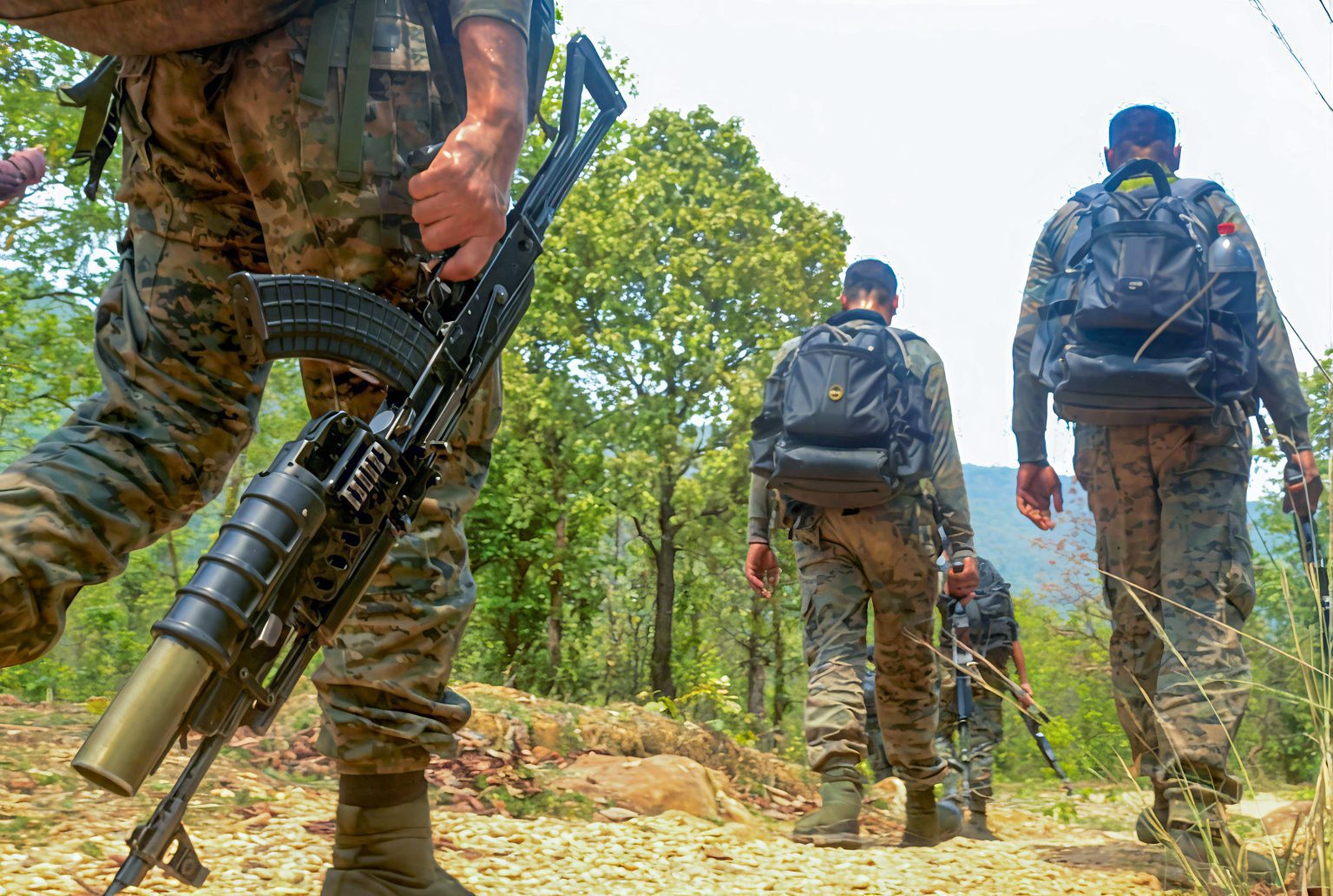
For decades, the word Naxalism carried a geography with it: dense forests, remote villages, disrupted roads and communities living far from the everyday reach of the state.
In 2026, that map has changed dramatically. What once represented one of India’s most persistent internal-security problems has increasingly become a story of restored governance, expanding connectivity and, crucially, thousands of people choosing to leave violence behind.
India’s declaration of being effectively free from Left-Wing Extremism on March 31, 2026, marked the culmination of a long transformation. The Ministry of Home Affairs describes the change as the outcome of a multi-dimensional strategy combining security, development, welfare, technology and rehabilitation.
At the heart of that transformation has been a simple but consequential principle: ending an insurgency is not only about weakening armed networks; it is also about creating a credible pathway back into civilian life.
Rehabilitation as a pillar of peace
India’s surrender-cum-rehabilitation policy for Left-Wing Extremists was designed to encourage cadres who wished to abandon violence to return to the mainstream.
The Ministry of Home Affairs describes the scheme as part of a broader conflict-management and resolution strategy, intended to provide gainful employment and entrepreneurial opportunities while helping surrendered cadres build stable lives outside the extremist movement.
The policy therefore places rehabilitation alongside lawful security action rather than treating surrender as an isolated event.
Its framework covers eligible cadres who surrender with or without weapons, while state-level screening and rehabilitation committees assess individual cases. The objective is to ensure that surrender becomes a durable transition towards mainstream society.
The significance of that approach has become particularly visible in the recent decline in LWE activity.
According to the latest government assessment, 3,927 cadres surrendered between 2024 and March 2026, including 2,337 in 2025 alone.
Civil society representatives, journalists, community leaders and public representatives also contributed to confidence-building efforts that encouraged cadres to give up arms and rejoin society.
A policy that has evolved with the changing ground reality
The surrender framework has developed over time.
Earlier versions included immediate financial assistance, monthly stipends, vocational training and incentives linked to the surrender of weapons. The current approach places stronger emphasis on rehabilitation as a route towards sustainable livelihoods.
Under the framework highlighted by the Government in 2026, higher-ranked surrendered cadres receive an immediate grant of $5,300 (INR 5 lakh), while other eligible cadres receive $2,600 (INR 2.5 lakh).
A monthly stipend of $105 (INR 10,000) is provided for 36 months. Additional incentives are available for surrender, with enhanced benefits in group surrenders and further compensation associated with the deposit of weapons.
These provisions are designed to address the practical question that follows surrender: what comes next?
Financial assistance can provide an initial bridge, while vocational training, livelihood support and other forms of rehabilitation can help former cadres establish a new economic identity.
The broader policy architecture also recognises the importance of families. Government measures include support for housing, self-employment and skill development, while children of surrendered cadres can receive free education up to Class XII.
The emphasis consequently moves beyond the individual surrendering cadre to the creation of a stable social environment around the family.
Vishwaas, Nirman and Jan Kalyan
The latest government framework describes the transformation through three interconnected pillars: Vishwaas, Nirman and Jan Kalyan.
Vishwaas focuses on rebuilding trust through security, inter-agency coordination, structured surrender and rehabilitation mechanisms and community outreach.
Nirman focuses on infrastructure, connectivity and governance reaching remote areas. Jan Kalyan places welfare, dignity, cultural inclusion and mainstreaming at the centre of the development process.
The combination is significant because rehabilitation works most effectively when surrender is followed by access to the institutions and opportunities of normal civic life.
Roads, schools, healthcare, banking, mobile connectivity and welfare schemes transform the practical meaning of returning to the mainstream.
This has been accompanied by a remarkable expansion of physical infrastructure.
Since 2014, more than 12,249 kilometres of roads have been constructed in LWE-affected areas, while more than 9,600 mobile towers have been established under different government schemes. In the most severely affected areas, 96 percent of villages now have mobile connectivity.
Financial inclusion has expanded alongside connectivity.
Between April 2015 and March 2026, 1,804 bank branches, 1,321 ATMs, 74,720 banking correspondents and 6,025 post offices were established in LWE-affected districts.
Such infrastructure gives communities direct access to formal financial services and government delivery systems.
Education and livelihoods strengthen reintegration
The transition from conflict to development is particularly visible in the expansion of education and skill-building opportunities.
According to the Government, 259 Eklavya Model Residential Schools have been sanctioned in affected areas, with 179 developed.
In addition, 46 Industrial Training Institutes and 49 Skill Development Centres have been established, with an overall investment of nearly $84 million (INR 800 crore). More than 90,000 young people and women have received skill training.
These interventions give the rehabilitation process a longer-term dimension. Education opens pathways for younger generations, while vocational training and employment opportunities help families connect with the formal economy.
The Government’s wider tribal-development initiatives have also been integrated into this process.
PM-JANMAN has focused on Particularly Vulnerable Tribal Groups, while the Dharti Aaba Janjatiya Gram Utkarsh Abhiyan seeks to address infrastructure gaps and expand economic opportunities in tribal villages.
Bastar illustrates the transition
Chhattisgarh’s Bastar region provides one of the clearest examples of how security, rehabilitation and development have converged.
The Bastariya Battalion, established in 2017, recruited 1,143 personnel, including around 400 local youth from Bijapur, Sukma and Dantewada. Local participation strengthened engagement between security institutions and tribal communities.
Over the subsequent period, more than 3,240 kilometres of roads were constructed across the Bastar region and 889 mobile towers installed.
Rehabilitation was incorporated into this transformation. A dedicated plan was prepared for around 3,000 surrendered cadres, with an initial allocation of roughly $2 million (INR 20 crore) for skills, education and livelihood opportunities.
In May 2026, the Shaheed Veer Gunda Dhur Seva Dera initiative added another dimension by converting around 70 CAPF camps into service centres offering government schemes, healthcare, banking, agricultural assistance, skill development and other citizen services.
The transformation of security infrastructure into civilian service infrastructure symbolises the shift from conflict management to development delivery.
Violence falls as mainstreaming expands
The broader security data underline the scale of the transformation.
The number of LWE-affected districts fell from 126 in 2014 to two by 2026, while the number of most-affected districts declined from 35 to zero, according to the latest government assessment.
Naxal-related incidents fell from 870 in 2014 to 234 in 2025, while fatalities declined from 310 to 100 during the same period.
The change has also been reflected in surrender numbers. Earlier government data showed 1,639 cadres had surrendered by October 2025, alongside 312 cadres neutralised and 836 arrests.
The subsequent increase in surrender figures demonstrates how rehabilitation has become an important component of the final phase of the counter-LWE strategy.
From ending violence to expanding opportunity
The larger significance of India’s surrender-cum-rehabilitation model lies in the way security and development have increasingly converged.
The National Policy and Action Plan adopted in 2015 established a structured framework combining security, development and community rights.
The MHA continues to describe its approach as multi-pronged, with security-related expenditure supporting not only operations but also rehabilitation of surrendered cadres and community-oriented initiatives.
The March 31, 2026 milestone represents more than a numerical reduction in affected districts. It marks a shift in the relationship between the state and communities that spent decades in the shadow of extremism.
That progression — from surrender to rehabilitation, rehabilitation to reintegration, and reintegration to development — captures the deeper meaning of India’s journey towards a Naxal-free Bharat.






Comment