




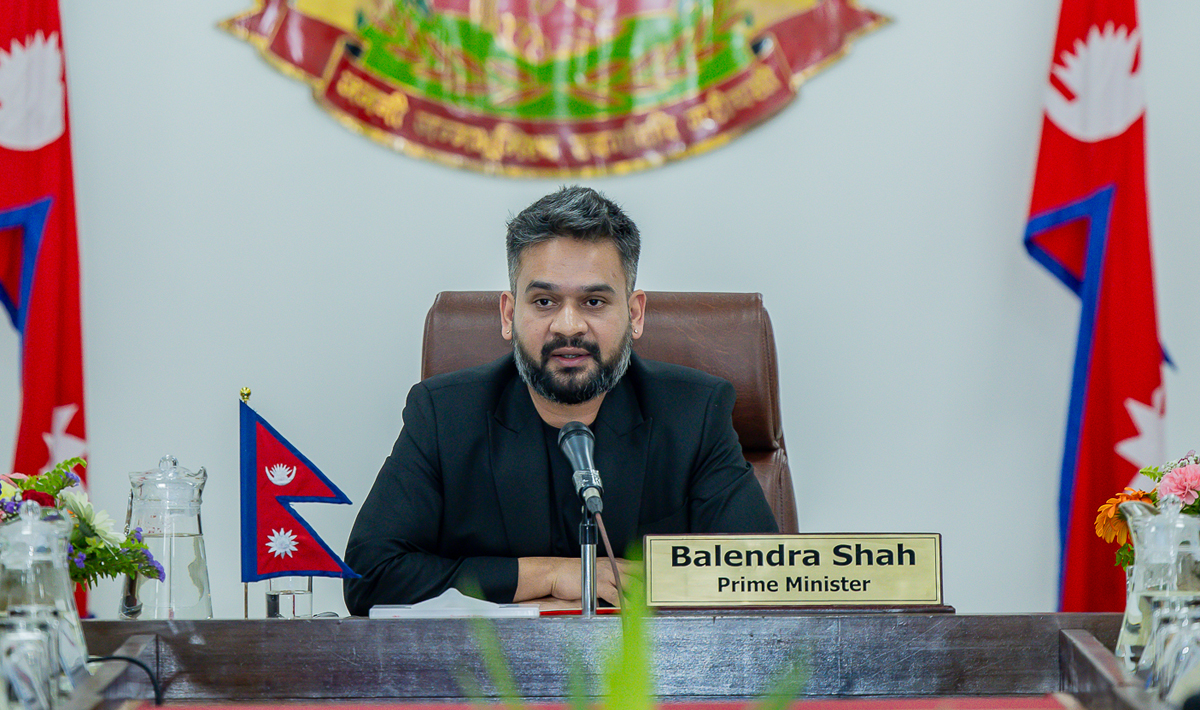
KATHMANDU: The government’s decision to request a three-year postponement of Nepal’s graduation from Least Developed Country (LDC) status has triggered debate over whether the country is prepared to lose the trade privileges, foreign aid facilities, and economic protections tied to its current classification.
While Nepal has already met two of the three UN criteria required for graduation, the government argues that weak economic growth, geopolitical instability, climate risks, and dependence on remittances could expose the economy to serious shocks if the transition happens in 2026 as scheduled.
Nepal had been preparing to graduate from LDC status to developing-country status on November 24, 2026. However, the government has now asked the United Nations to halt the graduation process for an additional three years.
Following the formal request, debate has intensified over whether the government intends to keep Nepal in the category of least developed countries. Questions are also being raised about why a powerful government with a five-year mandate decided to delay the graduation process.
What is LDC graduation?
The concept of Least Developed Countries (LDCs) emerged in the 1960s after World War II to address global inequalities in development and promote peace and economic progress. The idea was introduced because of the widening gap between highly developed and underdeveloped countries.
Under this framework, the United Nations Conference on Trade and Development (UNCTAD) identified a group of developing countries that required special international support and categorized them as LDCs.
These countries are generally characterized by low income levels and structural obstacles to achieving sustainable development goals.
The United Nations General Assembly officially listed Nepal as an LDC on November 18, 1971.
Government documents show that Nepal has been making efforts toward graduation through periodic plans, budgets, and policy programs since 2010.
However, to graduate from LDC status to developing-country status, a country must meet specific criteria related to per capita gross national income (GNI), the Human Assets Index (HAI), and the Economic and Environmental Vulnerability Index (EVI).
By 2024, Nepal had met the required thresholds in two of the three indicators. According to data from the United Nations Committee for Development Policy, Nepal’s per capita gross national income reached USD 1,404 by 2025, exceeding the required threshold of USD 1,306.
Similarly, Nepal scored 77.58 points on the Human Assets Index, well above the required threshold of 66 points.
However, Nepal remains below the required threshold in the Economic and Environmental Vulnerability Index. Nepal scored 28.96 points, compared to the threshold requirement of 32.
Even so, Nepal is still eligible for graduation because meeting two out of the three criteria is sufficient under the UN framework.
Proposal to postpone LDC graduation cites five key reasons
However, the government has requested a postponement of Nepal’s graduation from Least Developed Country (LDC) status by citing reasons beyond the three formal graduation criteria. In its proposal, the government stated that Nepal’s economic growth rate is projected to remain limited to 2.3 percent due to the impact of regional conflicts, disruptions in global supply chains, and pressure on remittance inflows.
The government also warned that Nepal could lose the duty-free and quota-free market access and other special trade facilities currently available under LDC status after graduation. According to the government, this could lead to a decline of up to 35 percent in employment within productive sectors.
The private sector, particularly export-oriented industries and businesses, has repeatedly drawn the government’s attention to these concerns.
In its letter, the government further stated that Nepal’s smooth transition strategy has been implemented more slowly than expected. It added that growing geopolitical tensions and the impacts of climate change have created additional challenges for the country’s reform-oriented economy.
The government also noted that recent developments in West Asia have affected remittance inflows, which remain a key source of Nepal’s foreign exchange reserves. At the same time, rising prices of fuel, food, and fertilizers have added pressure on the national economy.
Parliamentary committees and Planning Commission stress preparedness
The issue of Nepal’s graduation from LDC status has long been discussed by both the government and the private sector. Export-oriented industries, in particular, have expressed concerns about the possible loss of trade privileges after graduation.
The Development, Economic Affairs and Good Governance Committee under the National Assembly prepared a report titled Study Report on Nepal’s Graduation from Least Developed Country to Developing Country, 2081 after consultations with private-sector representatives, stakeholders, and lawmakers.
The committee submitted separate recommendations to the Office of the Prime Minister and Council of Ministers, the National Planning Commission, the Ministry of Finance, the Ministry of Foreign Affairs, the Ministry of Industry, Commerce and Supplies, the Ministry of Agriculture and Livestock Development, the Ministry of Education, Health and Labour, Employment and Social Security, and the Ministry of Forests and Environment.
The report stated that graduation would improve Nepal’s international image, enhance the country’s credibility, and create long-term opportunities in several sectors. However, it also warned that Nepal would lose LDC-specific benefits, face a decline in development assistance, lose some trade privileges, and experience reduced access to concessional financing.
The committee therefore recommended that the government make adequate preparations across all concerned sectors before graduation.
Similarly, the National Planning Commission’s LDC Graduation Progress Review Report under the Smooth Transition Strategy also highlighted the need for greater attention to reducing economic vulnerabilities linked to climate risks, trade dependency, and external shocks.
Experts say government’s move is justified
Former Nepal Rastra Bank director and economist Nar Bahadur Thapa said the government’s effort to postpone Nepal’s graduation process was appropriate given the current economic situation and potential risks after graduation.
“The economy is slowing down, and economic growth has remained weak. Losing export concessions and foreign aid after graduation could create serious challenges,” he said. “That is why the government has proposed a three-year extension.”
Thapa added that rapid economic development would have been the ideal alternative to delaying graduation, but the government’s decision reflects an assessment of current global and domestic realities.
He also said Nepal’s preparations for the post-graduation phase remain inadequate and that the country should avoid taking steps that could result in economic losses merely in the name of graduation.
According to him, the government’s move is reasonable, especially considering the possibility of thousands of jobs being affected in export-oriented industries after graduation.
“Graduation is only a few months away, and the consequences will soon become visible. Export industries could lose the quota-based facilities they currently receive,” he said. “If requesting an additional three years allows the country to prepare properly, there is nothing wrong with the government making that effort.”





Comment