




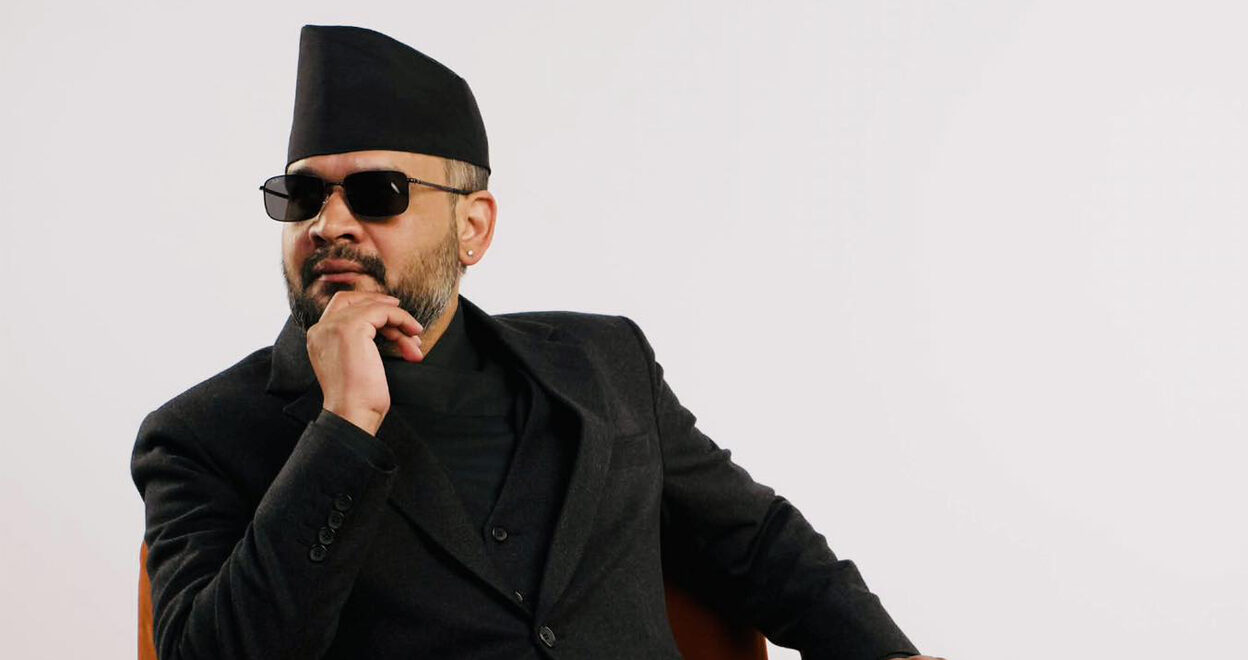
KATHMANDU: Former Kathmandu Metropolitan City Mayor Balen Shah has been appointed Nepal’s new Prime Minister.
President Ramchandra Paudel appointed Shah on Friday morning as the parliamentary party leader of the majority party, in accordance with Article 76 (1) of the Constitution.
Shah was elected to the House of Representatives from Jhapa-5 in the March 5 elections, defeating former Prime Minister and CPN-UML Chairperson KP Sharma Oli.
He secured 68,348 votes, while Oli received 18,734 votes. Shah won the seat by a massive margin of 49,614 votes in Jhapa-5, a constituency long considered a stronghold of UML and previously dominated by Oli.
After joining the Rastriya Swatantra Party, Shah was fielded as the party’s prime ministerial candidate following a seven-point agreement with party chair Rabi Lamichhane.
With RSP securing a majority in the elections, Shah was elected parliamentary party leader, paving the way for his appointment as Prime Minister.
An engineer by profession with a musical background, Shah rose to prominence as an independent candidate before being elected mayor of Kathmandu at the age of 32. He entered national politics while still in office and has now become Prime Minister within three months of that transition.
Shah is scheduled to take the oath of office and secrecy at 12:34 pm today at Shital Niwas. He is also preparing to form a 15 to 18-member Cabinet immediately after the swearing-in ceremony.
Who is Balen Shah:
Balen was born on April 27, 1990. He is a Nepali politician, structural engineer, and rapper who has emerged as a major national figure. He has also become the country’s first prime minister of Madheshi origin. Earlier, he served as the 15th mayor of Kathmandu from 2022 to 2026, becoming the first independent candidate to hold that position.
In the 2022 local elections, Shah won the Kathmandu mayoral race. During his tenure, he launched several initiatives, particularly in waste management and traffic regulation. However, his administration also faced criticism over issues such as the demolition of unauthorized structures, handling of informal settlements, and actions against street vendors.
He also drew attention for advocating the idea of “Greater Nepal,” referring to territories lost after the Sugauli Treaty during British rule in India. Shah gained further prominence during the Gen Z-led protests of 2025.
In January 2026, he resigned as mayor and joined the Rastriya Swatantra Party (RSP) to contest the general election as its prime ministerial candidate. He ran from Jhapa-5, where he defeated former Prime Minister K. P. Sharma Oli by a wide margin, contributing to his party’s historic electoral victory.
Early life and education
Shah was born in Naradevi, Kathmandu, into a Maithili-speaking Madheshi family. He is the youngest son of Ayurvedic practitioner Ram Narayan Shah and Dhruvadevi Shah. His family originally came from Ekdara in Mahottari district and moved to Kathmandu after his father was appointed to Naradevi Ayurvedic Hospital.
He completed his schooling at Alliance Academy and pursued his higher secondary education at V.S. Niketan. He later earned a bachelor’s degree in civil engineering from Himalayan White House International College and a master’s degree in structural engineering from Nitte Meenakshi Institute of Technology in Bengaluru, India. He was also awarded a research fellowship by Kathmandu University for PhD studies focused on preserving Newa heritage structures to promote tourism and economic development.
Music career
Before entering politics, Shah was active in Nepal’s hip-hop scene from the early 2010s. He released his debut song ‘Sadak Balak’ (Street Children) in 2012, a track he had written during his school years, reflecting the struggles of urban youth. He gained wider recognition in 2013 after participating in the YouTube rap battle series Raw Barz.
His music often addressed social issues such as corruption, inequality, and urban challenges. One of his notable songs, Balidan (“Sacrifice”), criticized political corruption and resonated strongly with younger audiences, helping build his public profile.
In 2025, he contributed the song ‘Nepal Haseko…’ to the film ‘Laaj Sharanam’. The track, which he wrote, composed, and performed, gained significant popularity and trended on YouTube after its re-release for the film.
Mayor of Kathmandu (2022–2026)
Shah ran for mayor on a platform centered on transparency, accountability, and anti-corruption. His campaign particularly appealed to Kathmandu’s Newar community, and he used digital platforms and public discussions to engage voters. He ultimately defeated candidates from major parties, including Nepali Congress and CPN-UML.
His political rise is often linked to the broader movement for alternative politics inspired by the late Ujjwal Thapa, founder of the Bibeksheel Nepali party. Several individuals associated with that movement supported Shah’s campaign.
During his tenure, efforts were made to improve urban infrastructure and public services. Agreements were reached to address waste management challenges, including involving private companies in garbage collection. Initiatives also included installing tactile pavements for visually impaired pedestrians, constructing traditional-style bus stops, introducing new bus routes, upgrading stops, and implementing a smart ticketing system.
2026 Parliamentary Election (Jhapa-5)
After stepping down as mayor in January 2026, Shah joined the RSP and became its prime ministerial candidate. He chose to contest from Jhapa-5, directly challenging long-time political leader K. P. Sharma Oli.
Shah won the seat decisively in the March 2026 elections. He secured 68,348 votes—the highest number ever recorded in a parliamentary election in Nepal—surpassing the previous record held by Oli. Oli received 18,734 votes, resulting in a victory margin of 49,614 votes.



Comment