




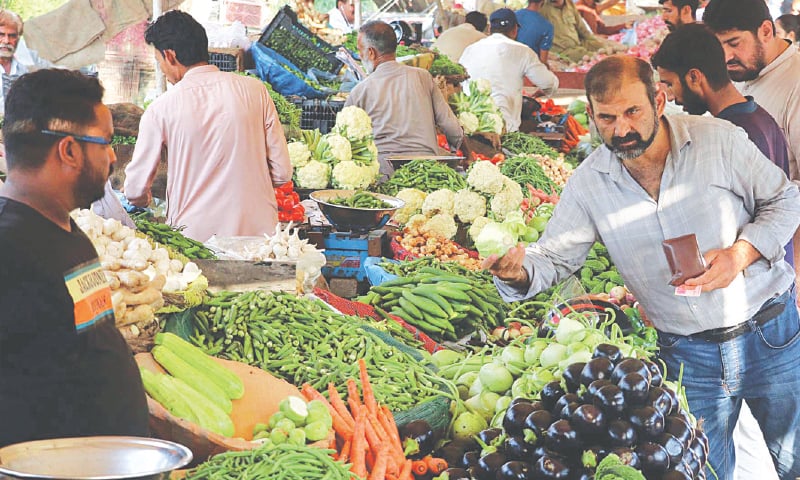
A new government survey has delivered a stark assessment of how rising food and electricity costs are reshaping household finances across Pakistan.
According to the Household Integrated Economic Survey 2024–25, Pakistanis now spend nearly two-thirds of their income on just two essentials: food and power.
The findings reveal a society under severe financial strain, where inflation is steadily eroding purchasing power and forcing families to rely increasingly on foreign remittances and informal support networks to survive.
Released by Planning Minister Ahsan Iqbal, the survey marks the first comprehensive assessment of household economics in more than six years. Conducted under pressure from the International Monetary Fund, the study captures the lived reality of millions struggling to cope with a prolonged cost-of-living crisis.
Inflation tightens its grip
The survey paints a bleak picture of how inflation has consumed household budgets. While average incomes have increased since the last survey, expenditures have risen even faster. The result is a shrinking financial margin that leaves little room for savings or long-term investment in education and health.
Households now spend only 2.5 percent of their income on education—less than half of what they spend on housing. This sharp imbalance reflects how basic survival costs have overtaken priorities once considered essential for upward mobility.
The data shows that inflation has effectively downgraded education from a long-term investment to a luxury many families can no longer afford. Food prices remain the single biggest burden. With staples such as wheat, rice, cooking oil and vegetables repeatedly hitting record highs over the past two years, families have been forced to cut portions, switch to lower-quality food, or skip meals altogether.
Electricity bills, meanwhile, have surged due to repeated tariff hikes and subsidy withdrawals, adding another layer of financial pressure.
Power bills drain urban budgets
Urban households have been hit particularly hard by rising electricity tariffs. Although their average monthly income has increased from PKR 53,000 ($190) to PKR 96,767 ($350) over the past six years, the gains have been largely offset by soaring utility costs.
Power bills now consume a significant portion of household budgets, particularly during peak summer months when air conditioning becomes unavoidable. The situation has been worsened by erratic supply, extended load shedding and fuel price volatility.
Despite higher payments, households continue to face unreliable service, deepening frustration and distrust in the system. For many middle-income families, electricity costs now rival food expenses, shrinking disposable income to almost nothing.
Rural households lean on remittances
The survey highlights a sharp rise in dependence on foreign remittances, particularly among rural households.
The share of remittances in total household income has climbed from below 5 percent to nearly 8 percent nationwide. In rural areas, this reliance has doubled over the past six years.
This trend reflects deeper structural problems. With limited employment opportunities and declining agricultural returns, many young people are leaving villages in search of work abroad. Their earnings are increasingly sustaining families back home, replacing local income sources that have steadily dried up.
Officials from the Pakistan Bureau of Statistics have acknowledged that the growing dependence on remittances and assistance signals shrinking domestic income opportunities.
Double-digit inflation has eroded wages, while job creation has failed to keep pace with population growth. For rural households, migration has become less of a choice and more of an economic necessity.
Informal Support Becomes Lifeline
Beyond remittances, the survey shows a sharp increase in reliance on gifts and financial assistance from relatives and community networks. This share has more than doubled to 4.6 percent of household income, pointing to growing dependence on informal safety nets.
While such support helps families survive short-term shocks, it also underscores the absence of formal social protection mechanisms. Many households are now dependent on relatives working abroad or better-off family members to bridge monthly budget gaps. This informal system is increasingly stretched, especially as economic pressures spread across social groups.
Youth exodus signals economic distress
Independent experts cited in the survey link these trends to a mass exodus of young and skilled Pakistanis. Limited job prospects, stagnant wages and rising living costs have pushed thousands to seek opportunities abroad. The departure of working-age citizens has become one of the defining features of Pakistan’s economic crisis.
This brain drain has long-term consequences. While remittances provide short-term relief, the loss of skilled workers weakens the domestic economy and reduces future growth potential. The survey data indirectly reflect this trade-off: households may receive foreign income, but the country loses human capital.
Income growth fails to match reality
The Planning Ministry noted that average household income has increased significantly over the past six years. However, the data shows that this growth has not translated into better living standards. Inflation has outpaced wage increases, effectively cancelling out nominal income gains.
Urban households have seen higher income growth than rural ones, widening the inequality gap. Yet even city dwellers struggle to manage expenses, as rent, fuel and food prices continue to climb. For rural families, lower income growth combined with higher dependence on remittances highlights the absence of viable domestic employment.
Education spending shrinks
One of the most alarming findings is the collapse in education spending. With only 2.5 percent of income allocated to schooling, families are making painful choices between survival and long-term development. Private school fees, books and transport costs have risen sharply, pushing many parents to withdraw children from formal education.
This trend threatens to deepen social inequality. Families with overseas earners may still afford education, while others are forced to sacrifice schooling altogether. Over time, this could widen class divisions and reduce social mobility, trapping future generations in poverty.
IMF pressure and delayed data
The survey was conducted from September 2024 to June 2025 after a six-year gap, largely under pressure from the IMF. The long delay in data collection itself highlights governance challenges. Without regular surveys, policymakers have operated with outdated information, potentially underestimating the depth of the crisis.
Now that the data is public, it exposes the scale of household distress that has built up over years of economic mismanagement, currency depreciation and inflation. The findings also raise uncomfortable questions about the effectiveness of past reforms and relief measures.
A society living month to month
Taken together, the survey results show a society living on the edge. With two-thirds of income going to food and power, households have little room for emergencies, healthcare or education. Savings are minimal, and debt levels are rising as families borrow to cover basic needs.
The growing reliance on remittances and informal assistance reflects not resilience but desperation. It signals that domestic economic structures are failing to provide stable livelihoods. For millions, survival now depends on relatives working abroad or community goodwill.
Warning signs for the future
The Household Integrated Economic Survey does not offer comfort. Instead, it serves as a warning. Rising food and power costs have reshaped household priorities, pushing education and long-term planning aside. The data shows how inflation has hollowed out middle-class security and deepened rural vulnerability.
While official statements highlight income growth, the lived reality revealed by the survey tells a different story. For most Pakistanis, economic pressure is intensifying, not easing. With each tariff hike and food price surge, the margin for survival narrows further.
As policymakers confront budget deficits and IMF conditions, the social cost of economic decisions is becoming impossible to ignore. The survey stands as a stark record of how ordinary Pakistanis are bearing the burden of systemic failures.





Comment