




KATHMANDU: The Election Commission published the personal details of 3,406 first-past-the-post candidates on January 23, stating that voters in the digital age would be able to instantly check candidates’ qualifications through the Commission’s website.
Since then, the publicly available list has triggered discussions at the grassroots level about candidates’ qualifications, with voters even raising questions on social media based on the information provided online.
However, this opportunity has not been equally available to voters across all constituencies. The digital list published by the Commission is missing details of many candidates. While the omission of one or two profiles could be considered normal, the overall state of the list appears disorganized.
This could be attributed to human error on the part of either candidates or the Commission. But can it be considered normal when the qualifications of candidates from an entire district are not verified at all? Such a lapse has been observed in the Commission-certified list of candidates from Ilam.
While voters in most parts of the country are checking their candidates’ qualifications from the published list, voters in Ilam have been deprived of this opportunity. On the Commission’s website, none of the candidates from Ilam have their educational qualifications or professional experience disclosed.
In Ilam, Suhang Nembang, the son of the first Constituent Assembly member Subas Chandra Nembang and a sitting lawmaker, is contesting a direct election for the second time. Voters not only in Ilam but elsewhere as well may be curious to know his complete personal profile. Yet, in Ilam, educational qualifications and experience have not been prioritized for any candidate, including him.
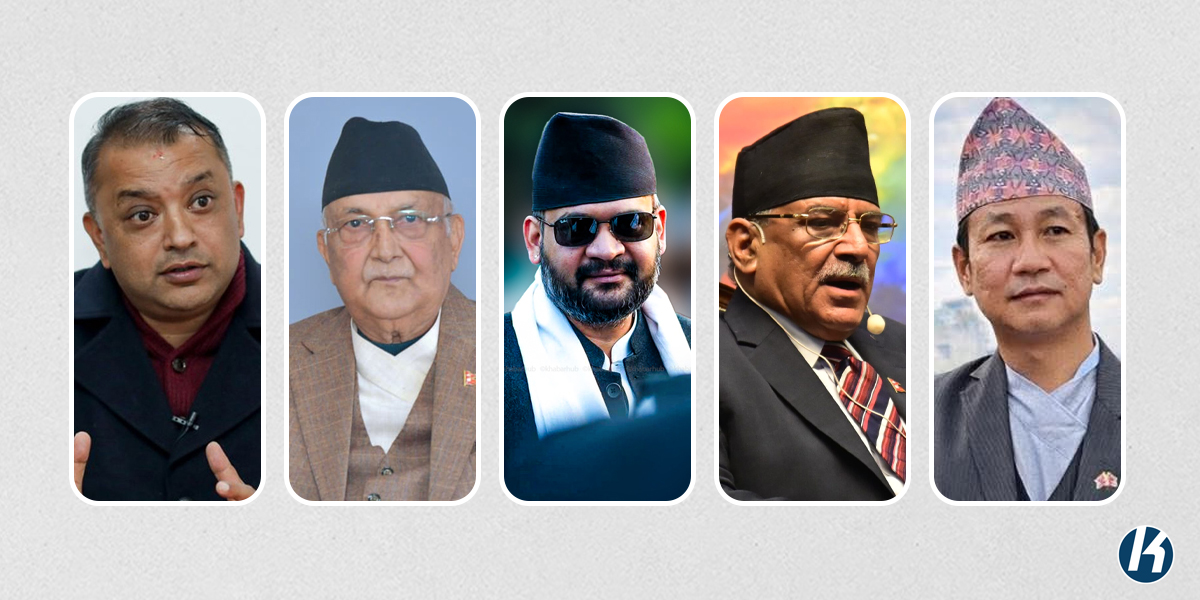
The problem is not limited to Ilam. The profile of KP Sharma Oli, a four-time prime minister and chair of the CPN-UML, is also incomplete. Contesting again from his traditional constituency of Jhapa-5, Oli has repeatedly faced questions about his educational qualifications. Still, his profile does not contain complete details.
In the 2022 election, Oli had mentioned SLC as his educational qualification. This time, however, his profile includes neither educational qualifications nor experience. Likewise, the profile of his challenger, Rastriya Swatantra Party (RSP) senior leader Balen Shah, also lacks complete information.
Similarly, the introductory details of Nepali Congress President Gagan Kumar Thapa, contesting from Sarlahi-4, remain incomplete.
In contrast, Harka Raj Sampang Rai, chair of the Shram Sanskriti Party and a House of Representatives candidate from Sunsari-1, has filled in his complete personal details. Former prime minister and CPN (Maoist Centre) chair Pushpa Kamal Dahal ‘Prachanda’, a candidate from Rukum East, has also mentioned his educational background and other details in full.
Overall, the Commission’s records show that most candidates, from new as well as established parties, have left significant portions of their personal details incomplete.
Observers say that as party leaders shift constituencies, it becomes even more important for voters to have clear access to candidates’ personal profiles as one of the criteria for casting their votes.
“Is the Election Commission a dumping site? If it accepts whatever is submitted without scrutiny, why create such a system in the first place?” asks sociologist Dipesh Ghimire. He argues that the Commission should have established a system where candidate applications cannot be submitted unless all required information is filled in.
A large number of today’s voters are well-versed in information technology. For them, a candidate’s past experience, educational background, and potential to bring change can also be assessed through personal information. This, Ghimire says, should be seen as part of electoral literacy.
Voters base their choices on election campaigns, manifestos, and public image, but personal details are another key criterion. That is precisely why this system was introduced, to make candidates more transparent and accountable, he adds.
“The reason candidates may be reluctant to disclose family details, educational qualifications, or academic institutions could be the fear that such information might later invite issues related to asset laundering or personal integrity,” Ghimire says. “But certifying incomplete details without due attention is the Commission’s weakness. It also creates confusion among voters.”
He further questions why candidates who claim to be contesting elections with integrity choose to hide their details, and who should be held accountable for this.
When Khabarhub sought clarification from the Election Commission, spokesperson Narayan Prasad Bhattarai said the issue had drawn the Commission’s attention. He acknowledged shortcomings in the process.
“We had delegated this task to offices deployed in the respective constituencies. The rush to complete candidate registration may have caused these problems,” he said, adding that officials have been alerted and responsibilities reinforced. “We will correct the errors as much as possible.”

Comment