




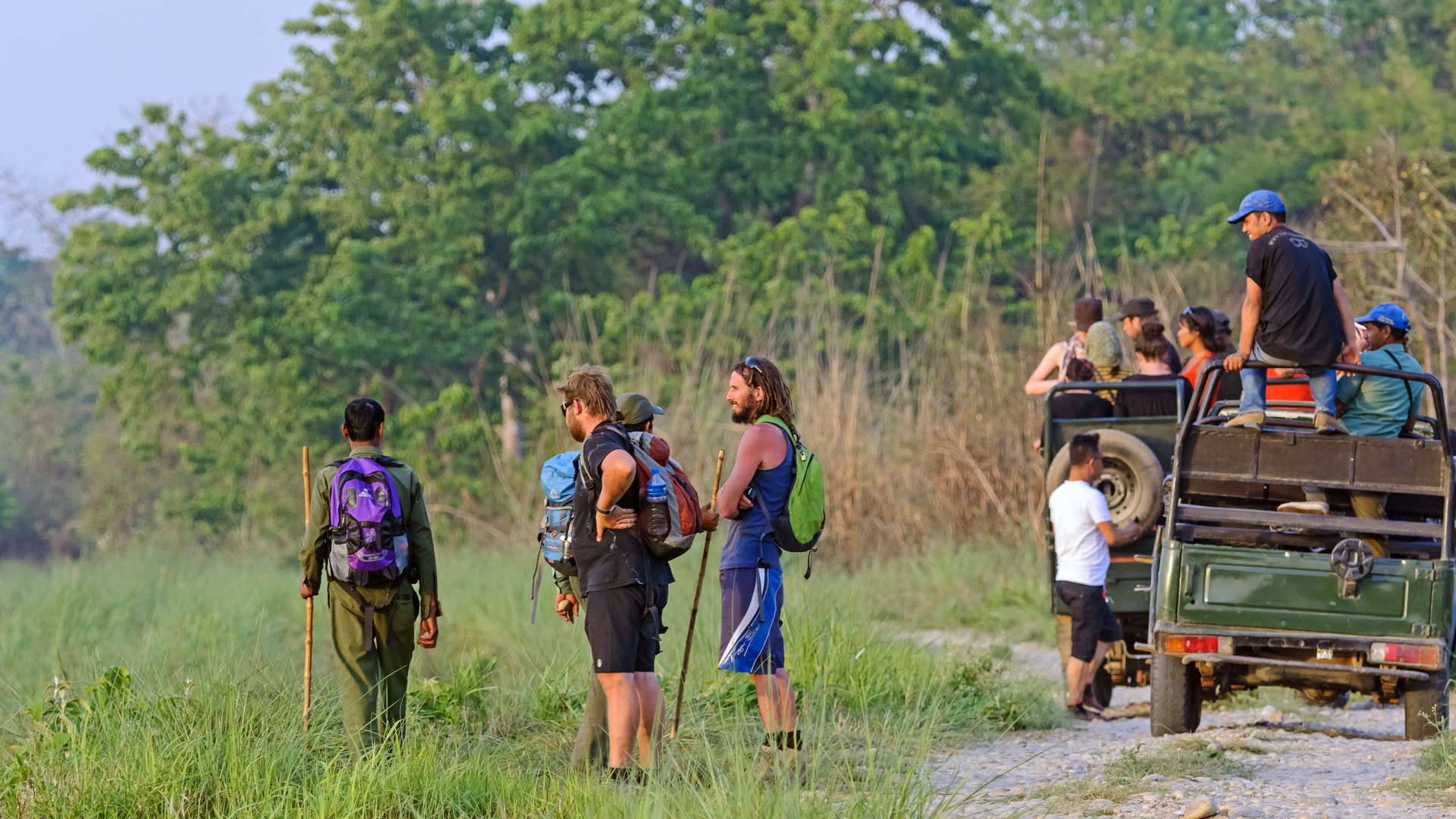
KANCHANPUR: The number of foreign tourists entering Nepal through Gaddachauki, the country’s western border crossing in Kanchanpur, has been increasing in recent years.
According to the Immigration Office at Gaddachauki, tourist arrivals through the border point have risen steadily over the past few years.
According to Nawaraj Adhikari Bhatta of the office, 1,753 foreign tourists entered Nepal through Gaddachauki in the last fiscal year, generating Rs. 10.518 million in revenue. During the same period, 1,534 foreign tourists exited Nepal through the border crossing.
Office statistics show that 542 foreign tourists entered Nepal through Gaddachauki in 2022, followed by 983 in 2023 and 1,154 in 2024.
Despite the significant tourism potential in the Sudurpaschim Province, many tourists entering Nepal through the western border crossing travel onward to cities such as Kathmandu and Pokhara.
Tourism entrepreneurs say that tourists are not staying in the Sudurpaschim Province despite the presence of major attractions such as Khaptad, Badimalika, Ramaroshan and Shuklaphanta National Park. They attribute this to inadequate infrastructure and a lack of publicity and tourism promotion.
“The Gaddachauki checkpoint is the main entry point for foreign tourists, and major tourist destinations in India are also close to the border,” said tourism entrepreneur Jagadish Chandra Bhatta. “A tourism information desk should be established at the checkpoint itself.”
He said the information center should provide visitors with information about tourist destinations across Nepal, particularly those in the Far West. He also stressed the need for coordination between the government and private sector to promote tourism in the region.
Dinesh Malla, president of the Kanchanpur Chamber of Commerce and Industry, said that although the Far West has considerable tourism potential, visitors often travel elsewhere because of inadequate infrastructure and promotional efforts.
“We lack convenient infrastructure and other facilities to reach the attractive destinations in the region,” he said. “We should promote these destinations and create an environment that encourages tourists to stay here, even if only for one night.”






Comment