




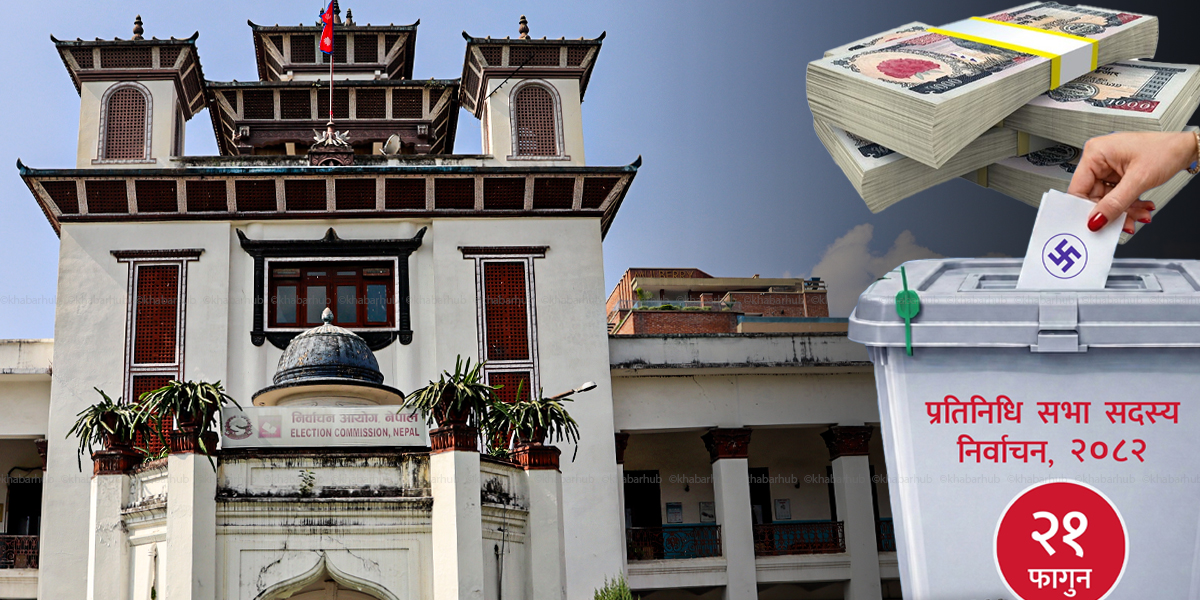
KATHMANDU: The upcoming House of Representatives election on March 5 is expected to see formal spending exceed Rs 37 billion. This includes an estimated Rs 27 billion by the government through the Election Commission and security agencies, and Rs 10.52 billion as the legal spending limit for over 6,000 candidates from various political parties.
The government estimates spending around Rs 27 billion on the election, covering costs by the Election Commission, the three security agencies, and other related bodies. Initially, the Election Commission requested Rs 7.8 billion from the government. According to Ministry spokesperson Tank Prasad Pandey, Rs 6.72 billion has been released to the Election Commission, Rs 10.39 billion to the Ministry of Home Affairs, and Rs 1.99 billion to the Ministry of Defence.
The Election Commission has already finalized candidate nominations for both first-past-the-post and proportional representation elections and completed the printing of 15 million proportional representation ballots. Security agencies including the Nepal Army, Nepal Police, and Armed Police have also requested substantial funds for logistics, vehicles, fuel, and temporary policing during the elections.
Candidate spending
The Election Commission has set formal spending limits for candidates at NPR 10.52 billion in total. For the 3,406 candidates contesting 165 first-past-the-post constituencies, the commission has divided the country into five groups with per-candidate limits ranging from NPR 2.5 million to Rs 3.3 million depending on the constituency.
Under this framework, first-past-the-post candidates can formally spend a total of Rs 9.88 billion, while proportional representation candidates across 64 political parties, comprising 3,213 candidates, can spend up to Rs 64.26 million.
Historically, political parties and candidates have often spent multiple times above the legal limits, raising concerns about adherence to campaign finance rules.


Comment