




KATHMANDU: Political parties and candidates in Syangja have stepped up campaigning ahead of the House of Representatives election scheduled for March 5. Election mobilization committees have been formed, and door-to-door outreach has intensified across the district.
Syangja, which has two constituencies, is expected to deliver results that may differ from previous elections, given the changing political landscape. A total of 12 candidates are contesting in each of the two constituencies.
Organizationally, the Nepali Congress, CPN-UML, Maoist Centre/Nepali Communist Party (NCP), and the Rastriya Swatantra Party (RSP) maintain a strong presence in Syangja, while other parties have long lagged behind. As a result, the contest is widely expected to remain largely among these four forces.
Key contenders in Syangja-1?
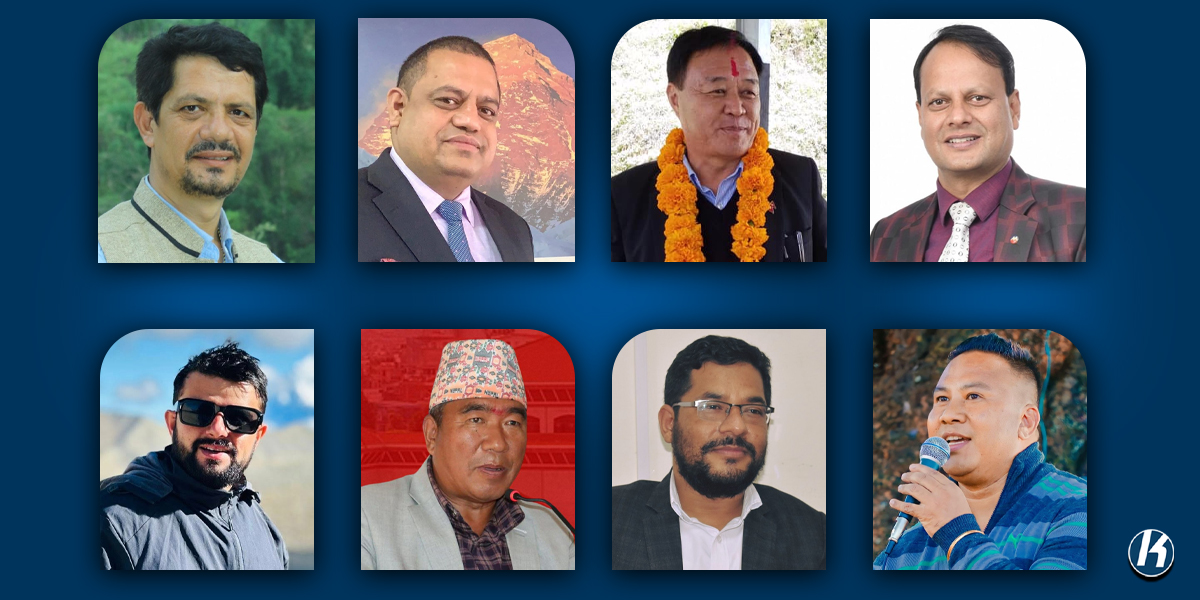
In Syangja-1, key contenders include Min Prasad Gurung of CPN-UML, Bharat Raj Dhakal of the Nepali Congress, Shailendra Ghimire of the Nepali Communist Party, and Dhananjay Regmi of the Rastriya Swatantra Party (RSP).
Gurung has been active in UML politics since his student days. He was elected as a Provincial Assembly member in the 2074 BS election from a coalition and is considered a relatively non-controversial figure within the party. He has also been involved in real estate and the banking sector.
Nepali Congress candidate Dhakal has a long professional background in banking. While he has not been prominently visible in frontline party politics, he is known to have contributed internally to the party and secured the ticket relatively late in the election process.
Shailendra Ghimire, the NCP candidate, was previously involved in underground Maoist politics and has recently become active in open politics. He contested the Constituent Assembly election from the same constituency in 2070 BS but was defeated.
The Rastriya Swatantra Party, which has expanded its influence in recent years, is also seen as a strong contender in Syangja-1. Former Tourism Board CEO Dhananjay Regmi is contesting on the party’s ticket. He joined the party ahead of the election season and has been actively campaigning since.
Past results and current dynamics
In the 2079 BS election, Nepali Congress secured first place in the constituency, followed by UML and RSP. At the time, the Nepali Congress and Maoist Centre had formed an alliance, leaving no Maoist candidate in the race.
Congress candidate Raju Thapa won with 31,999 votes, while UML’s Narayan Prasad Marasini received 28,744 votes. RSP candidate Bodh Raj Regmi came third with 6,065 votes. Other parties failed to cross the 1,000-vote mark.
While the Nepali Congress and UML remain the strongest organizational forces in the constituency, the RSP has gained ground by attracting cadres and independent supporters disillusioned with traditional parties. This rapid expansion suggests a more competitive race in Syangja-1 this time around.
The situation in the constituency suggests that while UML and the NCP are largely focused on retaining their existing vote base, the Rastriya Swatantra Party (RSP) and the NCP are attempting to draw voters away from traditional parties. Ultimately, the party and candidate that can most convincingly communicate this dynamic to voters is likely to emerge victorious on March 5.
Who is ahead in Syangja-2?
A political landscape similar to Syangja-1 is visible in Syangja-2 as well. Major contenders in the constituency include Khim Bahadur Thapa of the CPN-UML, Bhagwat Prakash Malla of the Nepali Congress, Padam Bishwakarma of the Nepali Communist Party, and Jhabilal Dumre of the Rastriya Swatantra Party (RSP). All four are new faces in House of Representatives elections.
Among them, Nepali Congress candidate Bhagwat Prakash Malla was elected as a Provincial Assembly member in the 2074 BS election. UML candidate Khim Bahadur Thapa has served two terms as chairperson of Kaligandaki Rural Municipality. Meanwhile, NCP candidate Padam Bishwakarma and RSP candidate Jhabilal Dumre are contesting a parliamentary election for the first time.
In the 2079 BS election, former Nepali Congress Vice President Dhanraj Gurung won the seat with 31,466 votes, receiving significant support from voters aligned with the then Maoist Centre. In contrast, UML Secretary Padmakumari Aryal, who had won the constituency in 2074 BS as part of the Left Alliance, was defeated after securing 25,839 votes. The RSP candidate finished third with 8,113 votes.
As in Syangja-1, other parties failed to cross the 1,000-vote mark in the previous election. Overall, the electoral atmosphere in both constituencies of Syangja appears similar, with comparable levels of competition among major parties.
So far, the campaign has remained relatively restrained, with limited direct attacks or attempts to highlight opponents’ weaknesses. Instead, parties are focusing on mobilizing their respective strengths.
The UML, Nepali Congress, and RSP have intensified their outreach, particularly through social media. Candidates from UML and Congress are also actively seeking feedback and suggestions from voters online. In contrast, the NCP and smaller parties appear less active in digital campaigning.
While development remains a shared agenda across parties, none has yet formally unveiled detailed commitments or policy roadmaps. With the election still weeks away, outcomes in both constituencies are likely to depend on how effectively the major parties retain their traditional vote bases, and how successfully the RSP and NCP attract voters from rival camps.


Comment