




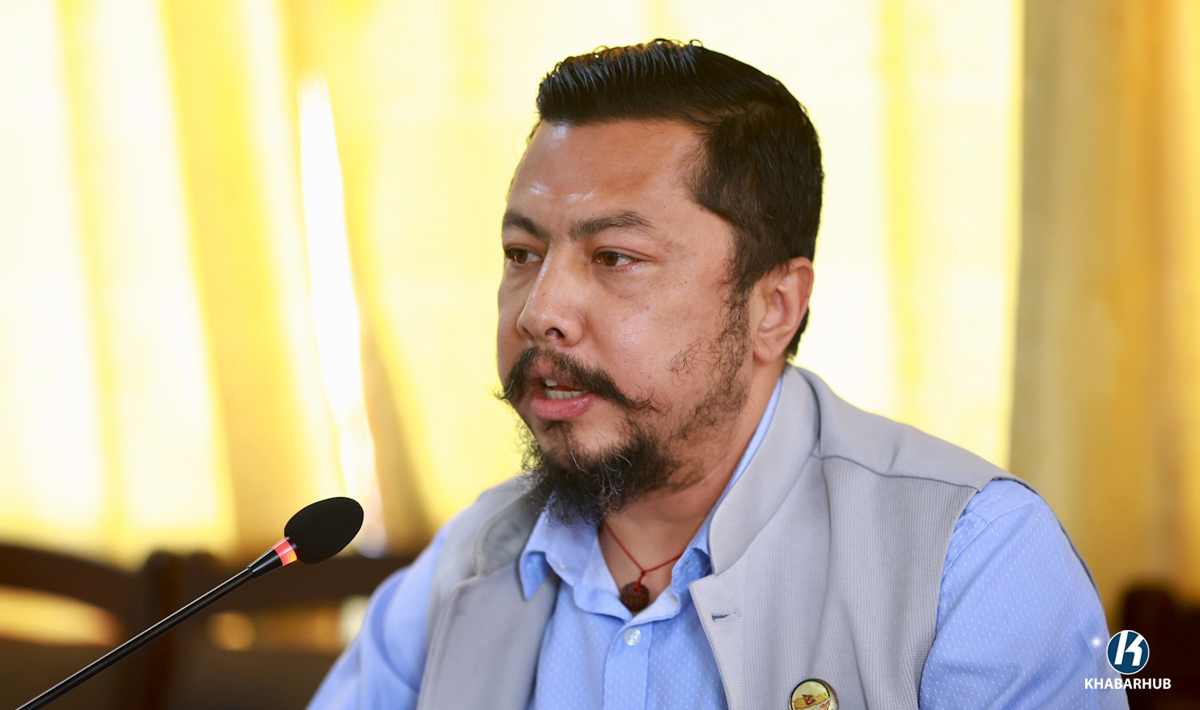
KATHMANDU: Minister for Energy, Water Resources and Irrigation Biraj Bhakta Shrestha has said that reservoir-type hydropower projects are a high priority for the government.
After inspecting the Kulekhani Hydropower Project on Sunday, the Energy Minister said reservoir-based projects should be promoted as a national priority for Nepal’s long-term energy security, industrial growth, and overall economic transformation.
He stated that the government’s main focus in the coming days will be the development of reservoir-based hydropower projects, adding that such projects would play a crucial role not only in electricity generation but also in water management, flood control, irrigation expansion, and tourism promotion.
During discussions with employees of all three power plants under the Kulekhani project, Minister Shrestha said the importance of water storage infrastructure has increased due to rising climate risks and irregular rainfall patterns.
“Climate change has increased the risk of glacier melt and altered rainfall patterns. In such a situation, there is no alternative to reservoir-based projects for energy security,” he said.
He also emphasized the need to increase electricity production during peak hours to support industrial sectors, particularly data centers and information technology industries.
The minister directed the Nepal Electricity Authority (NEA) to develop an integrated model for reservoir-based projects and stressed the importance of attracting both domestic and foreign investment. He noted that the government has already set a 50-year licensing period for such projects to encourage private sector participation.
Describing the Kulekhani project as a “role model,” he also called for immediate measures to address social concerns and complaints from local communities.
He highlighted that waste management has become a growing challenge due to increased tourism in the reservoir area and urged coordination with local stakeholders to protect the environment in the Indrasarovar region.
During his inspection, Minister Shrestha instructed authorities to demarcate land within the project area, manage debris flowing into the reservoir during floods, and urgently repair and replace outdated equipment.
The Kulekhani project, completed in 1982, is Nepal’s first reservoir-type hydropower project with a total capacity of 106 MW, comprising Kulekhani-1 (60 MW), Kulekhani-2 (32 MW), and Kulekhani-3 (14 MW).






Comment