




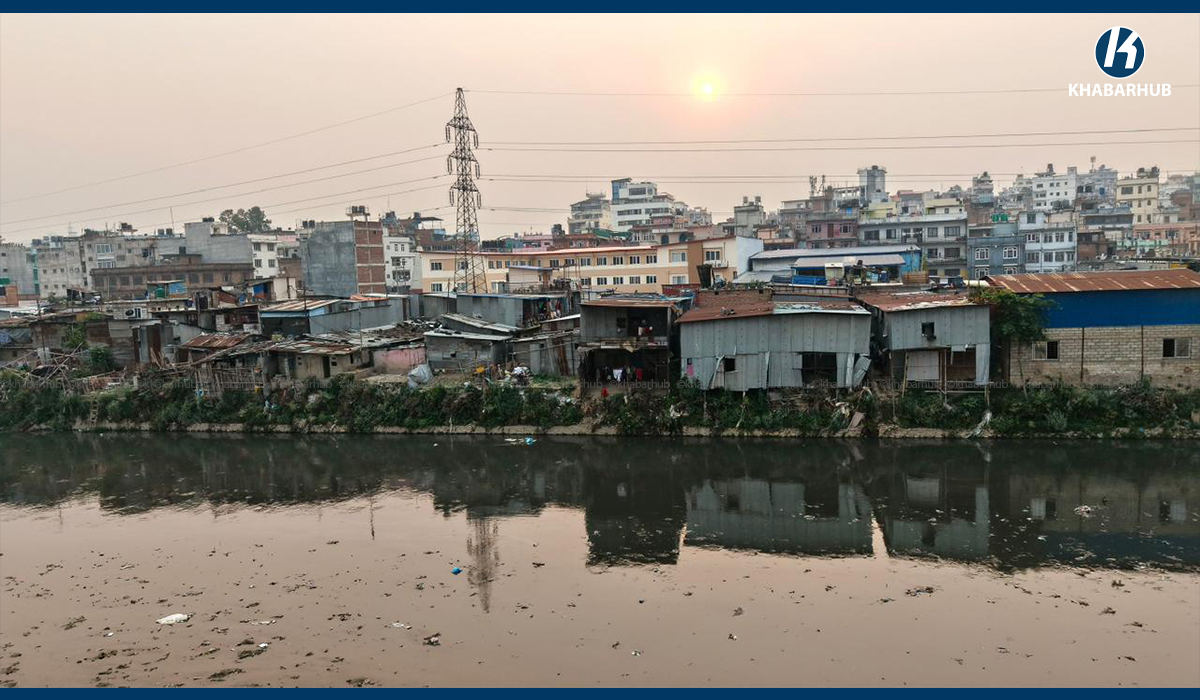
KATHMANDU: Amid the government’s move to clear squatter settlements in the Valley, officials have claimed that only a small fraction of those identifying as squatters in Kathmandu are genuine.
According to the Land Problem Resolution Commission, a total of 1,404 individuals in Kathmandu district had applied as squatters as of Thursday. However, settlements in areas such as Thapathali, Teku, and Balkhu host a significantly larger number of people claiming squatter status.
Officials at the Kathmandu Valley Development Authority say their data suggests that only around two percent of squatters in the capital are genuine, while the rest are fake.
Citing statistics, the authority’s legal officer Ghanshyam Paudel said many individuals claiming to be squatters actually own substantial land in their home districts.
“Many of those identifying as squatters in Kathmandu own ropanis of land back home. Some with up to 25 ropani in villages are occupying government land in the capital,” he said.
However, he stressed that the small percentage of genuine squatters should not be treated the same way.
“The government should not use bulldozers indiscriminately. It must first identify genuine squatters and ensure their rehabilitation before taking action,” Paudel added.
Former district project chief Subash Basnet also echoed similar concerns, referring to the Land Act 1964, which categorizes squatters into three groups. He argued that many currently claiming the status do not meet the criteria.
Basnet presented examples from research, claiming that individuals with significant landholdings—such as 27 ropani in Khotang or multiple plots in Kavre—are living in Thapathali under the label of squatters.
He further alleged that some structures in these settlements are being rented out, allowing low-income families to live there at cheaper rates.
“Those with limited income rent these huts, and they are often the ones seen expressing distress. But at the same time, the few genuine squatters must receive fair treatment from the state,” he said.
The findings come at a time when the government is preparing to evict riverbank settlements, raising concerns over verification, fairness, and rehabilitation of affected communities.






Comment